The Taxi Ride: Chinese Style

Once you get in, you're mine, sucker!
Once you get in, you’re mine, sucker!

Taxi drivers in KaiFaQu, the development zone just outside of Dalian city can run the gamut. They can be complete turds so vile that they require special instructions for disposal or you could end up singing duets with them (see previous entry). I’ve had my fair share of experiences with taxis, and in September I will have been here for two years, so I can at least offer my insights with a tiny bit of credibility on the subject.

As you travel, though, you run across many more turds in the taxi biz than you do possible singing partners.

First night in China: an 8 RMB ride becomes a 10RMB ride just because. I remember being suspicious of the price right off the bat, but powerless to tell the driver I thought he was being a bit turdlike, so I paid the fare.

Not a specific because it happens every times, but holiday hikes in prices. If it’s two days before Tombsweeping Festival chances are you’ll be charged a flat rate of 10 RMB no matter what time of day, and the price will continue until a day after the holiday. And if you know holidays here you know it’s not even a big deal! I can see Spring Festival or National Day Holiday (Which is like a week long despite the name), but there are times when I swear these buggers are making this stuff up. And these prices are non-negotiable. I’ve tried, going as far as even opening the door while still moving and just telling him to let me out.

The other near-constant is when it’s raining, has been raining, or has just stopped raining. They will charge you 10 RMB because they’ve spilled water on their windshield and called it rain. Okay, not that bad, but just about. They will also try this crap when it’s snowing, but you can wiggle with them during the winter. Is it because it’s more dangerous to drive in the rain? Does the two extra yuan really justify the risk they’re taking driving me three minutes? And isn’t it their job to drive? In all weather? If I don’t pay the extra two yuan will they become more reckless? What exactly is the extra charge covering? Oh, and did I mention, it can be considered rude to put on your seat belt with drivers because they can take it as a judgment on their driving prowess?
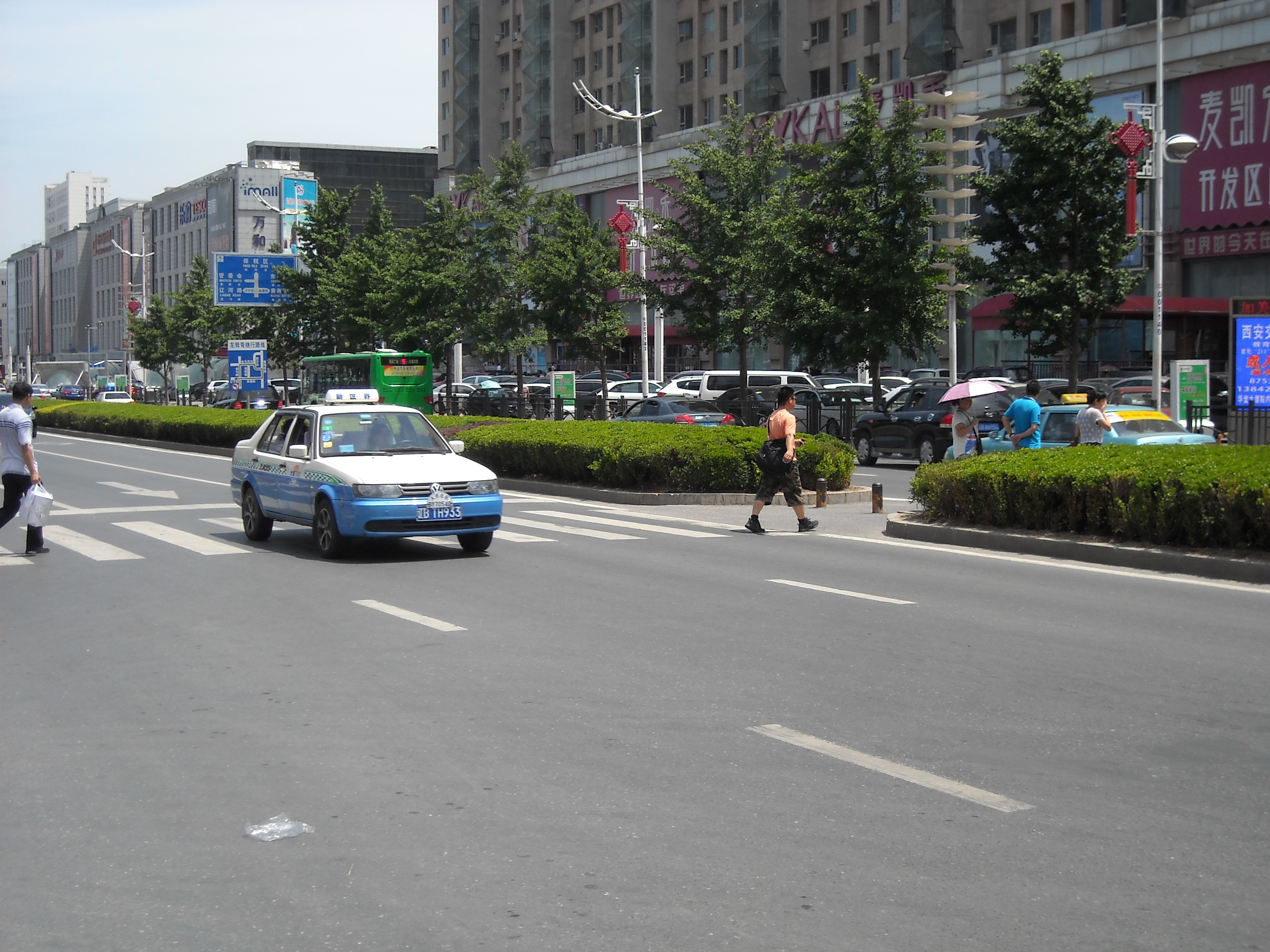
It's like the movie Taxi Driver...without guns, Deniro, or English...
It’s like the movie Taxi Driver…without guns, Deniro, or English…

Let’s see, we have simple cheats, holidays, rain and snow…what else?

If you’re traveling a distance that’s not a part of their immediate territory there’s gonna be a little battle, too. For example, if I were to get a cab from Kaifaqu to either Dalian or JinShitan (Golden Pebble Beach) both about 20-30 minutes away they won’t even turn on their meter. Instead, you must wheel and deal before he starts driving. Of course, this is only a need if it’s at a time when the Light Rail Train is closed.

Remember that one time when I helped that couple find their boat and we had to drive around for a while, looking at the docks and ports? Well the meter said something like 63.40RMB, but he charged the couple 100RMB. When I asked why, he just said it was because he had to drive around a lot and it was so far from he next passenger. Hogwash, considering I was his next fare and I was right in front of him. On the way back I got him to agree to 50, and the couple paid it for me, so that wasn’t one that directly cheated me.

The most common answer to the long-distance taxi ride is to call a sharecab. It’s what it sounds like. Multiple folks sharing the cost. They actually have that specific service, and I do have the number for the local one.

However, if you are out for the night, hanging with your friends at a restaurant or a bar, the share cab isn’t always an easy thing to secure. Then it’s just you and the driver going back and forth until he beats you into submission. Because they almost always win. I’ve seen gorgeous women try to bat their eyelashes and flirt with them in perfect Chinese, just to get like five RMB off the original price. And if you’re inebriated in the least, and they can see it, you’ll need to be able to negotiate or have someone who can do it for you.

I saw what should have been a 10RMB ride become a 50RMB because someone was visibly drunk.

Some easy solutions I’ve found for a few of these situations include simply asking the driver to turn on the meter (a phrase you can say like, “Ni neng da kai biao ma?” or “Biao, da kai.”), asking for a receipt (I usually say my boss wants it. “Wo xuyao fapiao. Wo de jingli xuyao.”), or just talk a lot about how much you like China (The goal here being that you’ll persuade him not to cheat you too much just because you’re a foreigner).

Ah, he looks hammered...If I play my cards right, maybe he'll give me his wallet.
Ah, he looks hammered…If I play my cards right, maybe he’ll give me his wallet.

I’ve traveled a little bit lately. Not too much, but enough to see different types of drivers in different cities. When you travel in China and want to avoid being cheated the best thing to do is be Chinese. If you’re not, you’ll probably get ripped off in some way, somehow. That’s not just a Chinese thing. I’ve seen it happen in America and heard about it everywhere. Travelers just need to resign themselves to having targets painted on them. Your goal is to make that a smaller target anyway you can. Good luck.

But being an American in China, it doesn’t matter. I have a target. And what’s more, it’s not only because I’m white. Some Chinese drivers will just cheat EVERYONE.

A few tales from the road, if you’ll indulge me.

Almost two years ago Noelle and I were in Beijing during the October National Day holiday I mentioned a second ago. It was the last day of our trip and we were trying to get to some of the must-see places. We were somewhere on the street and we wanted to be at Tienanmen Square. We declined a few crazy looking fellows, but then got won over by an unassuming old dude on a rickshaw. We went back and forth for just a moment about price, but then agreed on something like 30RMB. The price was already outrageous, but, you know, whatever.
Rickshaw Sample

We both climb into the seat and off the guys goes, not even peddling because his was a hybrid peddle/engine rickshaw, I guess. A minute or so goes by and another rickshaw driver, a bit younger, rides up pointing at one of the back tires frantically and basically just being a very concerned rickshaw driver. Turns out the back tire was too flat and one of us needed to get in the rickshaw with him. This is sounding funny to me, yeah, but I really have no way to convey my thoughts, so I just repeat the price we agreed on and the old driver nods passionately.

Well, off we go again, this time in two rickshaws, careening through dirty alleys, neighborhoods that are definitely not on the must-see list, and then we pull up in a dark, empty alley the man says is right next to the square. We hop off and then things get loopy.

They pull out a laminated chart with prices—all much more than 30 RMB. What ensues is a flurry of frantic gestures and raised voices in Chinese and English, and more and more furious pointing at the prices on the oh-so-official laminated sign. The gist: he wants us to pay 600RMB. Three for each cart. My first thought is, I can take these two little shits. And I give it more than just a cursory look before passing on the option of knocking them both over their rickshaws and just taking off. After all, it’s National Day, as in, Chinese patriotism out the butt, and we’re in the capitol—an alley in the capitol. We open our wallets to pay something, not the whole thing, but something, and what does one of them do? He literally snatches the money out of Noelle’s hand. Seriously. It was tantamount to being mugged, the way it wall went down. In the end he got around 300 or something from us, maybe 400RMB. And as we walked away he still huffed and puffed.

Things we could have done differently: be Chinese, not ride a rickshaw, jump off the rickshaw, push the man over the rickshaw, give him the agreed upon amount and walk away from the man and his rickshaw…

Sometimes, even now, when I think about the whole situation, I get royally irritated and want to go find a rickshaw driver, pretend I know nothing of Chinese, get him to agree to a price, and then wait for him to cheat me…just so I can curse him and yell at him in Chinese, or, maybe just knock him over his rickshaw. But not in Beijing and not during the National Day week.

And then when we got back into Dalian from that very trip we almost let ourselves get picked up by a black taxi.

We had just gotten off the plane and were walking around the terminal looking like lost laowai (informal name for foreigners) when a dude with the Chinese version of swagger just casually approaches us and offers us a ride back to Kaifaqu. I ask him if he’s a taxi driver and he assures us that he is. We ask how much, but he busies himself with looking official and leads us deeper into the terminal and away from people. We descend two flights of stairs with not a human in sight, and finally agreed on a price—something like 80-90 RMB.

At the ground level, we walked out to a dark part of the parking lot and he motioned for us to stay put while he goes to get his car. Noelle and I are exchanging worrisome glances, but it’s when I see him reach his black car that I make the call. We pick up our bags and speedwalk to the front of the terminal, about two hundred feet away. We make it there just as he comes up behind us and tries to motion us in. We stand firm and step in line with the other people waiting for actual taxis.

In the end, the ride home was 100 RMB, so chances are we might have saved money with the black taxi, but probably not. And if he had tried any funny crap we’d have had no way to combat him. The whole thing with him just had a strange vibe, so I’m still pretty certain we made the right decision by ditching him.

Two more recent ones…

On our way to the airport in Zhengzhou on our last day of vacation, Xiao Ming and I fell into a pretty elaborate trap.

We got off the train, and then walked to the bus stop. Tons of people everywhere, some standing in line, others gawking at nothin’ in particular, a few mothers holding their babies out in front of them so the kid can pee right on the street, and of course taxi drivers trying to catch fares.

As we approach the bus a taxi driver intercepts us and offers to take us anywhere, but we push past him and ask the bus worker about bus ticket prices. They’re not expensive at all. Then we ask him how long it takes to get to the airport. At this point the taxi driver we pushed through is right next to us. The bus worker looks from him to us and says, with a straight face, that it takes four hours. Four hours! That’s absurd. We ask why and he says because the bus must drive around the city first, collecting others from different stops.

Well, that is unacceptable. Our plane takes off in less than three.

The taxi driver then says, no problem, he can get us there in less than an hour. We reluctantly play the negotiating game with the man and eventually settle on 80 RMB. It’s a bit more than we’d normally pay, but whatever.

We get into his cab and find to others—a young Chinese man with big round eyes, and a man who looks old enough to set some sort of record—already waiting to go. We quickly ascertain that we’re all going to the airport, so that’s good. I feared that he’d do something shady if we all had different destinations. Yes, I’m that jaded.

So we push off. At first it’s all good, but then the situation deteriorates quickly. He begins to talk in rapid-fire dialect that I can’t follow. Turns out that he now want 20RMB more. Xiao Ming says that he will kick us out if we don’t pay now.

The two of them go back and forth for a while, both yelling. She tells him that he already agreed upon a price and that business is carried out that way everywhere. He counters that, no, it’s not.

She then assails his manhood. She tells him that a real business man, but specifically, she adds, a man, would not lie like this.

While they’re going at it the other two in the car are just silent. I’m adding in my own commentary on how much of a moron this guy is, but I’m not making much of a dent. And the driver is just meandering through back streets, threatening to leave us.

Finally Xiao Ming calls him out. She tells him that he purposely cheated us. He doesn’t want to admit it. Instead, he claims that, of course he had to agree to our price or we wouldn’t have gotten in his cab. We tell him, no shit. He somehow doesn’t see this as a cheat or a lie…

And then Xiao Ming hit him with mianzi. Mianzi, or Face, is a big deal in China, especially among men. It is respect, influence, peer admiration, clout—all rolled up into one. At this point Xiao Ming has gotten the guy to admit that, yes, he deceived us on purpose. He actually says it, “Wo pian ni le.” I cheated you.

He still wants his money, though, so Xiao Ming asks him one final question: Will 20 RMB buy your face?

Oh, that was great. The old man is staring at Xiao Ming like he’s witnessing a crazed animal spirit strike. The driver is resolutely staring straight ahead, avoiding my gaze in the rear view mirror.

She asks him again.

And he says, yes.

I can’t believe it, but then again, by this point it was obvious that he only worshipped at the altar of the dollar, or Ren Minbi, and wasn’t a man of any value himself. Even so, I couldn’t help add something to the moment.

As I passed him the 20 RMB note I said, “Hen pianyi mianzi.” Very Cheap Face.

About ten minutes later we’re on the highway and the driver pipes up again. He says we’re all getting off. I’m like, what the heck now?

He pulls up next to another taxi and they exchange a few words. We get out and the drivers help us haul our crap into the second taxi. After a parting glance, the first driver is gone like a fart in the wind.

Once in the second cab we get the story. Turns out, the first driver had called the second one an hour ago and told him to meet him there, on the highway. The second driver was always the one who was going to take us the rest of the way, apparently. We asked him if he did this often and how much he got paid. He said, yes, this was a common thing for him, and that he got paid 70RMB each time.

For a twenty minute ride, that’s not bad, but the first driver had collected 100 from us, 160 from the old man, and 120 from the other young Chinese guy. We then learned that the taxi driver is friends with a bus driver back at the bus stop, and that the bus actually got to the airport in one hour, not four. In fact, taxi drivers aren’t even legally allowed to be at the bus stop where we were picked up.

The Taxi Relay Scam, ladies and gents.
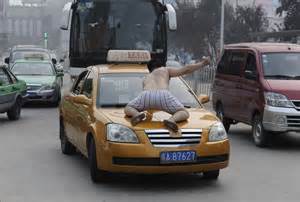
Sometimes you just have to take off your clothes to really express how pissed you are....
Sometimes you just have to take off your clothes to really express how pissed you are….

And the one thing that happened on our last trip to Guilin also happened on our way out of the city. Though it wasn’t as bad, and much less elaborate, it still annoyed me.

Before hailing a cab we were assured of a certain price, or at least what a ride should cost, to our destination. The driver we got, however, only saw me as a white face with zeros attached somewhere. He wants a ridiculous amount, and when we counter he basically just says, foreigners are all rich, that what he’s asking is nothing. This is, sadly, a way of thinking here. It gets a lot of foreigners in tight spots. People just think we all have money. When you claim you don’t most won’t believe you.

At first, the driver only talks to Xiao Ming and I stay silent, just listen. They go on a bit, but then I finally interrupt. I ask him why he’s giving us trouble. He is surprised I’m speaking Chinese, but not for long. He asks me, “What trouble?” I tell him that he knows, “what trouble.” I add that if he doesn’t want to take us then he can just stop and we’ll get out. I tell him we’re not in a hurry and that we don’t need him. Wo men bu zhaoji. Bu xu yao ni song wo men.

He then changes his tune a bit. He offers to take us to a bus stop nearby. At a normal price, we get there. Then, as we’re getting out, he says something I don’t catch. I ask Xiao Ming what it is, but she doesn’t tell me until we’re on the bus. Chinese girl with a foreigner—what does she thing? His tone, she said, had a lot of venom in it. When she told me all I kept thinking was, “I want to break his face”—the one with a nose and eyes on it, not mianzi.” I wanted to chase the narrow-minded buttnugget down and…But she calmed me down, and soon we were driving away from Guilin and to the airport.

These have been a few of my experiences with the Chinese Taxi Driver, a species of worker who sometimes sees every fare as an opportunity to practice their own special style of kung-fu: the art of the grubby paws.

Now, don’t get me wrong, I’ve had some pleasant ones (singing with a cabbie, a driver who gave great local descriptions, and even one who saved me money), but the bad ones are just more plentiful, and they have the potential to ruin your trip to some degree.

Some of the foreign teachers I met when I first got here had a phrase that helped them see their way through the hard, inconvenient, and downright strange times: T.I.C-This is China.

Xi’an Day One

I brought a new notebook with me on my recent trip to parts of the Shaanxi and Henan Provinces. It fit in my jacket’s inside pocket, and even at seven-thirty am, after having already been up a few hours, I was taking notes as the plane ambled around on the tarmac. As the plane lifted off I asked my friend how to say things like, “board plane,” “fly in the sky,” “gate,” “take off,” “land,” and “turbulence.”

I’m not afraid of flying in the least, but now that I’m older I prefer the aisle seat over the window. More leg room.

I feel like I could write about plane experiences all day long. Especially as a foreigner on an Asian airline. I go back and forth about how to talk to the flight attendants—Chinese or English—in my head, and no matter what I choose, they use the opposite to respond. I don’t get it, either. People are fun, too. Just like anywhere in mainland China, if there is the slightest chance of standing in a line everyone and their brother will fight to the death to be the first in it. Of course all this accomplishes is a long, crowded, irritated line where people are just holding their carry-ons and staring at one another for ten minutes.

The other day I looked up how to say, “Don’t push me,” surprised I had never used it before. In fact, to this day, I’ve never heard anyone utter the words. It reminds me of the time I asked my friend how to request privacy when speaking with a doctor. She looked at me, baffled for a moment, and then told me that Mandarin doesn’t have that word. She was serious.

Now of course they do have the word for privacy, and even a really indirect way to ask for it, but the fact is, when asked, she had a hard time thinking of a response, and it wasn’t due to poor English skills. It’s because they just don’t consider an individual person’s personal space. I haven’t gotten a chance to ask for privacy with a doc, but next time I need to see one you can be sure I’ll be shooing the half a dozen strangers lurking in the room out of it.

I digress.

The trip from Dalian to Xi’an, one of the ancient capitols of China, was pretty quick. Only about 2 hours.

Just like in Kunming, a shuttle bus from the airport got us to the hostel. This hostel, like many of them, is located on a skinny back street that many would just pass by without a second glance. I like narrow streets. People are forced to interact, children play in them and tangle with the “adults,” and when a little restaurant has an outdoor area almost everyone on the block is there chatting and eating. Skinny streets have a lot of life.

The Han Tang Hostel, not to be confused with the Han Tang Inn located 100 meters away on the same street, is a hostel to contend with. You walk in and realize you could be in a bar, restaurant, or some snazzy hotel, not just a haven for the weary trekker.

Every week the place hosts “events and outings” for their guests at no cost. A trip to the Muslim Quarter, Tour of the Wild Goose Pagoda, Dumpling Making Night, Live Music, etc. The food is Western style, and even though it’s a bit overpriced, it’s freakin’ good. The rooms themselves are comfortable, too. You’ve got your normal choices: dorm of 4-10 beds, doubles, or privates. Always go with the dorms, guys. Why travel if you’re just going to be a strange loner. The beds are bunk-beds that are almost too comfy, and the shower is AMAZING. It was better than two of my old apartments’. Just saying. Friendly staff with buttloads of intel on the area, and ridiculous work ethic. Seriously. One girl who checked us in around 1 pm and closed that night at midnight also opened the next day at 6 am. The girl’s a beast.

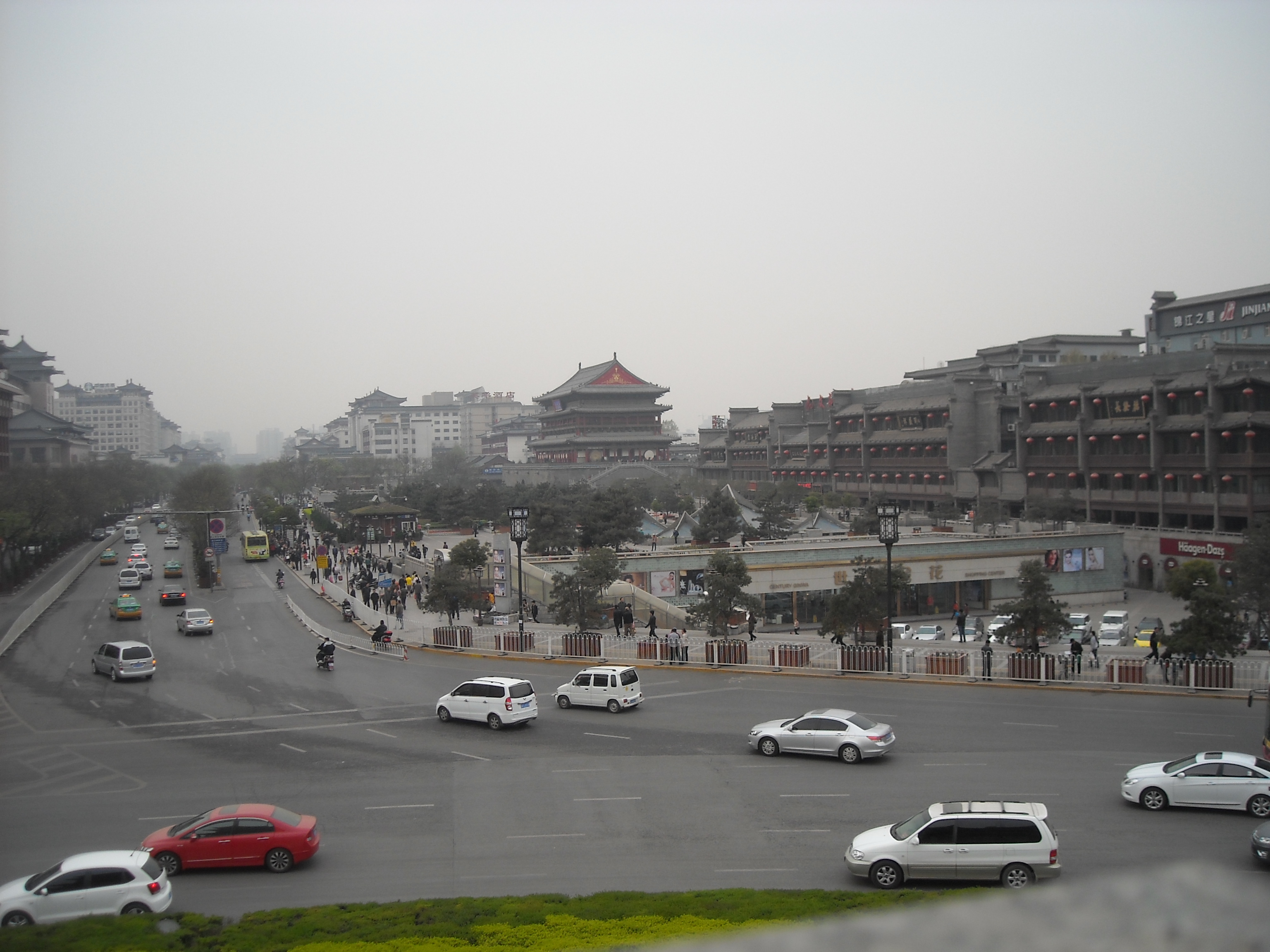
We dropped our stuff in our room and got cleaned up. Ever notice when you travel you just feel like you need a shower even if you took a shower that morning? Once we were good to go we checked out a few nearby sights. We got to the Bell Tower and the Drum Tower, two largely remodeled and refurbished structures that served true and useful purposes back in the day, around the Ming Dynasty. Today they are about a block apart and a large, busy intersection separate the two. A fancy looking shopping center sits behind the Drum Tower. At both there are ancient relics from the past, as far back as the mythical Xia and Shang Dynasties, about 5,000 years old.

Me...next to a big bell...
Me…next to a big bell…

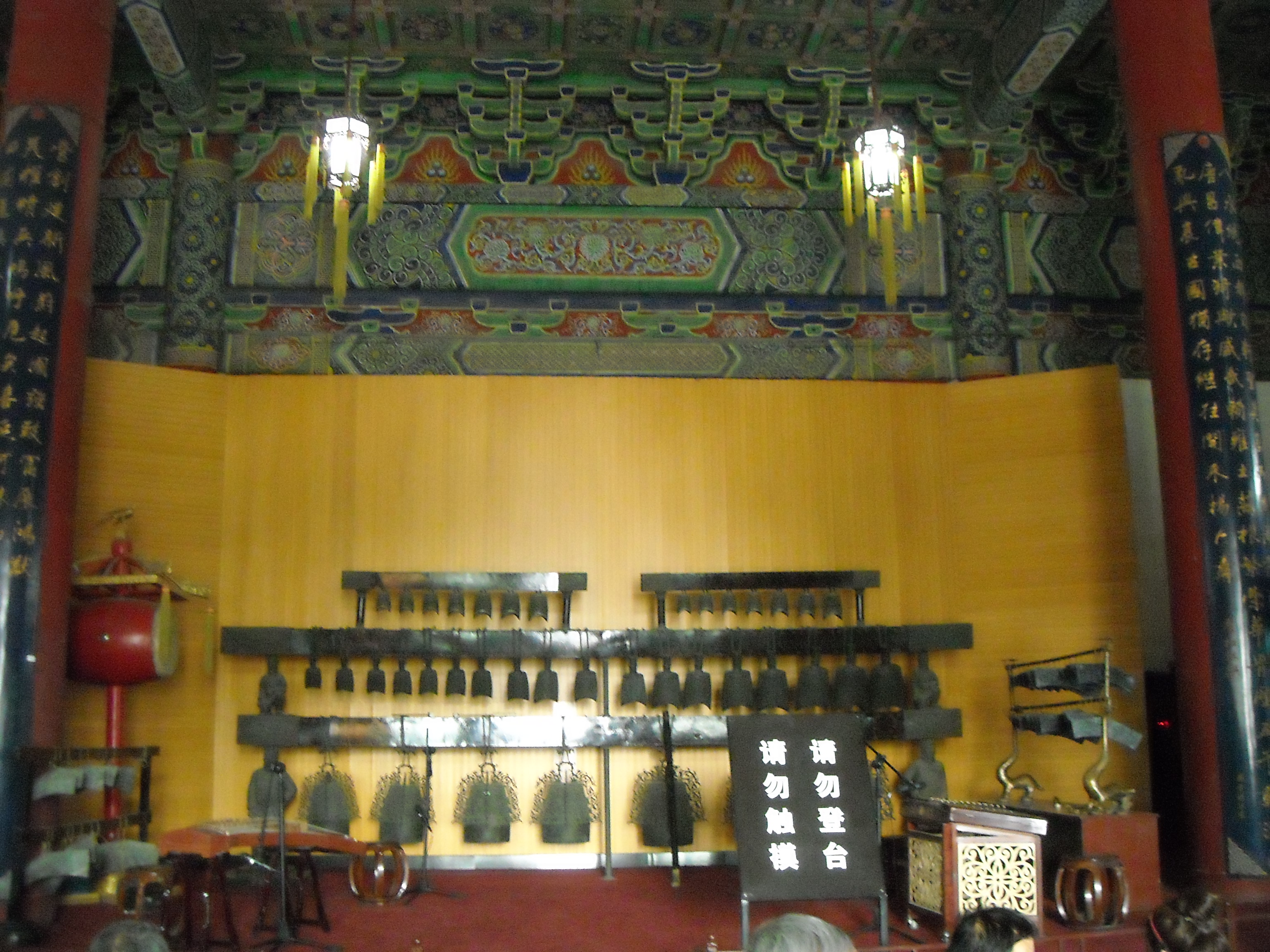
At the Bell Tower there is a complete replica set of bells that were dug up from the first emperor’s tomb, Qin Shi Huang. We caught a Bell ringin’ show, complete with a few other traditional Chinese instruments. They played two legitimate Chinese songs, and then on the third one I found myself humming along…because they were playing “Old Lang Syne,” the New Year’s Song. Yup.

The replica set.
The replica set.

Xi'an and Henan 021

Xi'an and Henan 025

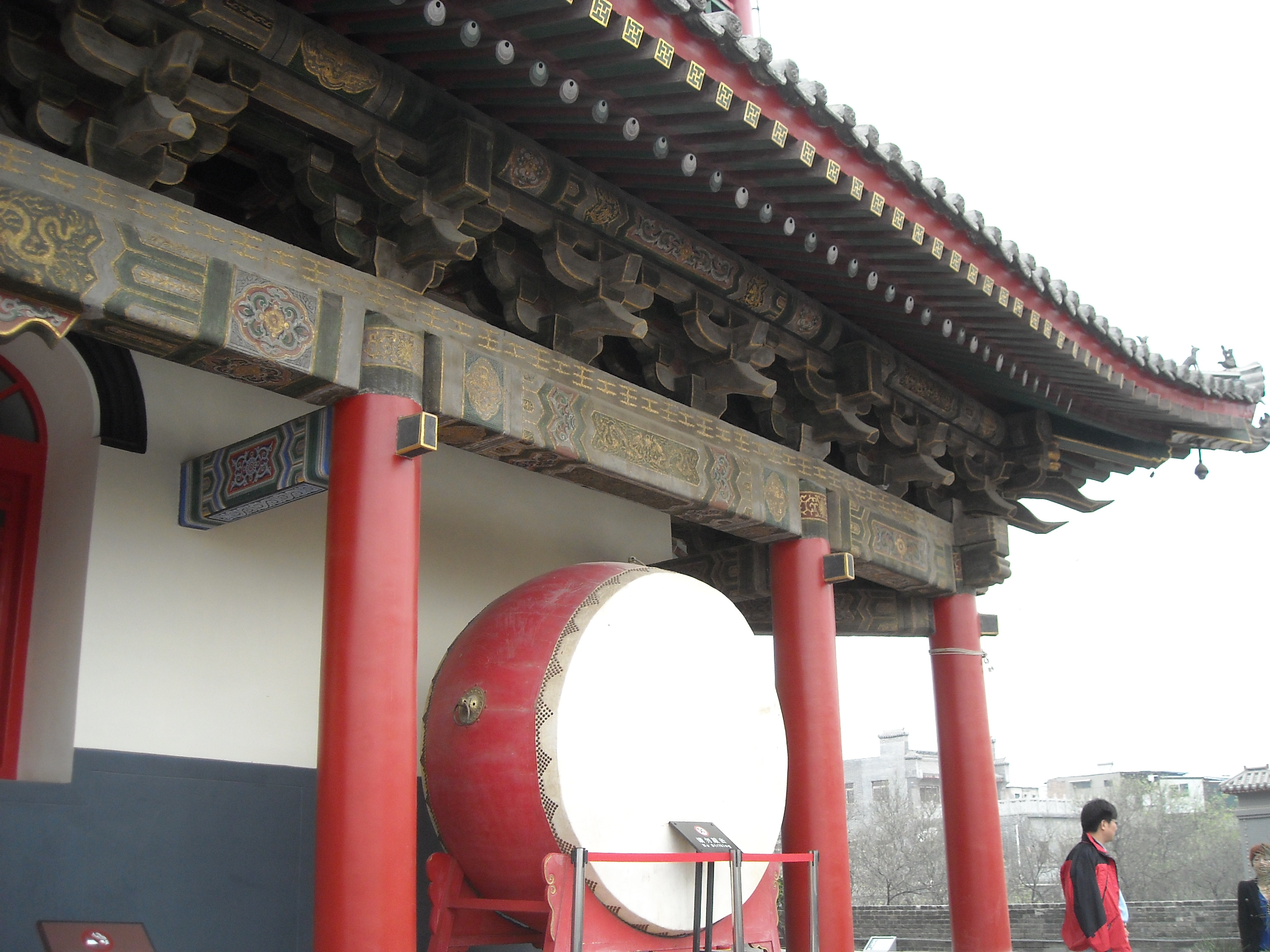
At the Drum Tower it was much the same, except for, you know, the show being a Drum show.

Xi'an and Henan 032

Xi'an and Henan 038

Xi'an and Henan 008

That in the distance there is the Bell Tower....
That in the distance there is the Drum Tower….

But at both places I picked up some souvenirs. Two that I got for my mother and brother I picked up from a woman with Ox Bone necklaces. She was a tough old bird who I worked on for a bit before I got her from 63 Rmb to 35. There was this really cool eagle carving that had the head of an eagle and the bottom part was a talon. It reminded me of my brother’s tattoo, so that was his. My mom’s was a necklace that had the two characters for “Peace,” “ping,” and “an.” The woman wanted 28 for my bro’s and 35 for my mom’s.

We had scanned them without much comment accept to ask the price before going to see one of the towers, but then we came back on our way out. It’s my “Haggle Policy” to never come back to a merchant once you’ve already walked away, but since I hadn’t really initiated a negotiation with her the first time, I let the rule slide. Plus, I wanted them.

I started looking around at other carvings I knew I didn’t want, asking prices and holding them up to my neck. I eventually asked about both of the ones I did want, but passed over them nonchalantly. When I picked up one (that I didn’t want) and asked about the price I tried to haggle her down without much success. I gave in easily and set it down. Then, acting like it was my consolation prize, and catching the look in her eye that said, “Buy something, Pleeease,” I picked up the eagle one and asked. I asked her to come down a bit and she did, a little. I then made a move to group two together for a lower price. She was for it, but still wanted too much. When I finally snatched up the two I actually wanted we had been going around for about ten minutes, with me “almost” walking away. She was eager to sell something at this point.

Being a foreigner speaking and negotiating in Chinese, I had brought a bit of a crowd to the table. This wasn’t good. She was representing China now. So she didn’t want to bend. So I cooled it, and bided my time. Once most of the others had wandered off I began talking to my friend about how these would make good gifts for my mother and brother. The woman perked up then. The Chinese are Big into family. You have no idea. So then she started helping looking for other nice ones and we reentered into the wheelin’ and dealin’. When I got her down to 45 she was pretty hard looking. She kept waving her hands, and my friend said that was the best. It wasn’t getting’ any prettier.

Then I told the woman in Chinese what I told the man in Thailand using English. “35 and I’ll buy these right now.” I added that they weren’t for me, but for family, and….she caved.

And then I had them carve “Xi’an” into the back of my brother’s necklace just for good measure…and the memories.

My friend couldn’t believe I got her so low without the merchant being royally pissed, but I knew it was fine. She wouldn’t have kept talking if she wasn’t willing. And plus, in the time we stood there she sold a bunch all because we were creating a crowd.

Don’t look at me like that; saving money on vacation is a tricky endeavor.

We wandered around the streets then, taking in some local scents and scenes. Another skinny street with a bunch of merchants, restaurants, and overhanging trees…and people, people, people. There’s an idiom in China that goes, “People mountain, people sea.” It basically means there’s a lot of flippin’ people. But you already knew that.

Xi'an and Henan 040

Xi'an and Henan 041

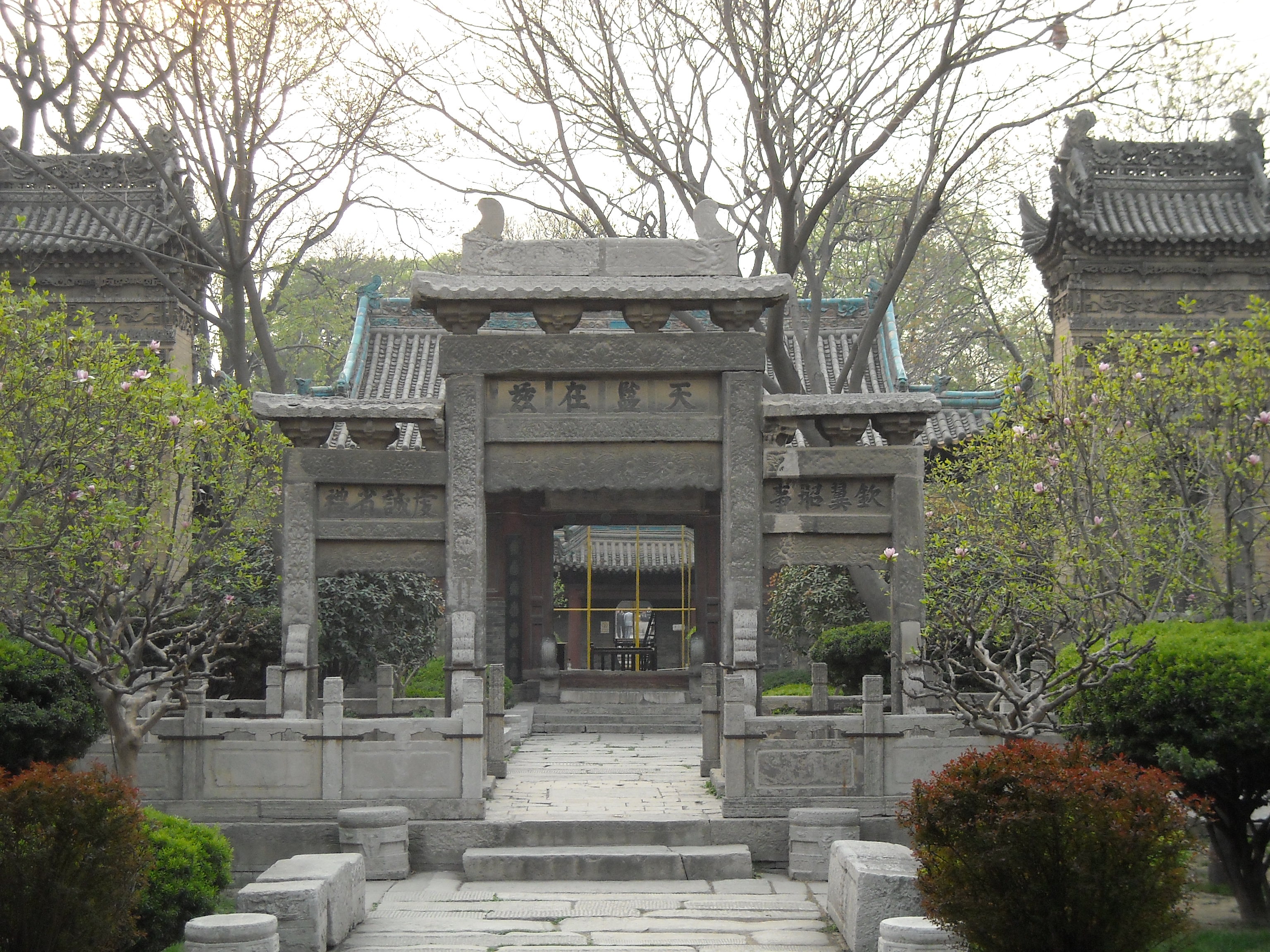
We headed to the Great Mosque next. It wasn’t far, just a few blocks away. We had to shimmy and shuffle through tightly packed alleys with a million merchants hawking their wares. Everything from imitation Dynasty currency to T-shirts sporting Obama with communist slogans on them could be seen. Once we got through it all, though, we came to the “Great” Mosque. With a name that literally brags about its awesomeness, I was expecting something…greater.

"Wei Ren Min Fu Wu" "Dedicate service to the people." This is a phrase good ol' Mao made well known. It's a phrase still used by the military.
“Wei Ren Min Fu Wu” “Dedicate service to the people.” This is a phrase good ol’ Mao made well known. It’s a phrase still used by the military.

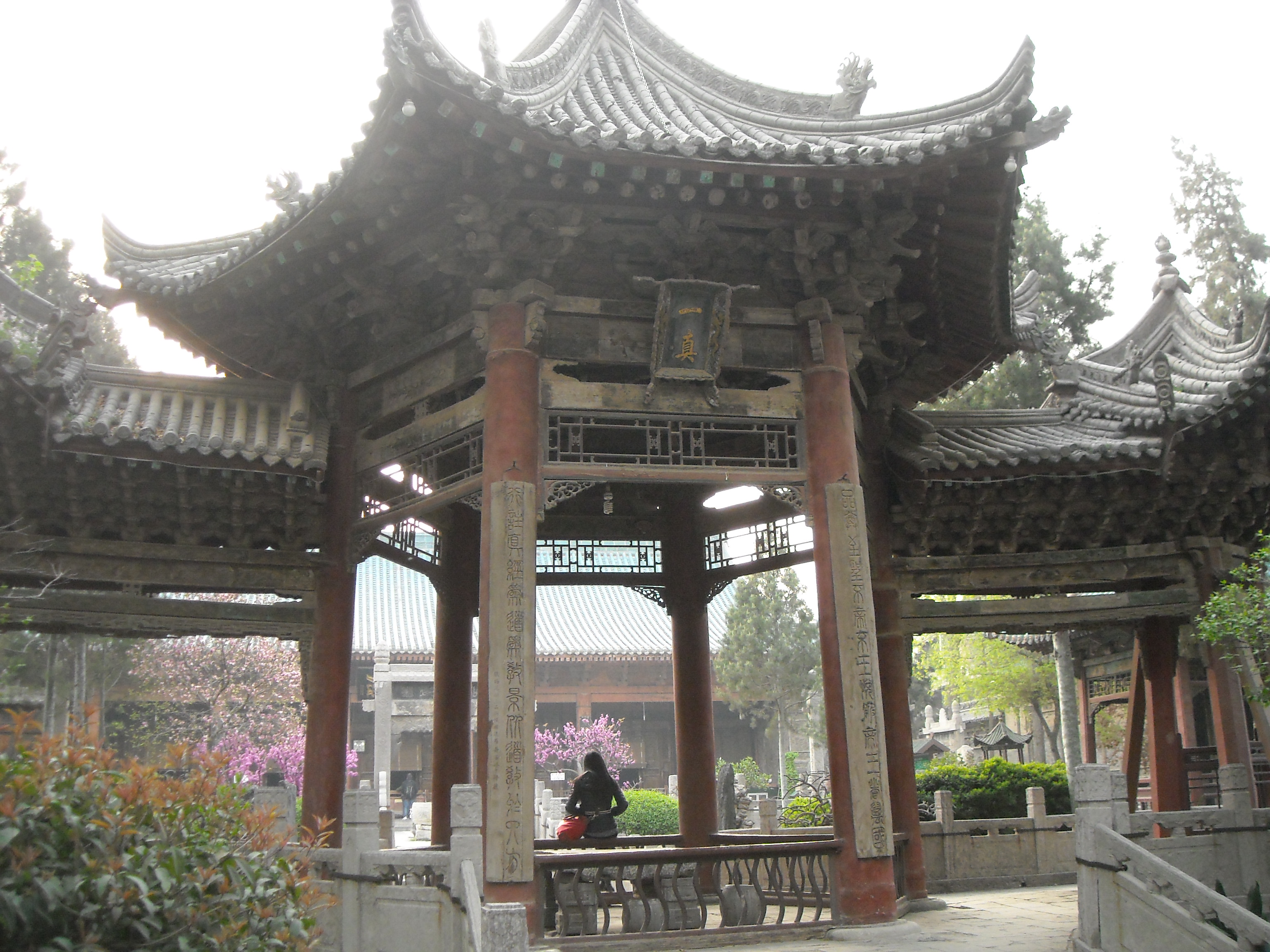
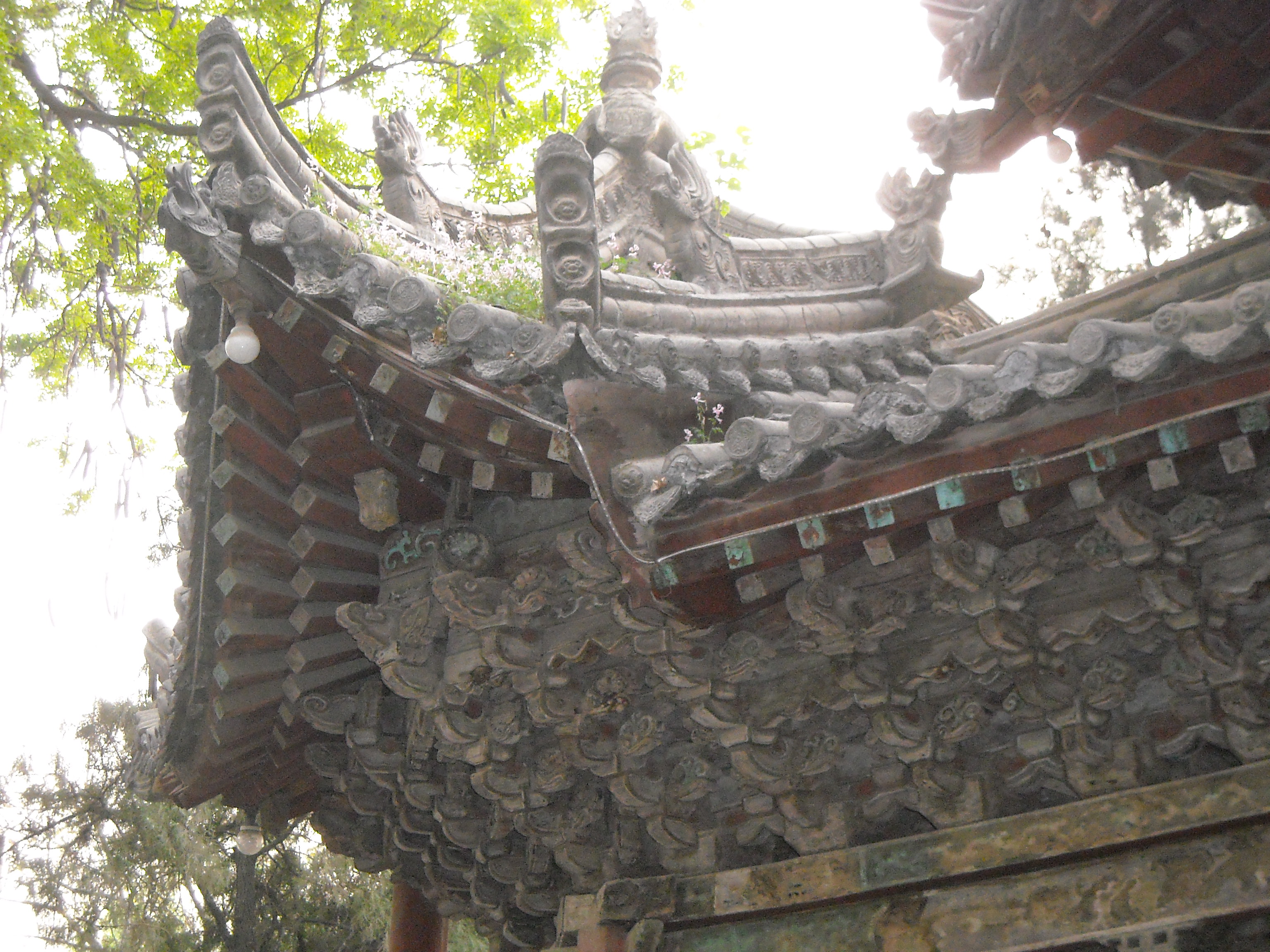
The Mosque is definitely an ancient, meaningful, still-in-use place of worship, but when you hear Mosque certain images are conjured. What I saw fit none of them. The whole place is Chinese style. Built in a long rectangular shape with big open-air courtyards and symbolic gazebos and stone tablets, the place looked more like what you’d see in an old Kung-fu movie, not the Middle East.

Xi'an and Henan 052

Xi'an and Henan 064

Xi'an and Henan 067

In that notebook I mentioned earlier I had a running commentary on the trip. Let’s see what I wrote about the GM: “Blond children Kung-fu fighting in the Great Mosque, Muslims in business suits, and a wooden sign protruding over the top of the wall proclaiming free wi-fi at a nearby café.”

The kids were with one of the very few Western families we saw. The bother and sister were running around the courtyards chopping at each other. The business men seemed to have just finished up with a meeting and were walking around in a herd. The wooden sign peaked over the stone walls of the Mosque and made sure we knew we were in the 21st century.

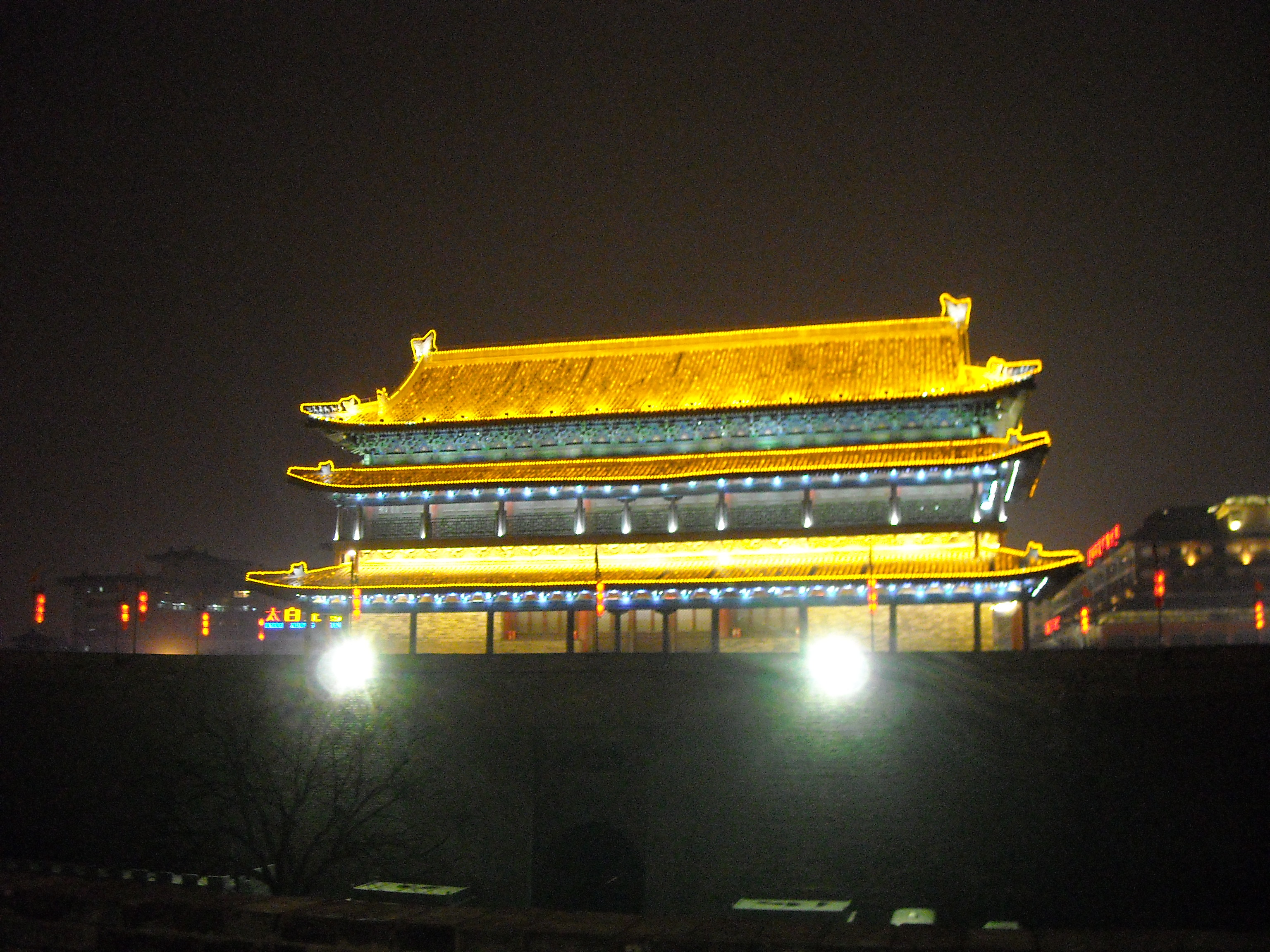
Afterward, we hiked it to the South Gate of the City Walls. Xi’an’s City Walls are, I think, the only fully intact city walls. The existing wall was started by the Ming Dynasty in 1370. It encircles 5.4 sq mi, a much smaller part of the city than the original. The wall measures 8.5 mi in circumference, 39 ft in height, and 49–59 ft in thickness at the base.

We got there around 6:45 and bought a ticket to get in and walk on the walls, but renting bikes and riding along the whole perimeter was our goal. Problem was, the rental place turned us away because they were closing at 7:30 and it takes 100 minutes to cover the whole wall. We went back down, told the other people, the gate people, the problem, and they just said we should have still been able to rent the bikes up until 7:30 with no issue. We ended up wasting 15 minutes arguing with them to either give us our money back or just let us ride the damn bikes. It was actually a good set up because the gate people sold tickets to get in and walk on the walls. Technically they had fulfilled their side of the bargain. The bike people were a separate organization that owed us nothing.

In the end, they rented the bikes to us for 50 minutes and grumbled about just wanting to get off work. We took the bikes and zipped off into the fading light as evening truly descended. It felt great riding on the walls at night when no one else was there. We could even see a few stars, something that’s actually more amazing than you might think…especially in a Chinese city.

Xi'an and Henan 077

We rode along for a while, picking up speed and just watching as parts of the city passed by. And then, around 7:45, we peaked behind us and noticed an electric cart following us. We kept going, but eventually they caught up and told us we needed to hop on with them and ride back. They wanted to get going. The whole time they’re talking to us I’m circling them on the bike. I ask my friend what time it is, and then I say, “Okay, see you back there.” I take off back in the direction we had come and dart through the night. I ride as fast as my legs can take me, looking back just a few times. The cart didn’t even come close to me. The cool air is circulating in and out of my lungs, my legs are burning, and I’m fairly certain the chain on the bike is about to bust any second…but I keep going. Something about the whole hassle with them closing earlier than they should have, the way they just were jerking us around…it propels me like a bat out of hell.

I made it back to the bike rental place and had enough time to hop off and put the bike back in the line where it belonged before the cart rolled up. The two workers look like they want to lop me off the side of the wall, but my friend just smiles at me and says, “You’re awesome.” I ask her what happened when I took off and she says they were irritated, but when they tried to catch up to me they couldn’t. Immature? Probably. Would I do it again? You bet I would.

Of course that night I began coughing. It would be the start of a two week cold that I’m pretty sure I deserved.

When we got back to the hostel we found that we shared the room with a Chinese guy, a Chinese couple, and two Norwegian girls. With day one down, we grabbed some western food, more showers, and slept like babies in the bunk beds.

Day Two would be the day we saw the Bing Ma Yong, Terra Cotta Warriors.

Sanhuofan

San huo fan—a going away meal. The pin yin tones are 4th, 3rd, 4th on the characters. Apart, these three characters translate to “To break away/Dispel,” “Companion,” “Meal.” My current Chinese teacher explained it, too.

“Chi wan fan, fen kai.” “After we eat, we separate.” She said it’s the final meal before moving on.

Last week we had our sanhuofan.

Teachers, Coworkers, None of us strangers and all of us Friends.

I don’t know if it was a traditional one or not because a week later we’re still around. I know that’ll change for many soon, but as for now, we’re still together. The school is in a rocky period of transition that has come upon the heels of news it was closing. A few months ago we were told about the imminent closing of our doors, so people did what people always do: We reacted. For most that meant seeking employment elsewhere—I was/am having meetings with a handful of training schools in the area to secure a steady position. Some of the Chinese staff has already moved on to different jobs and even the Western staff is looking ahead to an immediate future apart from the school. All of this is natural—to be expected—when you tell people the place is shuttin’ down.

As I said, though, transition. The school is not done. The owner has moved out of the country, but a new one is at the helm. Changes abound—some not so good. Customs are a tricky thing, and generally speaking, the school was always been very helpful at bridging those cultural gaps with minimal amounts of inconveniences and annoyances. I’m talking about common business practices, polite social etiquettes, creating good supervisor-employee rapport, and even simple personal boundary manners. Yes, the cultures of the East and West are often times at odds with each other, and yes, you should be sensitive to the practices of the country you’re in and give them priority (maybe), but when you’re working within a company that prides itself on blending the two’s cultures I feel it’s OK to be a little miffed when things start to deteriorate and those holding the reins aren’t listening to the solicited advice they are receiving.

In China (holds breath so as not to make an overly general, borderline insensitive statement), it seems that those in power have this idea that the people who are working for them or who are under their influence don’t have the capability to handle information without it being spun or heavily filtered (and then makes one anyway). With such an emphasis on saving face (mian zi), and a reliance on the social/political/professional benefits of relationships (guan xi), it can be terrifically difficult to get straight answers—or answers at all—from those in high positions, express genuine emotions or even practical advice (even when it’s seriously needed). Anyone who has lived here, and I hope I’m not leaning into the condescending, pedantic territory reserved for those who think they know what they’re talking about, can tell you that these things happen at all levels of employment, and to some extent, personal relationships.

Par for the course, you say? Not a golfer, says I.

But it really is. Color it the price of doing business here or whatever you want, but it does happen, and as a wai guo ren (outside country person: Foreigner), I don’t have a whole lot o’ options. The best I can hope for is that I’m partnered with an organization that is both conscious of the differences between the cultures, and willing to round out the rough edges to make the environment professional and conducive to getting things done properly. Just as a side note, previously, that’s how the school has been run. I’m still holding on to hope for this next chapter.

And…

One year ago today, Noelle and I arrived in China.

Banking, Business Cards, and Babies

There’s a rooster somewhere nearby crowing, only it sounds more like someone gave a megaphone to a drunk sheep and convinced it to sing a Ray Charles song. It’s about 11:15 am and he’s been at it for a while now, so I can only imagine that whoever is using the thing as an alarm clock keeps hitting the snooze on the overgrown bird, or he’s trying to spice things up and set a new pace to the day. Either way, the rooster isn’t what woke me up; it was the fireworks blasting off somewhere down the road at 8:20 this morning. Probably some construction crew signaling the completion of the sixteenth floor of whatever building their workin’ on. Yes, yes, even as I’m crawling out of bed it’s apparent that I am, in fact, in China.

That’s not to say I don’t enjoy a good old fashion explosion in the morning; I’m usually smiling when I realize it’s not an air raid. It’s all par for the course here in China, or so I’m slowly learning.

Ups and downs still abound, but I’m happy to report a nice up swing as of late. Our school has seen fit to give us our very own business cards, and I gotta be honest: I couldn’t help feeling a tiny bit of puerile pleasure at seeing my name in bold with the position of Education Specialist next to it. We have a whole stack of them, and after placing one in my wallet and vainly staring at the others for a moment, it occurred to me that I don’t really have anyone else I need to give one to. So I’m thinking that everyone gets a free business card from Jordan in their Christmas cards for years to come!

Another positive note is that we’ve finally attained success with our banking qualms. For nearly two months we’ve been trying to send money back home, and this week it actually worked. While banking in China as a foreigner is a bit tricky, it still should not have been as difficult as our situation turned out to be. On the other hand, banking here has been the only time I’ve ever been considered a VIP client. As foreigners Noelle and I have always bypassed the grab-a-ticket-and-wait-in-line gamble on the first floor and gone to the second, apparently more affluent, floor. Again, cue the childish excitement. However, with the troubles we’ve had to overcome, I can only wonder how many blockades stand in the way of the multitudes that don’t get expedited service.

At the end of the day though, I still find even the inconveniences interesting hurdles that need to be jumped, not horrible pitfalls of a developing country. Through it all we keep learning. Everyday we get a chance to fail miserably with our limited Chinese, but with each exchange we make we correct a mistake.

Both of us are finding new areas of interest, too. Noelle has gone to a local orphanage with a few other teachers and her love of all things miniature has made that a passion of hers. Through her visit we’ve learned a little about the bizarre and overly complicated state of adoption here in China, and we’ve had our eyes opened to the common misconceptions of everyday health concerns that many Chinese seem to harbor. I don’t know if anyone in history ever said the condition of a nation can be reflected in the way it treats its poor, orphaned, and destitute, but I think it’s a damn good thought. It becomes clear that China is still a developing nation when you encounter and interact with the system that inundates and tangles those children in needless bureaucratic mazes. From what I’ve gathered, and it is supremely limited by my ignorance, the situation surrounding orphans can seriously be labeled a plight of some magnitude.

Our staff at the school, largely informed by another passionate Western Teacher, has gone several times to the orphanage since we’ve been here. It’s becoming a weekly venture that I haven’t had the opportunity to be a part of yet, but next week’s outing is coming up quickly and I have no excuse.

On a completely unrelated and slightly more selfish note, I’ve developed a fascination with the ancient travelers—Chinese and European—that made major discoveries of exploration in Asia and even parts of North America. Something about the unbridled sense of adventure and wonder in these men and their endeavors sticks with me, and I find myself thinking more and more about their legacies each day.

Someone recently mentioned to me that some of the young adults in China today feel as though they are, for lack of a better word, lost. Generations before have had battles to fight, injustices to right and changes to make. So many feel that their lives have gaps that can’t be filled because there are no causes to rally behind or quests to undertake. Sure, the countless stores catering to every sort of style and commercial fancy can distract the hordes of consumers, but even through it all people can feel the empty spaces. What I can’t seem to shake is the feeling that this is not just a Chinese dilemma. Even in the US the young people embody that rebel without a cause mindset without even knowing it. Rebels with no focus are simply agents of anarchy, and no one really wants to get behind that, right?

I guess it boils down to one thing, and it’s funny because this one thing is what I’ve been battling in my own life and within my writing for a long time now: we all want to find our voice and we want that voice to say something worth saying. I think my fascination with those voyagers of so long ago stems from a very universal appreciation for those that changed the world, or at least added to our understanding of it a little at a time. Maybe by diving into the past I can help elucidate an answer for the present, at least for me anyway. That’s all I can do, really–try to make sense of the world the way I see it.

We’re teaching, learning, and living in a place and time that has much to offer…

Heck, I’m even trying to learn how to play Chinese Chess!

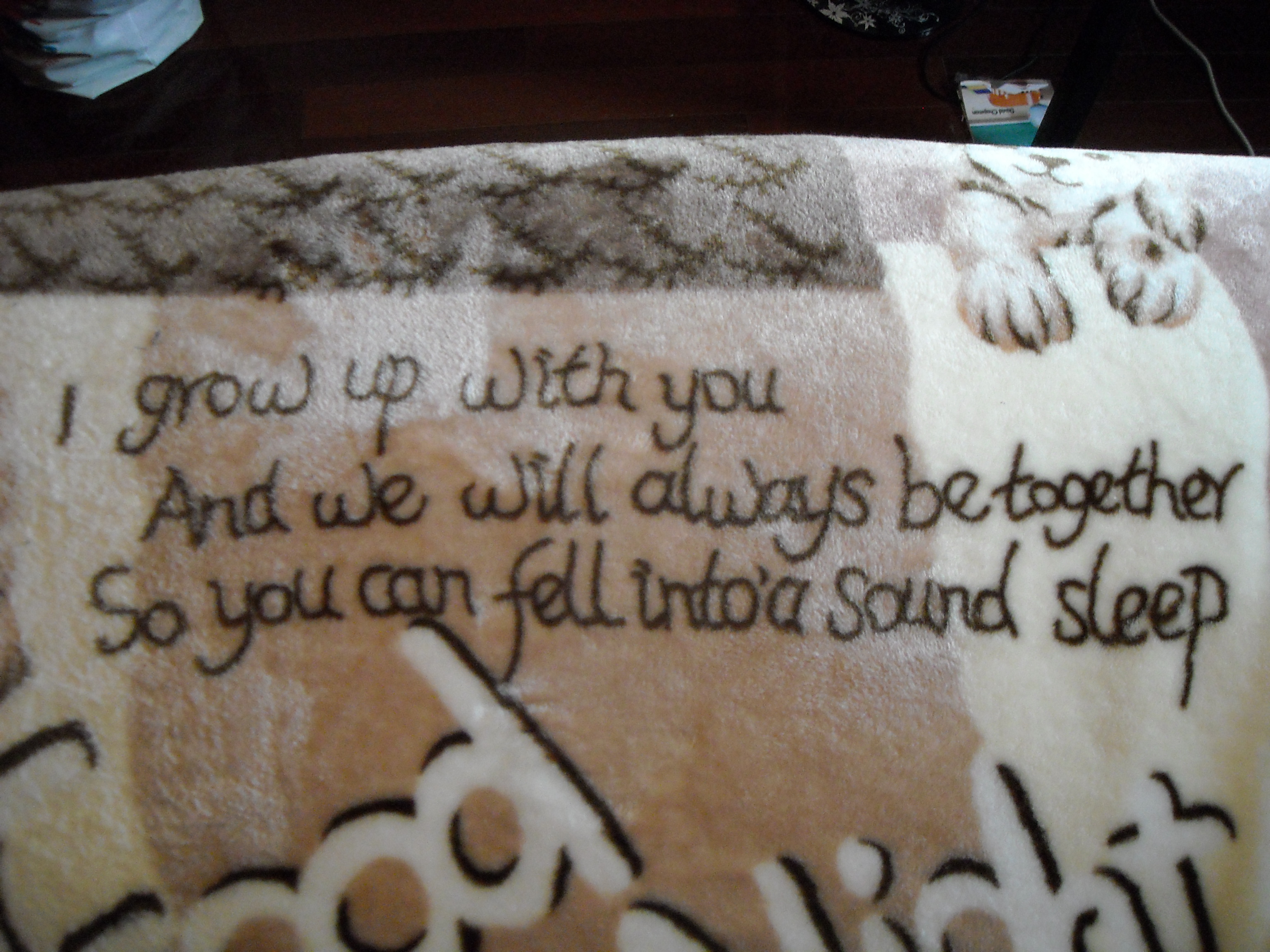
More Chinglish: A blanket Noelle bought with puppies on it. I’m just curious about the contraction “into’a”….what is it contracting?
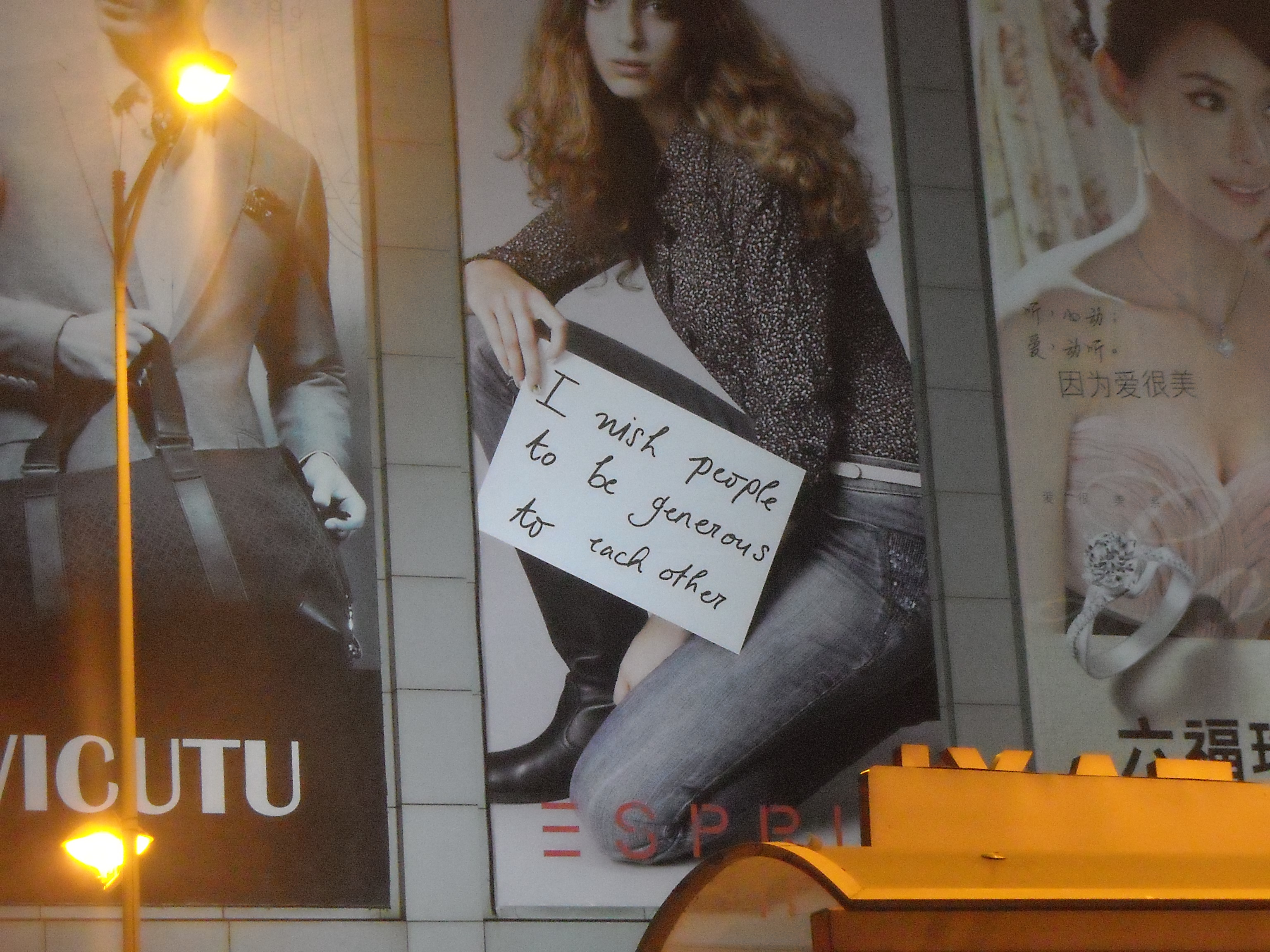
This one is up for all to see in the big shopping area…
This is the big Christmas tree in front of An Shang, the shopping mall. It’s actually very comforting to see them at least acknowledge the holiday with festive decorations and Christmas carols in the stores–even if the songs are in German, Chinese, and English.
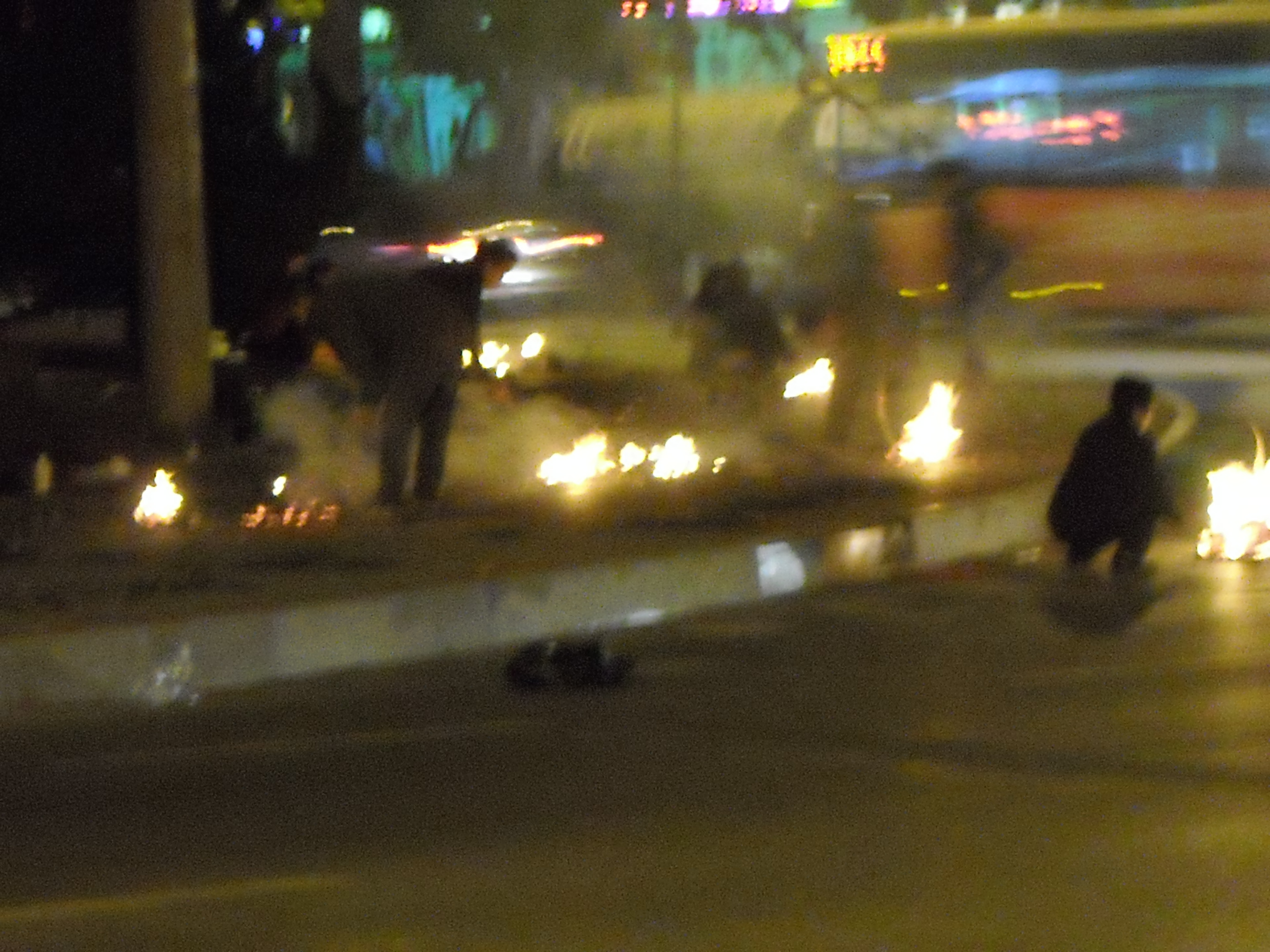
I’m sure I don’t fully understand this, but I’ve been told that this is a common practice. They are burning paper money so that their ancestors or deceased loved ones can have money in the afterlife. They simply burn the paper right there on the corner of the streets and let the flames die down on their own.  I’ve witnessed this several times here and each time I’m struck with many conflicting thoughts. Even so, this is a very interesting practice. I call them Fires to Heaven.