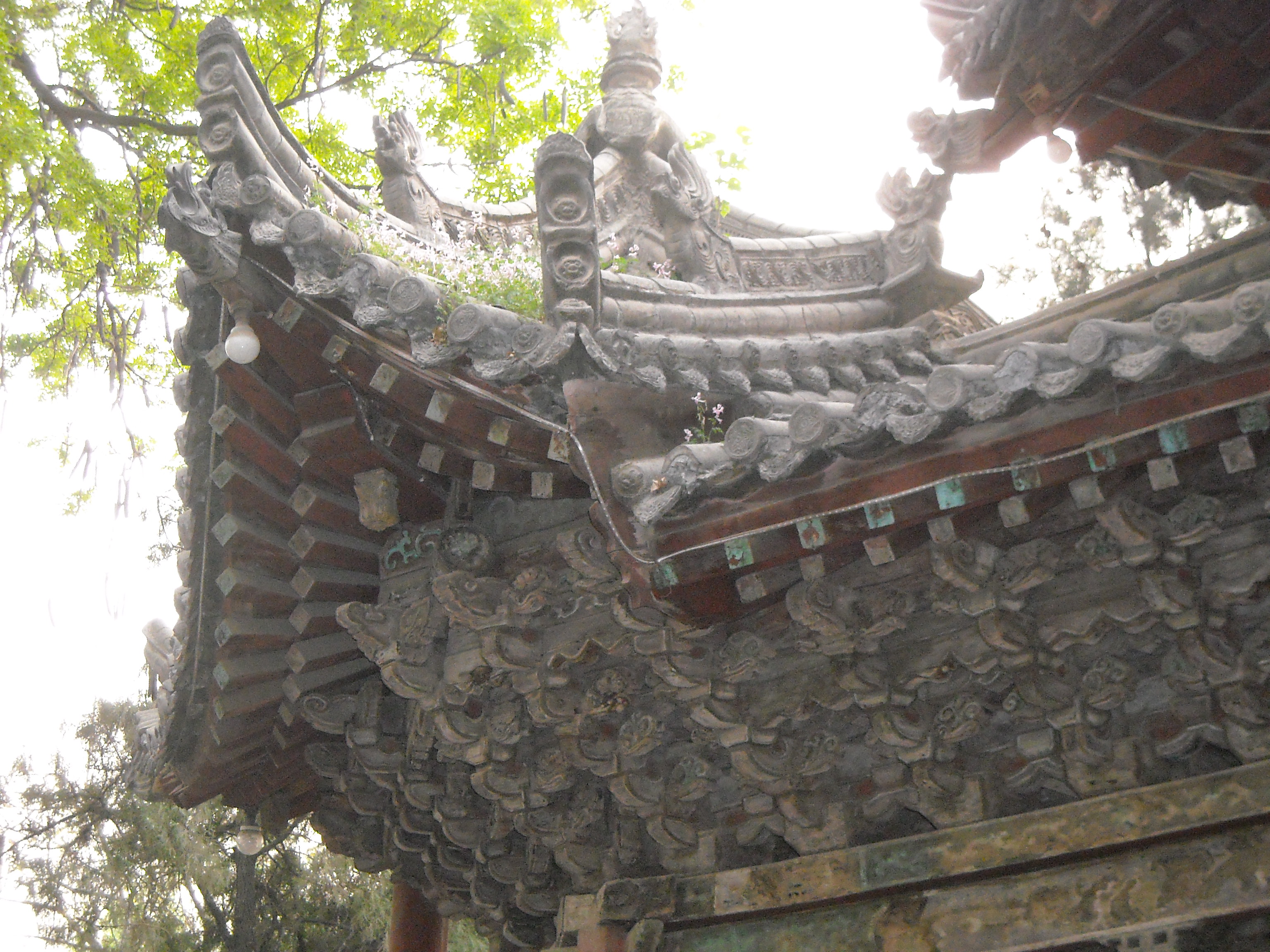
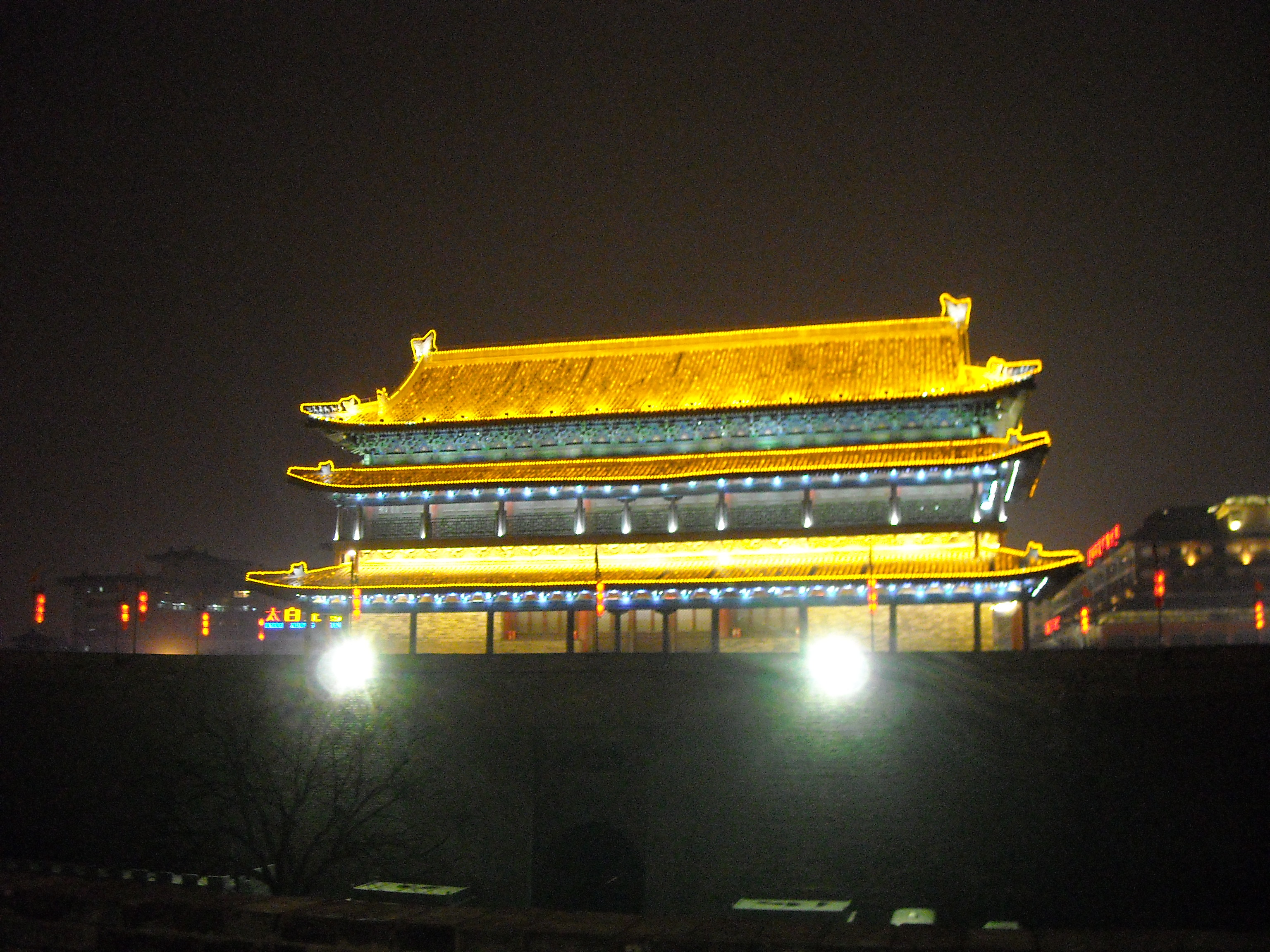
Thinking about going abroad? (My thoughts)

The other day someone asked me six different questions about being here, my work, and just what I thought….I decided to post my article on here as well.

I’ve also posted this in the “What you need to know” section of my blog because I think it fits there nicely.

My name is Jordan and I’m from Ohio, but for nearly two years I’ve been calling Dalian, China my home. I came over here with the expectation of staying for one year before returning home and getting an “adult” job. One and done, that’s what I kept telling myself, but before long that mantra became like a propaganda tactic that I really didn’t need or want to listen to. When my one year contract came to a close, I decided to stick around another six months. My coworkers were excited, and my supervisors didn’t need to replace a Western teacher (an arduous process here). So I settled back in and enjoyed the time.

I absolutely loved the training school I worked in for the first year and a half—the other teachers, the Chinese staff, the students, and even the building had a unique appeal to it that I will never forget. I enjoyed the walk into work on the nice days, and the convenience of my apartment’s central location. Dalian proper is definitely an urban setting with all the pros and cons of one. You’ve got access to just about any kind of cuisine, attractions, shopping, good public transportation, and parks. You also get great big whiffs of exhaust from all the traffic, the grit and grime of a city getting over populated, and the general chaos associated with a metropolis on the rise. But I don’t live in the actual Dalian city.

Dalian’s Development Zone, or Kaifaqu, is a twenty minute Light Rail Train ride north of the city, and has a much slower, almost quasi-urban-suburban feel to it. I love it. Everything I need is within walking distance, but for those lazy moments the ubiquitous taxi or bus is always available, too. While still technically a part of Dalian, Kaifaqu has its own aura. Seriously. Stationed so close to the coast, there’s always a sea breeze to cool you down, and though the beach is rocky, there’s plenty of swimming in the summer. When I first got here I wandered around, a lot. I took walks almost every evening, just to get a good look at the place. I walked at all hours, usually by my self even though a few coworkers chastised me for doing so at late hours. Even with their warnings, I felt safe. I still feel safer here than I did in my home town.

In the summer, when the heat is too much and you don’t want the stony beach of Kaifaqu, Golden Pebble Beach to the north is the place to go. Just a fifteen minute Light Rail Train away is the “ritzy” side of Dalian. All of Dalian has a large amount of foreigners from all around the world working with many different companies, but in Golden Pebble Beach there are a lot of North American teachers of all disciplines. Two international schools with great reputations entice them to stay a few years, but the area also has a few other cool features. There’s a nice beach, an amusement park, and it’s one of the only places you can escape the curse of one of China’s most well-known idioms—People, mountain, people, sea (ren shan ren hai). The crowds haven’t quite made it up there, but in a few years we’ll see. Plans to move Kaifaqu’s center closer to Golden Pebble Beach have been put into motion, and China loves construction.

My certification as a Secondary Integrated Language Arts teacher has come in quite handy, and is really the big reason I’ve been able to seek other employment opportunities in the area. To get here, however, you don’t necessarily need anything but a Bachelors degree. China has been making it hard to get over here for anything more than tourism, but it is possible. Get your degree, passport, and jump online and start applying. I went through Footprints Recruiting, and they worked as a liaison between me and the first school I worked at. Not only that, but their website www.footprintsrecruiting.com and their Facebook page https://www.facebook.com/FootprintsRecruiting  have a wealth of information about China and other areas around the world that regularly have postings for teachers. Going through an agency like Footprints put me in contact with a trustworthy school in the smoothest way possible.

Though I hold credentials for the high school English classroom, the majority of my students the first year were under the age of twelve. At first I wondered if I had what it took to be in that age range, but after just a few classes my hesitancy fell to the wayside. Learners here are a different breed of student, and for the most part that actually works to a new teacher’s benefit. Respect for elders, the desire to earn the teacher’s praise, and their peers’ admiration are three elements I’ve noticed that sort of collude to make the classroom a politely controlled and often hassle-free space. I had to design classes around asking questions just to get them to raise their hands and let me know what they were thinking! Once they get to know you, though, it’s anybody’s guess how they’re going to behave. I have kids hug me, poke me, try to use qigong to (play) fight me, and ask me to throw them into the air between classes or when we have a break. They like to give gifts, and it was only after a few stomachaches and colds that I realized I needed to stop accepting the damp cookies and candies they were handing me with their dirty hands.

I’ve gotten to teach some memorable lessons, including one about Mexican food like tacos. At the end of the unit about Mexico, I decided to have the class make tacos for real. I readied the ingredients: lettuce, tomatoes, tortillas, cheese, olives, and I even fried up some beef. After teaching the vocabulary and the instructions for the receipt we dug in and made them. We snapped photos and the kids had a good time putting their tacos together, but not all of them grasped the concept of how to eat them. Some students nibbled on the very top of the tortilla where there’s no filling at all while others munched on the middle of the bottom. The ladder resulted in a few messes as the filling just spilled out! Still, others placed the taco on a plate and used a fork and butter knife to cut into it. I let them play around until finally I showed them the right way to eat them. After that, we all enjoyed our tacos the right way.

Seriously...one of my favorite classes I've taught here at Jayland this year.
Seriously…one of my favorite classes I’ve taught here at Jayland this year.

My time here has been filled with experiences like that, some inside the classroom and many outside. The clash of the cultures isn’t so much a clash as it is a constant blending that a lot of the times results in humorous misunderstandings and always something learned. Everyone will have a different experience, though. No two are ever the same, and the location will affect this in a multitude of ways. Depending on what province or city you’re in, China will present you with plenty of opportunities to make your own stories.

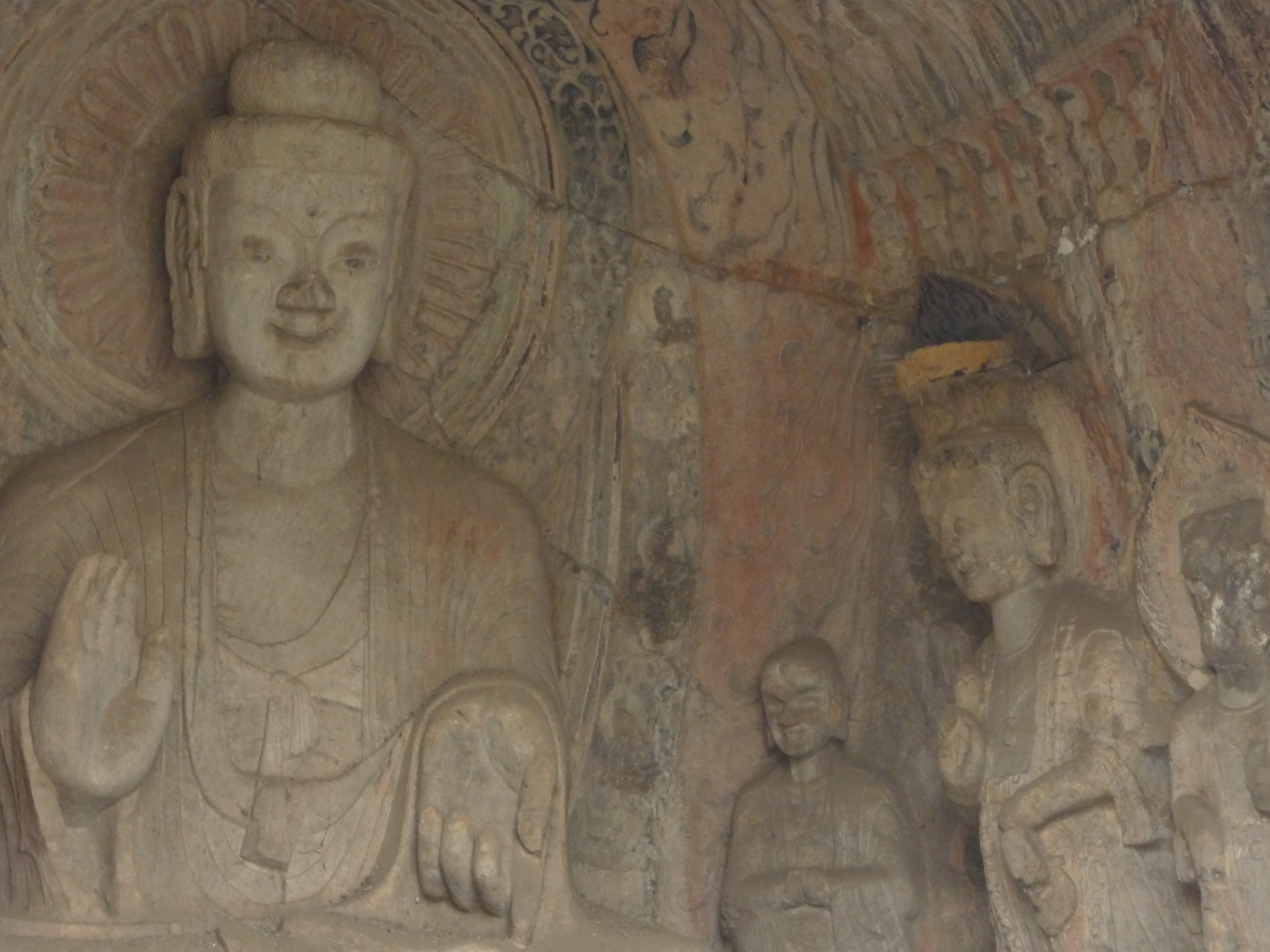
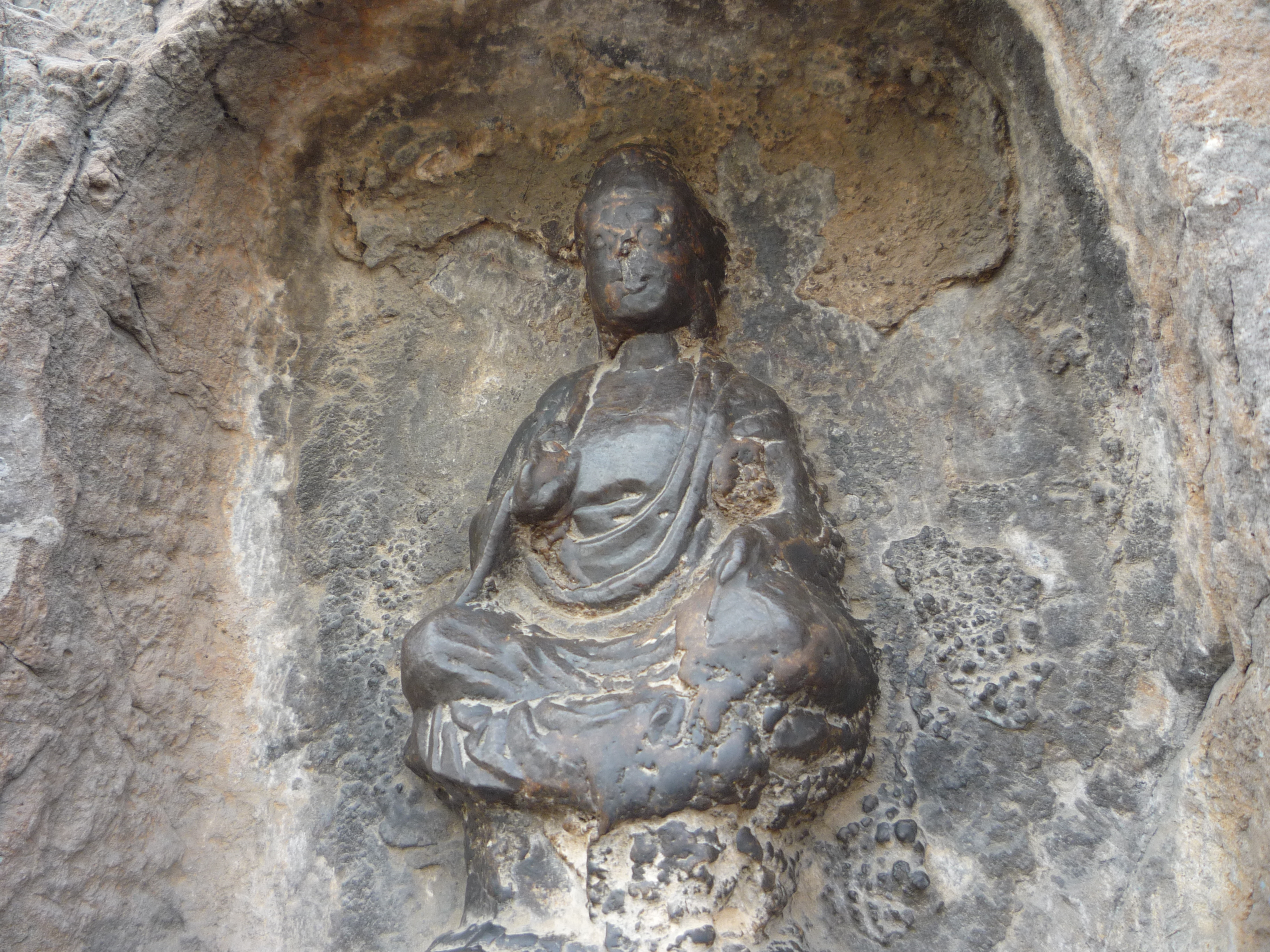
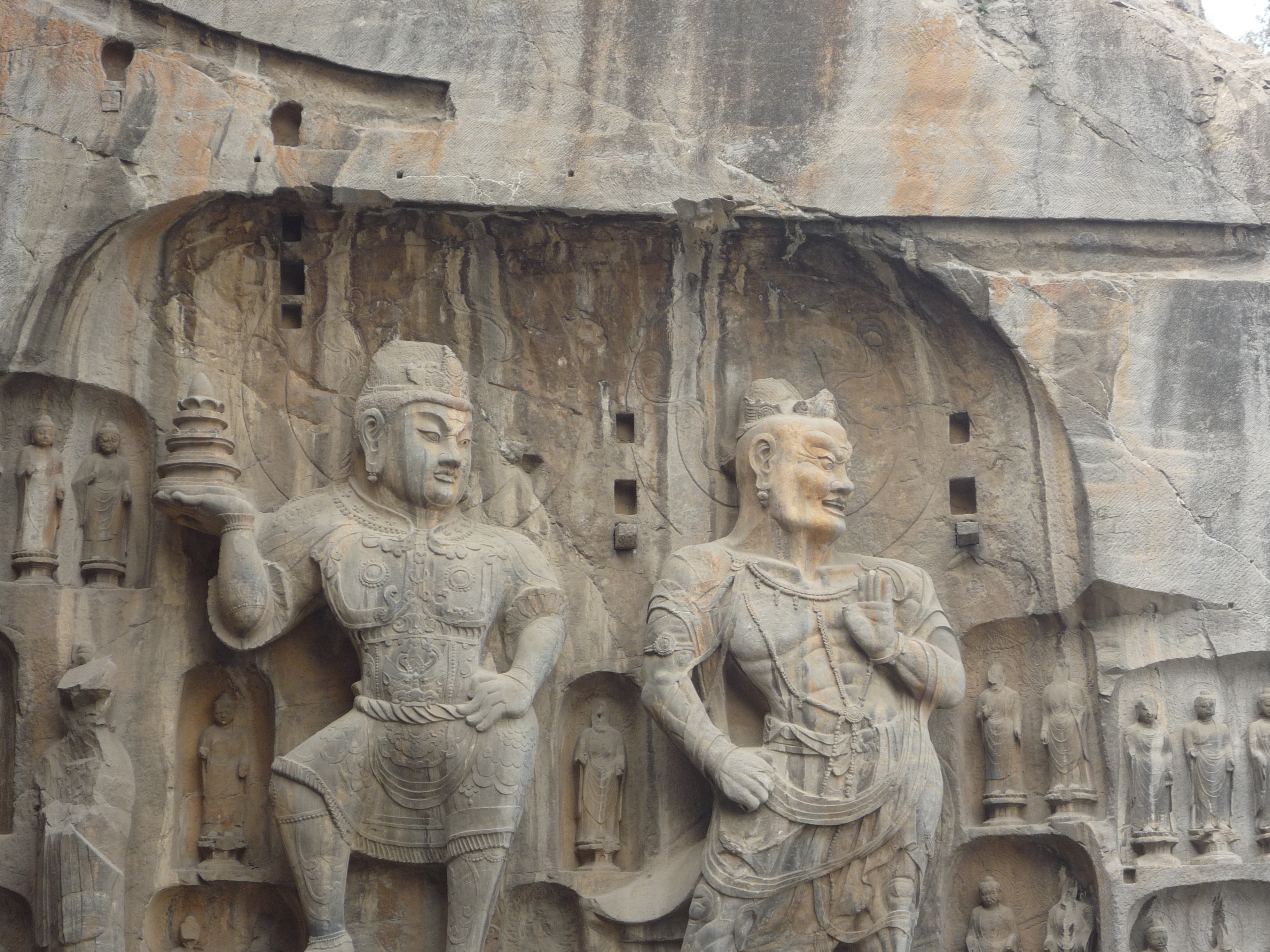
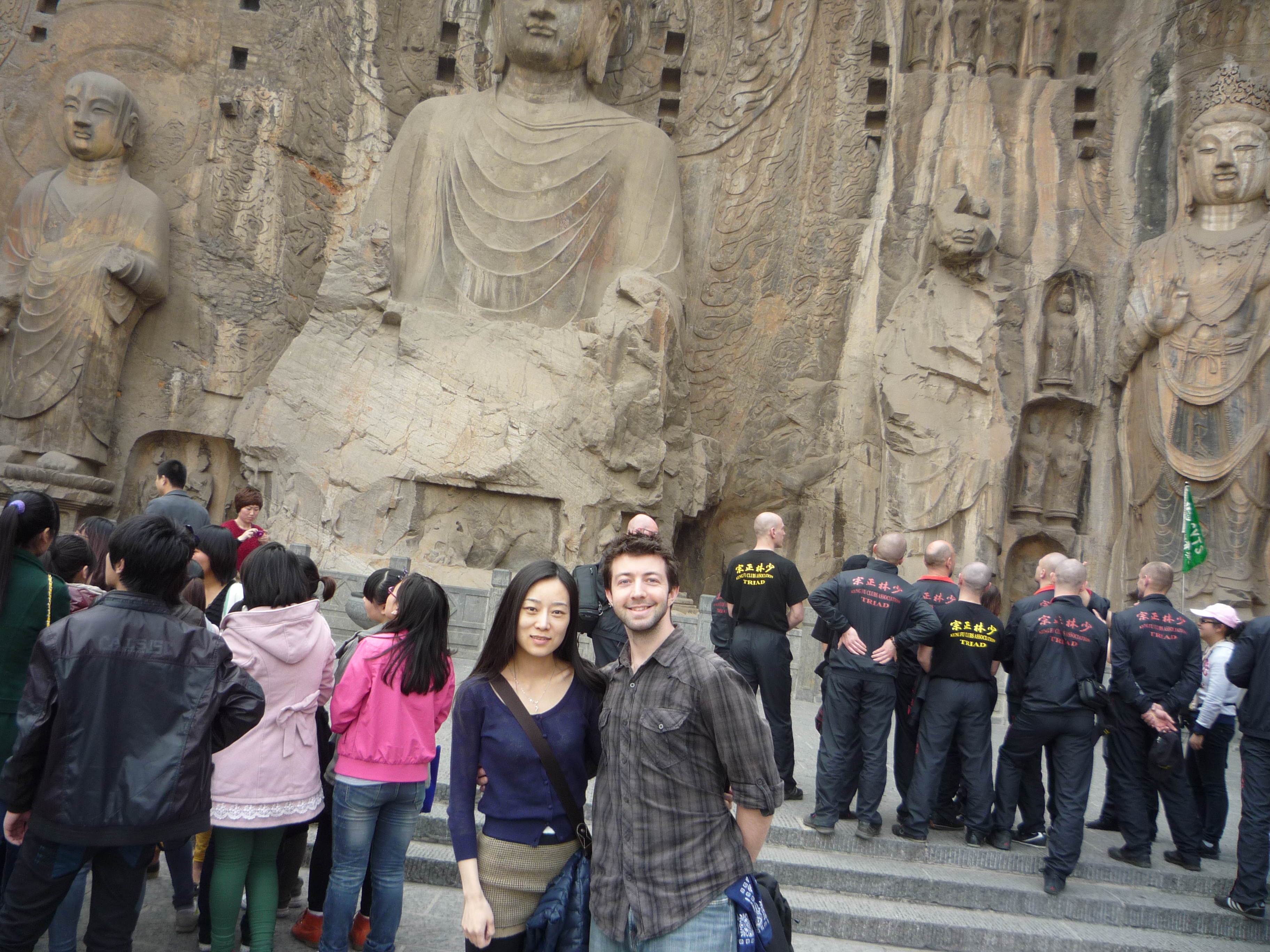
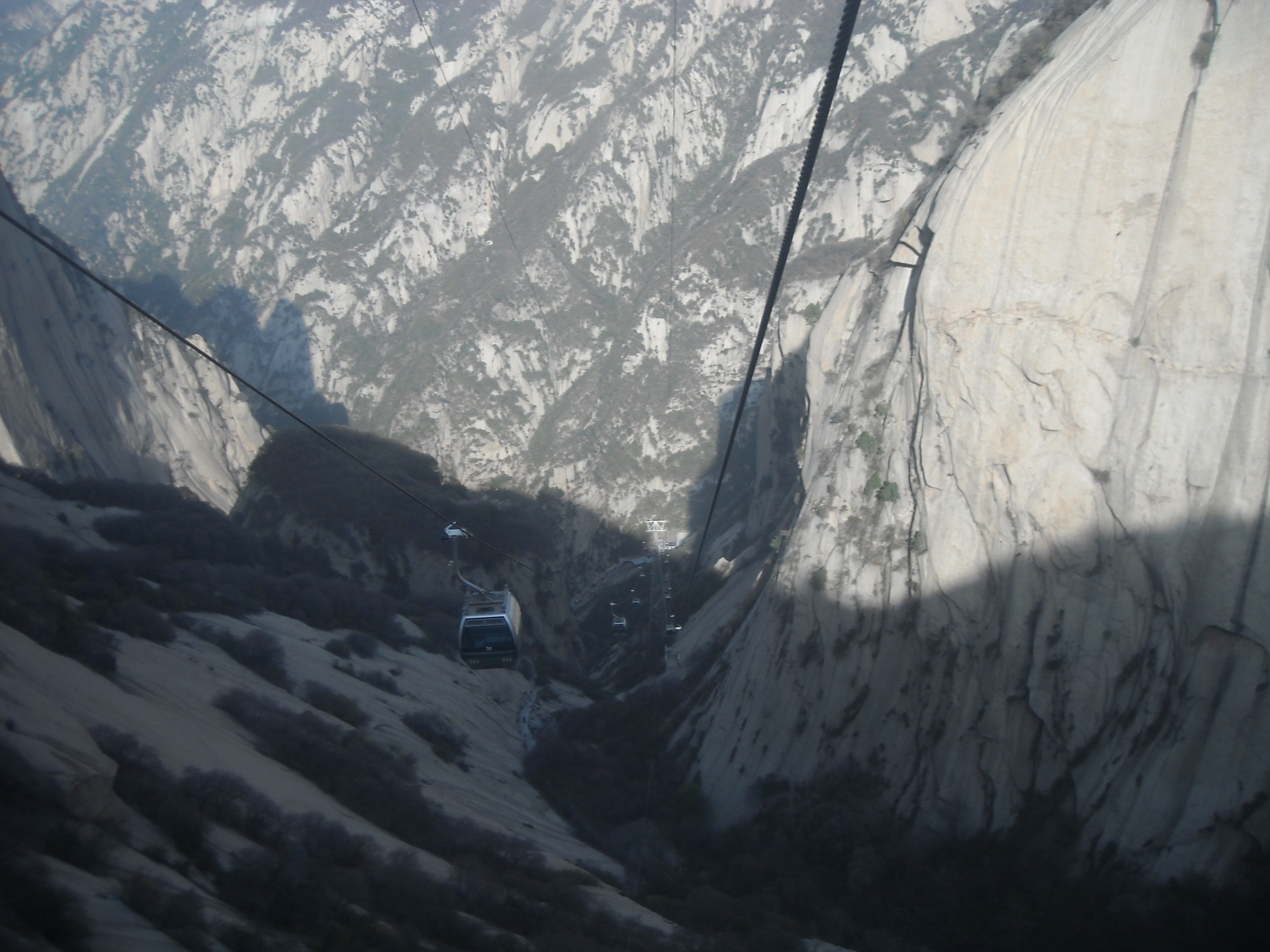
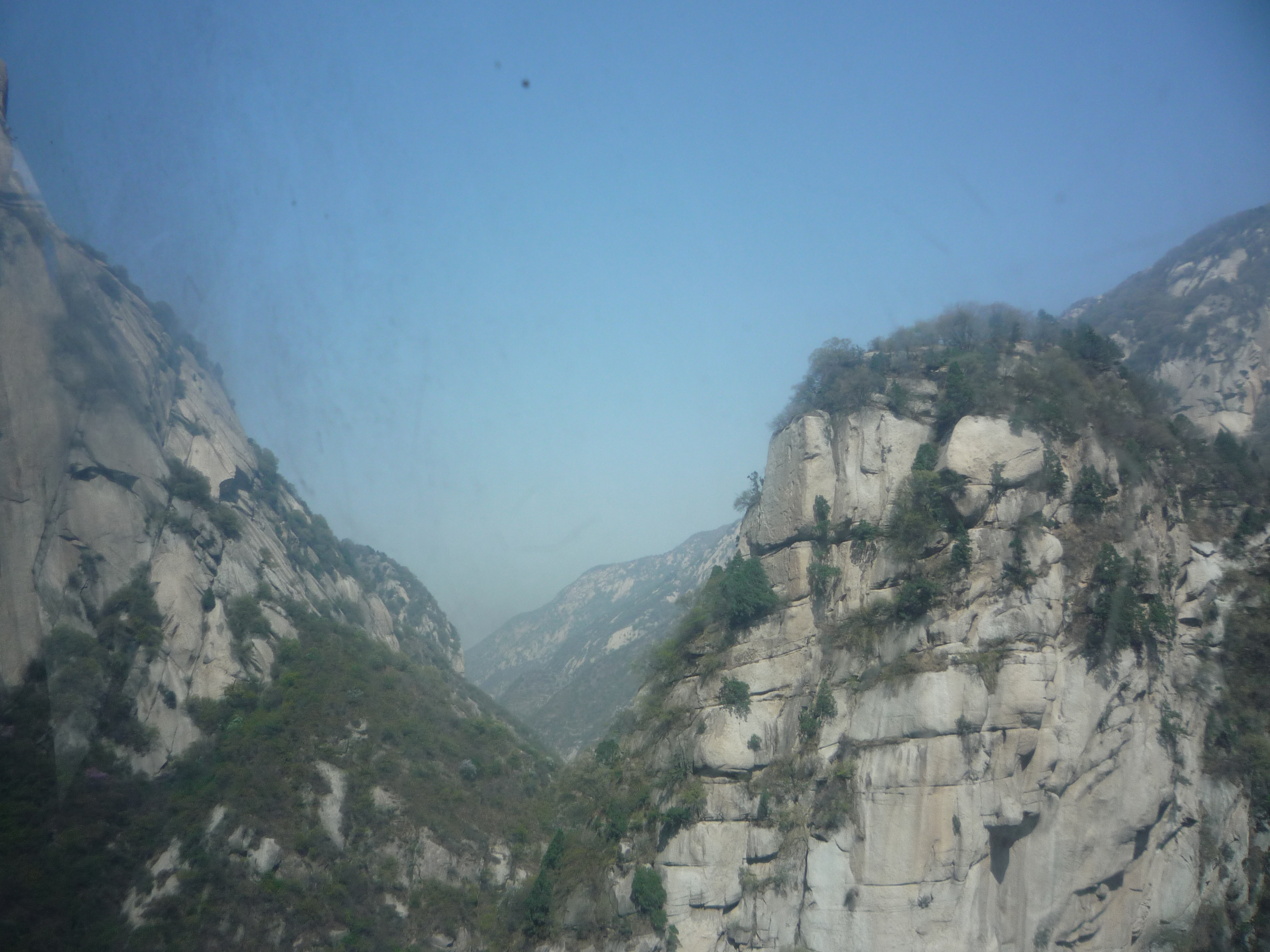
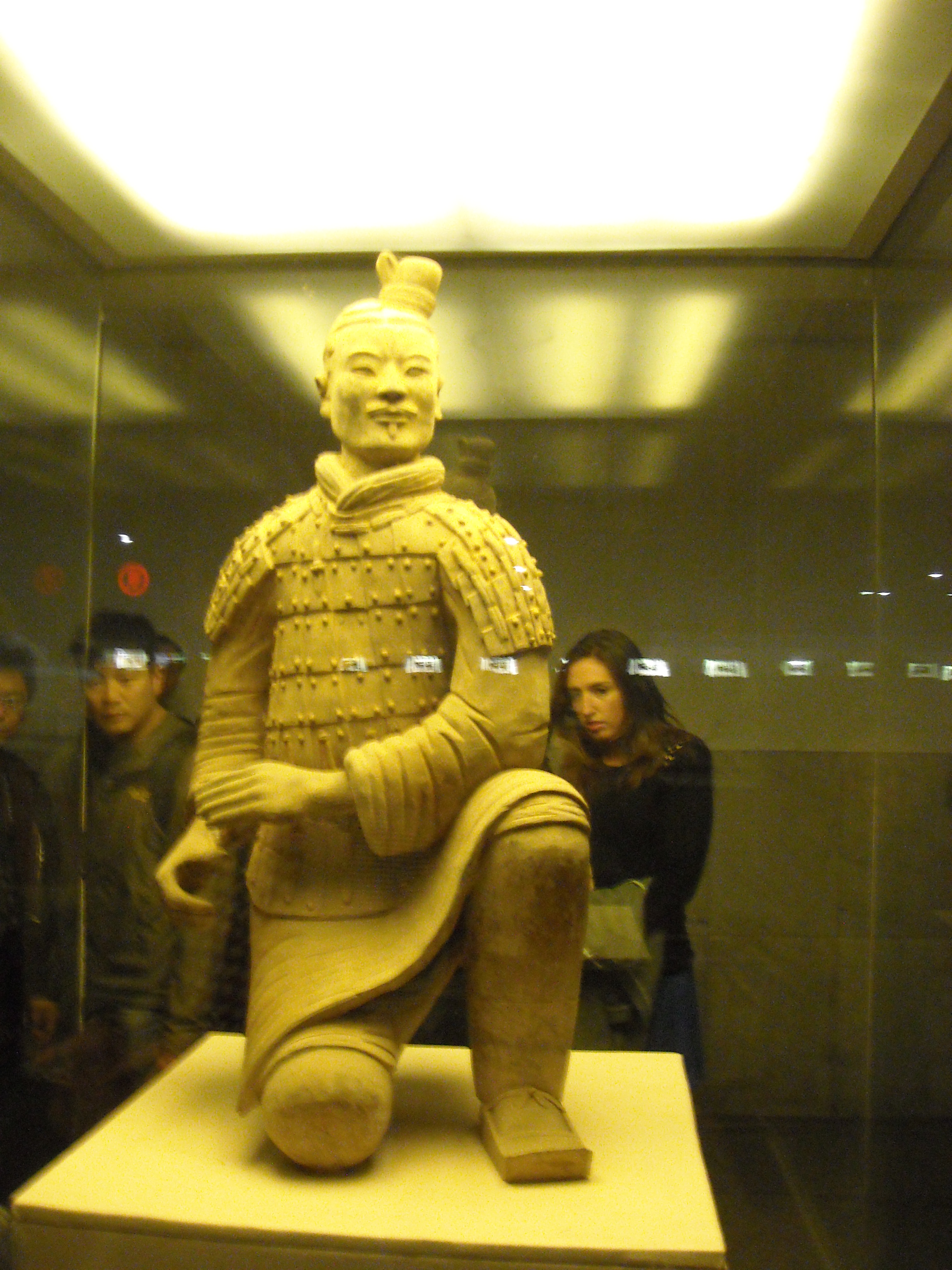
During my time here I’ve gotten to see a handful of pretty cool places. I’ve visited Beijing and seen the Great Wall and the Forbidden City, Xi’an and the Terracotta Warriors, and even Luoyang and the Longmen Grottoes. Natural sights such as sacred Hua Mountain and the beautiful scenery of Guilin and Yangshuo are fantastic, too. Even old Song Mountain where the Shaolin Temple has stood for hundreds of years is a wonderful destination. But if you’re going to live in China, I truly believe that Dalian, and even more, Kaifaqu, is one of the best places you can be. Dalian is a young city by Chinese standards, but it has an interesting history, great parks to see, a nice zoo, some beaches, a lot of job opportunities, some friendly and open people, and I would recommend this coastal city to anyone. No matter where you go, people will always want to get out, to travel. I talk with people all the time here who just want to see different areas of China. They don’t know why I like it here so much, but I tell them that one man’s back yard is another man’s adventure. And I’m still having a great time.

Getting the qualifications and choosing a destination are two big steps to moving abroad, but I would offer a few pieces of advice if you’re looking to take the plunge for an extended period. Before going to a country check out their internet set up. Is it monitored a lot? Get a VPN (Virtual Private Network). This can be the thing that saves your soul, or at the very least allows you to get accurate world news. There are plenty of options available to people for this kind of service.

My second piece of advice is, that even before you arrive, cultivate a habit of observation. Read about the country you’re going to. Do research. Then when you get there just watch and listen. A lot. Do a lot of observing with all your senses, and just try to refrain from passing judgments of any kind. This is a much harder task than you’d imagine, but I challenge you to do it. I’ve heard a ton of foreigners here complaining about one thing or another, but many of them haven’t been here more than three months. Don’t get me wrong, some of the complaints are valid, but certainly their day would improve if they spent the time trying to understand what confused them instead of immediately venting about it. The reward for this? Understanding, awareness, changed or improved perspectives, and you could quite easily make a bunch more friends by being willing to learn all the angles to this new culture in which you find yourself.

Developing and maintaining a sense of humor is paramount. Smiling when you want to curse the world is a skill not only useful for becoming a saint, but for dealing with the other seven billion people roaming around on this Earth. Laughing at an exchange that sees you shorted 50 RMB or on the wrong side of the city at an inconvenient time is, I would argue, the most versatile and practical skill you could have in your arsenal.

I didn’t come to China to get rich; I came to learn something about the world and myself. I have succeeded in ways I could never have imagined, and I know I am not an anomaly in the abroad community. Living and learning in a place that is so different from where you used to call home has a mystifying way of altering you, changing you into something new. My last piece of advice is a fun thing that you can only do when you make a big change. By moving abroad and settling into a different place you get the unique chance to reinvent yourself. That person you’ve always wanted to be? Now’s your chance.

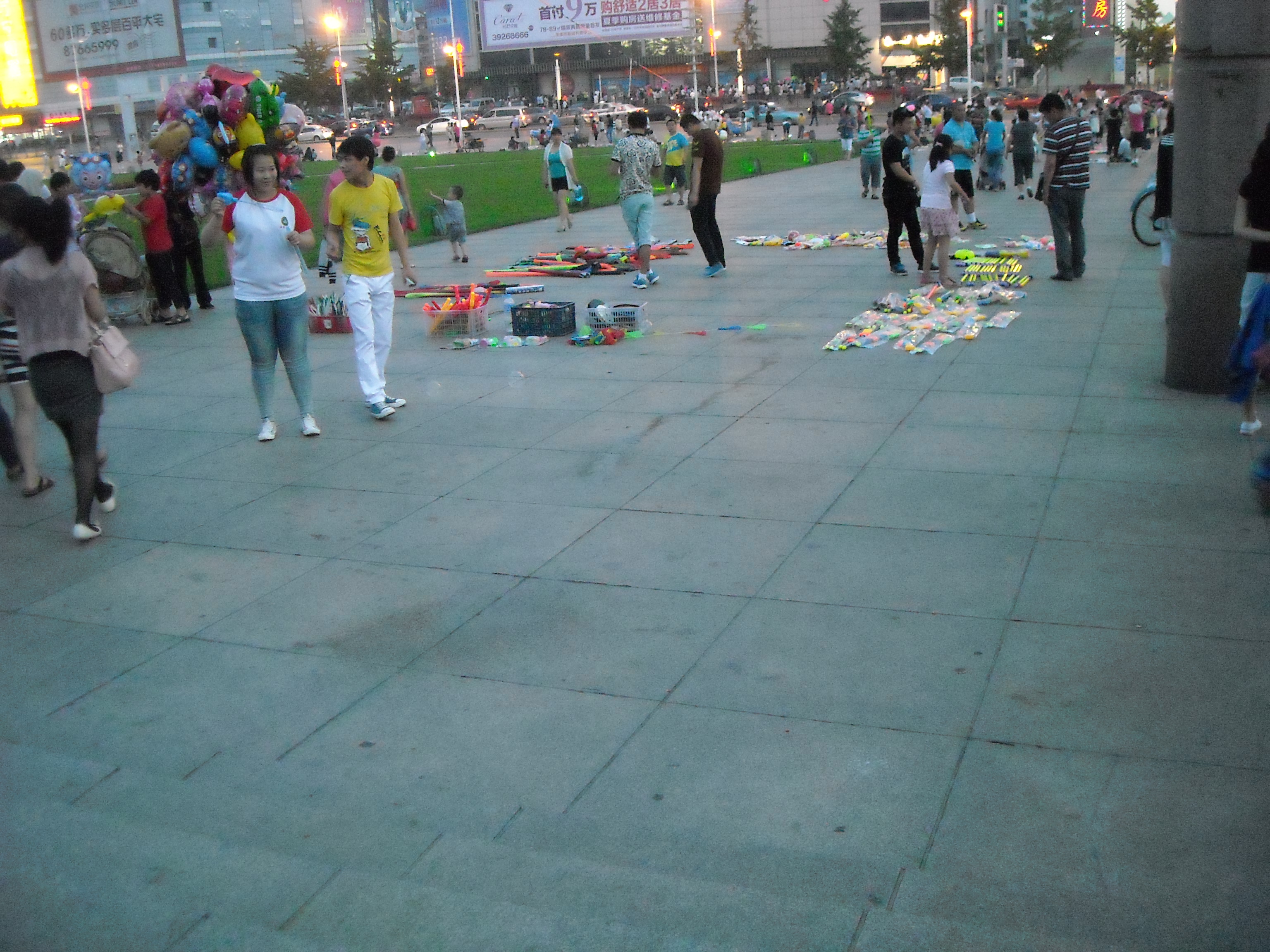
11 Observations about Behavior in China

People like Amsterdam for a bunch of different reasons, but the legally available cannabis and Red Light District are always on the list. When you think of Spring Break, you probably think of Cancun or some place hot and steamy so you have a valid reason for imbibing ridiculous amounts of alcohol and losing articles of clothing. People visit places for a bunch of different reasons, and not least of all of those reasons is so that they can do stuff they can’t easily do at home.

China has a bunch of pretty neat things to see, as just about anyone in the world could tell you, but there are also certain behaviors or actions you can get away with here that you couldn’t back in the US or other Western countries. Here are some of the behaviors that are socially acceptable (by many, but not 100% of everybody) in China that I’ve noticed A LOT of people doing.

I’m not complaining, just stating observations…

1

Public Toilets are a thing of absolute horror in China. If you’re blind you can locate the restroom by scent more than a hundred yards away in almost all cases—even Hospitals. Most are squat toilets, which are glorified holes in the ground, with puddles and clumps of human waste seemingly everywhere but in the hole. When I had my body check in the hospital almost two years ago I had to use the restroom for a part, and I swear to God the creators of Saw got inspiration from the bathroom I was in.

Maybe it’s the downright atrocious stench associated with these places or that everyone here is just a mild exhibitionist, but when the toilet is not readily available the road, sidewalk, grass, trashcan, stairs, and even sink will do just fine. I have seen everyone from a toddler all the way to a grown man drop trout and just…pee. They do it just about anywhere. Often they will make the effort to, you know, go into an alley or stand next to something, but the parents with children who have to go—forget about it. Dear Old Mom will just pick up her little tyke so that his butt hangs out the back of his “split bottom” pants and make a “shhhhh” sound in his ear until he lets loose his flow. Where does this happen, you ask? EVERYWHERE. No joke. That list a few lines up, yeah, all of those places.

Calling them buttless chaps would be tantamount to Child abuse, right?

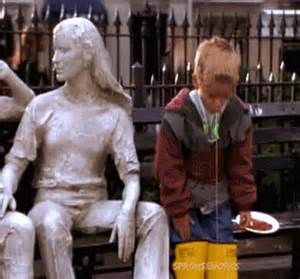
In fact, just a few days ago Xiao Ming and I were at this nice little area by a government building, where tons of people always hang out, and this six-year-old’s mom gives him the go-ahead to take a leak right in the middle of a crowd. SERIOUSLY. There were about a hundred people just milling around and no one said a damn thing. This boy, who is obviously old enough to know you do this crap in a toilet, is just spelling his name right where people are walking, in daylight. But the funniest thing, or most appalling part, is that just five minutes before we witnessed another young boy trip and face plant on the sidewalk—right where the second boy ended up peeing. Then, after the boy left, a young couple played with their jianzi, basically the Chinese version of hackey sack, right in the same spot.

Yep...there it goes...slipping and sliding right into those kites and toys he's trying to sell...
Yep…there it goes…slipping and sliding right into those kites and toys he’s trying to sell…
I wonder if she thinks it's water...
I wonder if she thinks it’s water…

And all of this is just Number 1. Number 2 requires a bit more tact, but not much more. There are times when you can hear suspicious grunts from behind bushes and trees, and on more than one occasion I’ve seen the leftovers not far off from walking paths. Yup.

So, who needs public toilets when all of the public is a toilet?

2

Don’t have a trashcan? Can’t abide dirtying your backseat? Toss it out the window.

I have seen countless acts of littering from all levels of citizens here. Taxi drivers lopping plastic bottles out the window, police officers dropping cigarette boxes, and even students throwing candy wrappers from classrooms are all annoyingly common examples of this type of behavior.

But it’s when you see the piles upon piles of garbage collected on the corners of streets or in the alleys at night being picked through by people looking for plastics and other valuable items that it becomes truly disheartening.

I have made it my mission to never litter here. Even if I must carry an empty water bottle for an hour, I won’t just discard it on the ground. When I see people doing it, I try to give them the stink eye, but it probably just looks like I have bowel problems, so I stop.

..unless you're in a hurry...
..unless you’re in a hurry…

However, knowing the option of ridding your person of the added burden of toting around trash (la ji) by simply tossing it on the ground is available to you does make life a bit easier…you’re not doing anything for the scenery, but you certainly are making your life easier.

3

I remember the Napster and Lime Wire days of my youth where I spent hours downloading tunes and—er, wait, I didn’t do much of that, either. But a whole helluva lot of other people did, and that was illegal…apparently.

Today people still have a dozen ways to get their hands (eyes, ears, etc.) on pirated or downloaded material, even in the States, but in China you don’t have to be savvy or hush-hush about it. Just go into a store and select a DVD of a movie that just came out in the theaters two weeks ago…for 12 RMB. That’s like $2. Or, better yet, just download them from torrent sites and store them on your computer…OR, even better—and quicker—just use Baidu to stream them. Baidu is the closest thing to a Chinese Youtube, but they always have full episodes of shows, and whole movies…except most of the nudity is edited out of True Blood, Game of Thrones, and other flicks.

A lot of young people are streaming American shows like Friends, The Big Bang Theory, and even Grey’s Anatomy in order to learn about Western culture and study the language with the English subtitles beneath the Chinese ones. The Vampire Diaries is also big here, along with Gossip Girl and the other ones I’ve mentioned above.

Bet you didn't know that, did you?
Bet you didn’t know that, did you?

I have picked up a habit of buying a DVD a week since coming here, sometimes more. The last few months I’ve been cooling it, but that just means I’m downloading more. The problem is I won’t be bringing any of my DVD stash back to the States with me. I’ve heard tales of people getting them through customs and all that, but I’m just not willing to test my luck…especially when getting caught smuggling one is something like 10,000 bucks. No, I’ll probably just give ‘em away or stake out a corner on the street and sell them for 10 RMB each. By the time I’m ready to come home I might be able to sell enough to pay for a flight back.

4

Gone are the days you needed to worry about an open container in public…People strut around with bottles of beer (pi jiu) in the evenings all the time. I’ve talked a little about the North Eastern “Drinking Culture” before, but this is just another tidbit.

On the downside, as a pedestrian, you need to remain ever vigilant for those reeking puddles and piles of vomit that are strewn about along sidewalks and crosswalks.

Just the other night I fell victim to one and needed to wash off my sandals. Let’s hear it, the collective ewwwwwww!


5

It was recently Independence Day in the US, and when I told this to Xiao Ming she asked me what I usually did on the holiday. Easy, I said: We usually get the day off and spend it near a pool, a grill, or a cooler, and surround ourselves with friends and family. Then, at night, on this special day, we watch fireworks as they are mostly legally set off.

How long does it last? she asked. One glorious, patriotic day, said I.

She kinda laughed, and I could guess why.

Here in Dalian there is tons of Korean BBQ all the time, drinking at Five Color City often enough, and yes, fireworks. I’ve told you before about how I can hear fireworks just about every single day. They light them when they have a new business opening, a floor of construction on a site is finished, weddings and funerals, and just for the fun of it. They don’t relegate them to one day, holiday, or social event; they spread the love and sulfur all around.

So don’t worry about telling the cashier you’re taking them out of state or the cops that, yes, you heard the ruckus but it was from down the street, in China you can just toss a firecracker out your apartment window and hope for the best.

6

Got something in the back of your throat and no tissue to hock it into? You got it, just lob that loogie right onto the ground. Pay no nevermind to your surroundings or whether you’re in or out of public transportation vehicles.

Now before the 2010 Beijing Olympics you could see that a concerted effort endeavored to annihilate this particular trend, but up in the NE area, especially in Kai Fa Qu, you have a healthy mix of classes and some of them…just…spit.

This hails from the Confucius (probably) belief of “better out than in,” and people, all ages of them, follow it religiously. I’m told that spitting is not actually a cultural thing in China, it’s just a nasty freakin’ habit that people have tirelessly clung to, but that doesn’t matter when you are dodging not only bile piles but also spittle puddles in the street. People will just spit right in front, beside, and behind you. No questions asked.

One of my first experiences with the spitting craze that so many are hip to came one night when a group of us were walking and a horrible sound, similar to a squirrel with asthma trying to do a Joker laugh erupted from somewhere to our right. Now the squirrel had the cover of shadows on its side, but the sound…good gawd. And the guy leading us around turns to me and, without a smile says, “And that is a little old lady.”

A quick look verified this, and her image has forever been seared into my retinas.

When we were on a long-distance bus from zhengzhou there was another woman…

I heard the coughing hack as she summoned the saliva from the back of her throat, and then the wet, puckering smack of her lips as she spat, and finally the splat as the loogie hit the floor. INSIDE THE BUS.

That one touched the ground!!!

7

A fan of the bon fire, but unable to put things aflame without your neighbors calling the cops (jing cha) on you because you didn’t let the fire department know of your intentions beforehand? Come to China and light mounds of loose leaf paper on fire just to have the wind lift them into the air and down the intersection.

As I’ve noted in a previous entry, the tradition of lighting paper, or paper money (ming bi) to send to their ancestors is very common. This is usually done at intersections and on special days like holidays or their ancestor’s b-day. The money is burnt in order to pass to the spirit world, or grandpa’s Spirit Bank account. There are those who burn more than just Casper Cash, though. They burn paper objects, and whatnot.

I have sat and watched several older couples in the act of burning these papers, and every time I’m attracted to the reverence in their gestures. This is a serious ritual for them.

8

Take a look at some older photos of China and you’ll probably see the ubiquitous bicycle somewhere in the frame. Until a relatively recent time China was a bike country, then a moped country, and now, in most cities, it’s quickly transforming itself into an automobile nation. There are concurrent problems that arise when ever change happens too fast, though.

Bad drivers, subjective traffic laws, advance games of Frogger every time you cross the road, and the lack of parking places are but a few. Go to any store in China and it’s easy to see that the building or the plan for it was stenciled out with no care whatsoever about where the customers would be puttin’ their cars. Xiao Ming, who has a PhD in Urban Planning and Land Use from France, has told me that a contributing factor to this situation is the building’s investor. He’s out to make as much money as possible and parking places just aren’t where the cash is. In fact, they see parking as a free service they don’t want to be tied to when they could be adding another hundred feet to their blueprints. This is neither here nor there, but she’s told me about how city officials will hire urban planners to design a city that is efficient and modern only to ignore the suggestions in order to make a buck. That’s why you get a lot of bullcrap set ups half the time here.

So what happens? Side walk parking and driving. Yes, as you stroll down the sidewalk you are on the look out for puke and slobber, but also for the ever-present threat of being run over. I’ve dodged a few close calls already.

Can’t find a place to park at the bank or grocers? Just park it right there where everyone is walking.

9

Wish you could just get a better deal on that scarf or that necklace? Bargaining not an option back home? Come to China where just about anything is up for negotiations.

The Chinese love a good bargaining match, and those who work in this sort of profession see it as a test of skill and moral fiber when they can get a good deal or make a buck off a customer.

Of course, when I first got here I had no precedent for haggling at all, and I’m certain I’ve overpaid on a bunch of stuff, but after a while I got used to it…and now I like it. I love asking if I could get something a little cheaper and have the merchant not laugh me off or threaten to call the cops. It’s great when the final price is less than half of the original. You can negotiate everything from socks to swords, man.

I was once on the look out for some new socks, wa zi, and the merchant wanted ten for two pairs. I chatted with them for a few moments before I then added a third set and still wanted a lower price. I held my ground, and finally she relented, giving them to me for 8 RMB. This was no big win, but it was funny because after the deal the merchant’s friend, a guy who’d been there the whole time laughed and gave me the thumbs up, adding a bit too enthusiastically, that I was like a Chinese person. All because I negotiated. I probably still got ripped off, but at least it wasn’t as bad as it could have been.

And for my last birthday Xiao Ming bought me a katana. A genuine, full-tang katana. The thing is sweeeeet. I love swords, have since Highlander stole my imagination as a youngster, and have collected them for years. I have two swords here, both of which have been bought by Xiao Ming for me. I sometimes take the katana out and wave it around, silently whisper, “There can be only one,” just for the hell of it.

Anyway, original price was something like 2,000RMB, but she got it down to 1,200 RMB.

Negotiating is fun.

10

Don’t have any unique talents or marketable skills of your own? Do you have powerful or well-connect friends? Great, then those connections can help you with everything you need in this life.

Guan Xi, baby. It’s the Golden Ticket.

I once read that the evolution of guan xi as a means of social-political-business interaction rose to prominence due to the unreliable nature of the nation’s legal system and its enforcement. People needed ways to trust others, to know a man’s worth or his salt, or something like that.

My first thought to that is: Well, why not strengthen the laws and give the local governments incentive to enforce them instead of constantly perpetuating the double-standards?

Because you are my God-father (gan ba ba) I went from washing cars yesterday to being the Provincial Transportation Director today! Now...what's my job?
Because you are my God-father (gan ba ba) I went from washing cars yesterday to being the Provincial Transportation Director today! Now…what’s my job?

Thus, the socio-cultural concept of Guan Xi stepped forth into the world. This is usually translated into “relationship,” but I’d be remiss if I whole-heartedly endorsed that simple definition of a much more complicated series of interconnected partnerships. You can have good guan xi with someone or bad, strong or weak. Some guan xi can get you discounts at stores while other kinds can help you set up a completely illegal establishment like a store or school without any kind of certification at all.

I have an adult student who once told me about a government official’s son who his company had just hired. My student seemed annoyed, so I inquired after it. Turns out, the official’s son is a complete waste of space. He has no training or drive to do the job well, but he is in a supervisor’s role. All because of guanxi.

I asked some teenage students once how they’d feel if another job applicant got a job that they were also interviewing for. They said that’d be fine. Normal thought, right? Sure. Then I asked them how’d they feel if they knew the only reason the other guy got it was because his father had strong guan xi with the CEO. They were less ok with that, but not because they thought it was a form of cheating. They were just angry because they couldn’t get the job with their skills or their guan xi. I asked if they thought of using the connections to get stuff was a form of cheating and they said they didn’t think so. One even went as far as saying that having good guan xi is actually a skill that’s on the same level as having good engineering skills.

Unfortunately, guanxi is such an engrained part of Chinese culture that foreigners are almost entirely excluded from being active members in it. Sure, we can benefit from someone’s guan xi (I certainly have), but actually having your own guanxi in any tangible, Chinese Way is nearly impossible. If you stay a long time, learn the language, or do something truly memorable for a person who already has strong guan xi then maybe, just maybe, he’ll take you under his guanxi wing and spread the wealth, but don’t count on it.

11

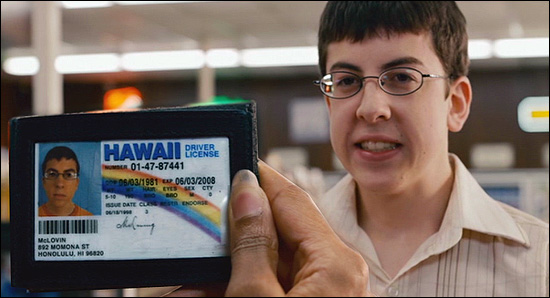
I never had a fake ID growing up. In fact, the bar scene wasn’t my scene in the least, so I never needed one. I knew some folks who had them, but not many. For me, fake IDs existed mostly in TV shows with annoying pseudo-delinquents.

He helped Edward Snowden escape...
He helped Edward Snowden escape…

Here in China, though, the fake ID is just the tip of the ice berg. I know two public school teachers who did not finish high school, but instead had fake diplomas made and used their uncle’s guan xi to get their current positions. I know of training schools that have augmented dates on lincensure certificates so well that the forgery and the real McCoy are identical in every way, even down to the perforated edges.

Heck, due to a hiccup in the Real Estate/Marital Laws married couples who own two houses are forced to pay an outrageous tax, so what are they doing? Getting divorces. They’re still “together,” just not, you know, on paper. For some, going through the motions of a divorce that cost about 20RMB to save thousands is beneath them. Instead, they’d rather pay a forger more than 100RMB to get fake divorce documents.

There are even people who pass out business cards for this forgery service! Gotta love it. Not that I’m already not cynical enough, but it’s gotten to the point where any person in a position of relative power elicits two questions from me: Did you earn this job on merit? Do you have legitimate credentials?

Sure, the National Govt. is making efforts to crack down on this sort of thing, but who’s to say the guy carrying out the policy hasn’t frequented the same services?

Want a job without all that hassle of earning it? No worries.

Seems legit.
Seems legit.

Ten Things From Chinese Internet

We live in an increasingly interconnected world of high-speed downloads and uploads, of text speak and netizen culture that sometimes bleeds into the actual 3D world of reality. Here are some of those tidbits that I’ve noticed while here in China…

Ten Internet Memes or Phrases that I’ve been hearing a lot in Dalian.

  1. 给力

Gei (3) Li (4)—This expression is a relatively new one that got its start right online in Chinese forums and chats. Its two characters translate to “give” and “power,” and it basically has the same meaning: to give power, to make something interesting or impressive, awesome…”

I used this once, and my friend just laughed and wondered how I knew it. Last year I heard it more than this year, but I’m told it’s still out there. You can also hear “Jia You,” which basically means, “Good Luck,” or “You can do it.”

2) 高富帅

Gao (1) fu (4) Shuai (4)—This phrase means tall, rich, handsome, and is the pseudo-standard Chinese women use when searching for that special someone. They want a tall, handsome guy with access to cash. I hear this phrase all the time, and even in television shows. While it may not be the exact blueprint for what is desired by all, it certainly has a lot of traction, and everyone knows of it.

Every time this sort of topic comes up in conversation and I say it, the girl usually acts surprised that I know of it, and then enthusiastically nods her head in agreement.

3) 白富美

Da ge r, piaoliang, bai OR Bai, Fu, Mei—Tall, pretty, white is the phrase that is the male equivalent to “gao, fu, shuai.” The whole of Chinese culture values white, pearly skin, as a lot of the world knows, but it’s one thing to think, “Oh, Chinese like pale girls,” and it’s another thing entirely to go to the beach and see people hiding out in tents, wearing full-body suits, or wearing heaving clothing in 90 degree weather, and carrying sun-brellas around during the day.

Even if a girl has gotten the tiniest bit of sun—say an hour or two—someone close to her will notice and say, “ni zen me zhe me hei?!” How are you so black?!

We're so tall and rich that we put our wads of cash on the top shelf. Did I mention that we're so good looking we can trick short people into climbing over one another to fetch our money from those shelves?
We’re so tall and rich that we put our wads of cash on the top shelf. Did I mention that we’re so good looking we can trick short people into climbing over one another to fetch our money from those shelves?

4)

The numbers: 2, 250, and 38—er, er bai wu, san ba. The number two has taken on the meaning of “stupid, dumb,” whereas 250 describes a foolish person. 38 is actually a bit worse because if you call a man a “san ba” you’re basically calling him a bad woman or an annoying gossip, or even a “biaatch.” Not at all nice.

Merchants will go out of their way to make prices anything else but 250, just to avoid the implied meaning of calling their customer an idiot. And lately young people have added some math into the mix: 2 + 250 + 38= 290. If you hear someone calling you er bai jiu shi they’re not saying anything nice, trust me.

He gets it...
He gets it…

5) 很黄很暴力

Hen (3) huang (2) hen (3) bao (4) li (4)—This phrase means, “very yellow, very violent.” A woman who was interviewed on a Chinese news channel used the phrase to discuss violence and pornography, and people just kept it going.

In Chinese something that is “yellow” has the stigma of being explicitly sexual or dirty. You have yellow jokes, yellow movies, yellow man, yellow woman, etc. You wanna be careful because this one is used often, and everyone knows the connotative meaning of yellow here. “Bao li” means violent, which sort of goes hand-in-hand with some of the topics.

6)

囧  jiong (3) is a character or pictogram that means embarrassed. The strokes look like a face making the embarrassed look. This is used a lot online because people can see the face, although I’ve heard a few middle schoolers say this at Starbucks.

Another similar one is “Orz” because it looks like a human bowing.

7)屌丝

Diao (4) si (1)—loser or even “douchebag.” This word got its start on a Baidu discussion forum, and describes someone who is poor, ugly, short, good for nothing, a failure in life, and even prone to excessive masturbation. It has become a popular term similar to the Japanese term “otaku” and can be used to refer to both males and females.

I have only heard this one once or twice, but I think it’s used online more than in actual conversations.

8)蛋疼

Dan (4) teng (2)—Ball Pain is a phrase that, well, men use, to describe    uncomfortable situations, pain, irritations, or just annoyance. In Chinese the testicles are often referred to as “Dan” or “egg” for some reason.
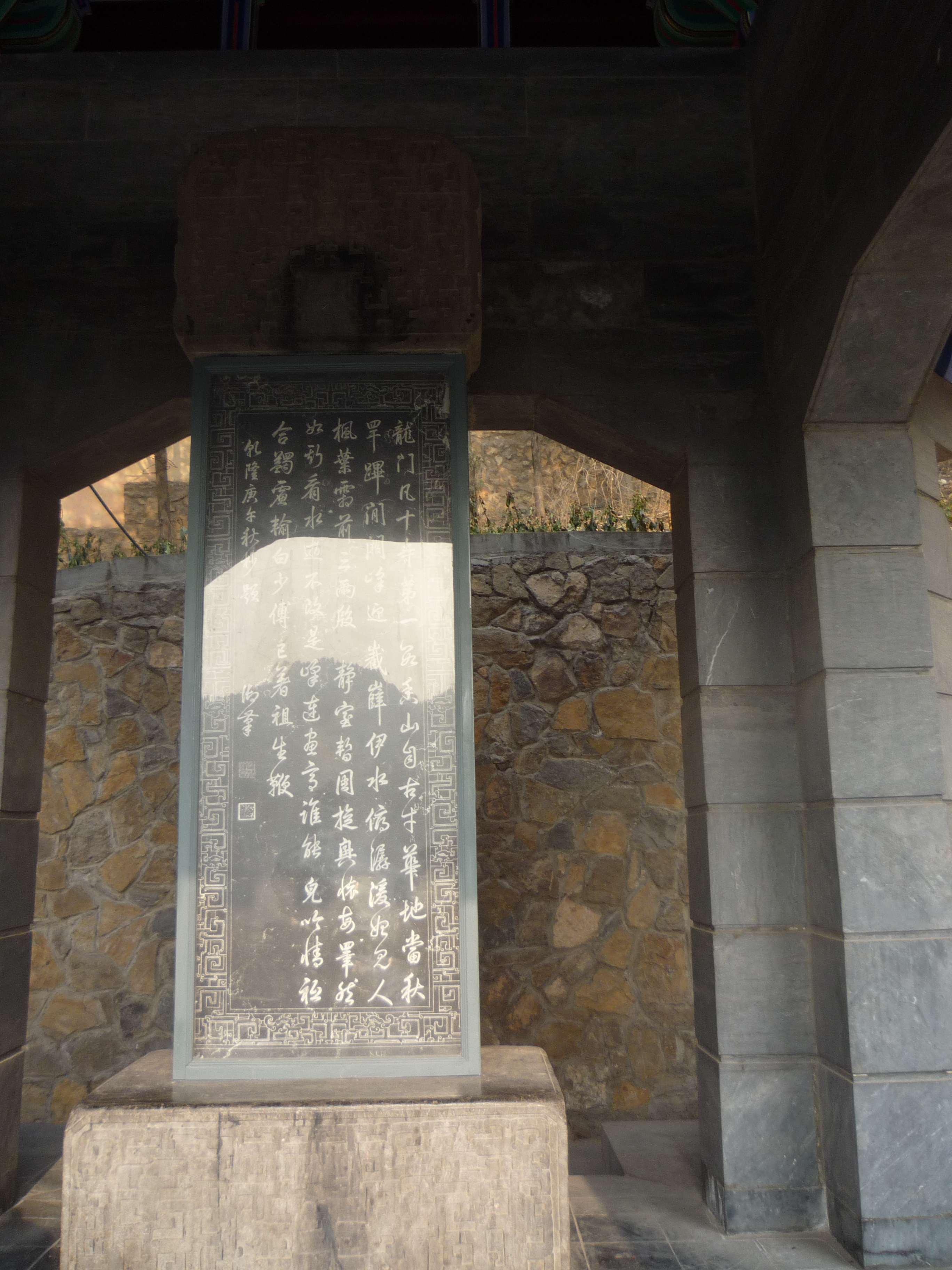
This is a new one for me as I have yet to hear it, but Xiao Ming jokingly told me about it a few days ago. She’s heard locals say it a few times.

9)神马都是浮云

Shen (3) Ma (3) Dou (1) Shi (4)  Fu (2) Yun (2)—God’s Horses Are All Passing Clouds. This phrase can be translated into “nothing is permanent” and the implied meaning is that we should all just chill. This has become a popular catchphrase for the youth or the “fen qing” emotional youth.

10)草泥马

Cao (3) ni (2) ma (3) –Grass Mud Horse. The Grass Mud Horse is a Chinese “netizen” symbol of resistance against the government’s control and online surveillance. It got insanely popular in 2009, and just kept going. It’s a homophone that sounds almost exactly like the Chinese “Fuck your mother.” The phrase is ultra-negative, of course, but my friends tell me it has even more feeling than the English phrase of the same wording.
Everyone knows that the Chinese net is policed by the govt., but most in the international scene don’t know just how much. For years now young people, artists, activists, and bloggers have led a campaign to take back their right of expression (in all forms), and the Grass Mud Horse just happened to be a mascot they could rally behind.

The GMH is a species of Alpaca, apparently. There were stuffed animals made, people paraded actual alpacas around in the streets, and a song was even made.

Let's upload some social commentary on Xi Jing Ping.... Ok, then let's talk about the Diaoyu Island... Oh, good, after that let's take pictures of our muddy butts and post them on Wei bo.
Let’s upload some social commentary on Xi Jing Ping….
Ok, then let’s talk about the Diaoyu Island…
Oh, good, after that let’s take pictures of our muddy butts and post them on Wei bo.

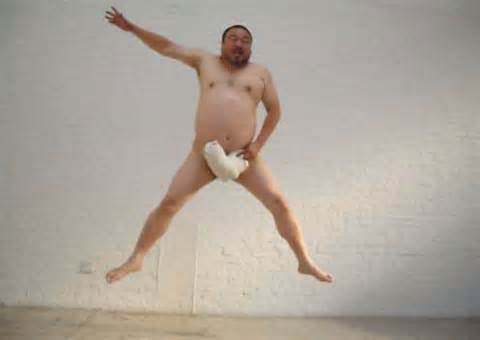
Ai Wei Wei, an artist, made big waves because of his dissent and artwork, but he’s just one name among many.

Is that an Alpaca between your legs or are you just happy to be out of prison?

I can’t even look up certain Yahoo! News articles here (I know, why would I even go to Yahoo for the news, right?). Simple things like air quality measurements to sensitive things like ANYTHING WITH POLITICS and some historical facts are all banned. I’m only on here now thanks to my VPN.

Yes, you can say that Chinese culture is still very conservative regarding a wide range of topics, but more and more, today’s young adults are pushing back and, in some cases, breaking those perceptions. Many of the people I’ve gotten to know during my time here are between the ages of 19-30, and most of them can’t stand the censorship or hypocritical nature of the government’s policy’s and officials’ behaviors.

Here the Cai Ni Ma is being confronted his arch-nemisis, the river crab (in Chinese Hexie, which sounds like
 

Here the Cai Ni Ma is being confronted his arch-nemisis, the river crab (in Chinese Hexie, which sounds like “Harmonious” in Madarin. Yes, another homophone.) Credit: Jessi Wong, image size 10x15cm, lino cut on paper 2010. Printed as part of the “Impressions” exhibition at the Australian Print Workshop.


But…so far, the fight is largely relegated to the virtual world where “50 Cent armies” commissioned by the govt. to perpetuate propaganda scour the web to shoot down dissenting voices, sites are shut down by agencies, keywords are monitored for sensitive topics, and the citizens are forced to use internationally-based servers just to get the news about their own nation.

And of course…the Cao Ni Ma song—

http://www.youtube.com/watch?v=wKx1aenJK08

A good website for Westerners to stay up on some of the modern “netizen” culture in China is China Smack.

http://www.chinasmack.com/

The Taxi Ride: Chinese Style

Once you get in, you're mine, sucker!
Once you get in, you’re mine, sucker!

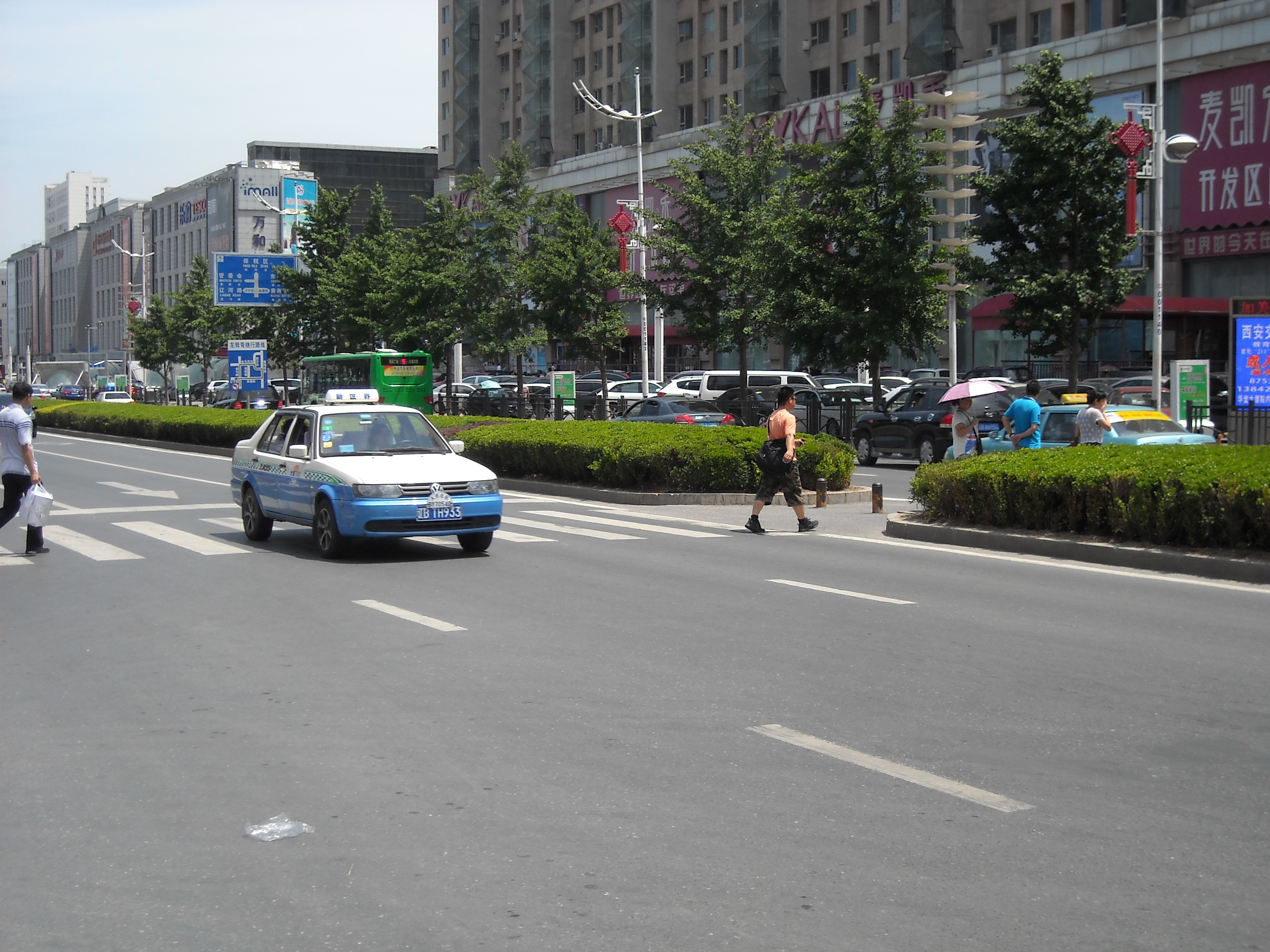
Taxi drivers in KaiFaQu, the development zone just outside of Dalian city can run the gamut. They can be complete turds so vile that they require special instructions for disposal or you could end up singing duets with them (see previous entry). I’ve had my fair share of experiences with taxis, and in September I will have been here for two years, so I can at least offer my insights with a tiny bit of credibility on the subject.

As you travel, though, you run across many more turds in the taxi biz than you do possible singing partners.

First night in China: an 8 RMB ride becomes a 10RMB ride just because. I remember being suspicious of the price right off the bat, but powerless to tell the driver I thought he was being a bit turdlike, so I paid the fare.

Not a specific because it happens every times, but holiday hikes in prices. If it’s two days before Tombsweeping Festival chances are you’ll be charged a flat rate of 10 RMB no matter what time of day, and the price will continue until a day after the holiday. And if you know holidays here you know it’s not even a big deal! I can see Spring Festival or National Day Holiday (Which is like a week long despite the name), but there are times when I swear these buggers are making this stuff up. And these prices are non-negotiable. I’ve tried, going as far as even opening the door while still moving and just telling him to let me out.

The other near-constant is when it’s raining, has been raining, or has just stopped raining. They will charge you 10 RMB because they’ve spilled water on their windshield and called it rain. Okay, not that bad, but just about. They will also try this crap when it’s snowing, but you can wiggle with them during the winter. Is it because it’s more dangerous to drive in the rain? Does the two extra yuan really justify the risk they’re taking driving me three minutes? And isn’t it their job to drive? In all weather? If I don’t pay the extra two yuan will they become more reckless? What exactly is the extra charge covering? Oh, and did I mention, it can be considered rude to put on your seat belt with drivers because they can take it as a judgment on their driving prowess?

It's like the movie Taxi Driver...without guns, Deniro, or English...
It’s like the movie Taxi Driver…without guns, Deniro, or English…

Let’s see, we have simple cheats, holidays, rain and snow…what else?

If you’re traveling a distance that’s not a part of their immediate territory there’s gonna be a little battle, too. For example, if I were to get a cab from Kaifaqu to either Dalian or JinShitan (Golden Pebble Beach) both about 20-30 minutes away they won’t even turn on their meter. Instead, you must wheel and deal before he starts driving. Of course, this is only a need if it’s at a time when the Light Rail Train is closed.

Remember that one time when I helped that couple find their boat and we had to drive around for a while, looking at the docks and ports? Well the meter said something like 63.40RMB, but he charged the couple 100RMB. When I asked why, he just said it was because he had to drive around a lot and it was so far from he next passenger. Hogwash, considering I was his next fare and I was right in front of him. On the way back I got him to agree to 50, and the couple paid it for me, so that wasn’t one that directly cheated me.

The most common answer to the long-distance taxi ride is to call a sharecab. It’s what it sounds like. Multiple folks sharing the cost. They actually have that specific service, and I do have the number for the local one.

However, if you are out for the night, hanging with your friends at a restaurant or a bar, the share cab isn’t always an easy thing to secure. Then it’s just you and the driver going back and forth until he beats you into submission. Because they almost always win. I’ve seen gorgeous women try to bat their eyelashes and flirt with them in perfect Chinese, just to get like five RMB off the original price. And if you’re inebriated in the least, and they can see it, you’ll need to be able to negotiate or have someone who can do it for you.

I saw what should have been a 10RMB ride become a 50RMB because someone was visibly drunk.

Some easy solutions I’ve found for a few of these situations include simply asking the driver to turn on the meter (a phrase you can say like, “Ni neng da kai biao ma?” or “Biao, da kai.”), asking for a receipt (I usually say my boss wants it. “Wo xuyao fapiao. Wo de jingli xuyao.”), or just talk a lot about how much you like China (The goal here being that you’ll persuade him not to cheat you too much just because you’re a foreigner).

Ah, he looks hammered...If I play my cards right, maybe he'll give me his wallet.
Ah, he looks hammered…If I play my cards right, maybe he’ll give me his wallet.

I’ve traveled a little bit lately. Not too much, but enough to see different types of drivers in different cities. When you travel in China and want to avoid being cheated the best thing to do is be Chinese. If you’re not, you’ll probably get ripped off in some way, somehow. That’s not just a Chinese thing. I’ve seen it happen in America and heard about it everywhere. Travelers just need to resign themselves to having targets painted on them. Your goal is to make that a smaller target anyway you can. Good luck.
But being an American in China, it doesn’t matter. I have a target. And what’s more, it’s not only because I’m white. Some Chinese drivers will just cheat EVERYONE.

A few tales from the road, if you’ll indulge me.

Almost two years ago Noelle and I were in Beijing during the October National Day holiday I mentioned a second ago. It was the last day of our trip and we were trying to get to some of the must-see places. We were somewhere on the street and we wanted to be at Tienanmen Square. We declined a few crazy looking fellows, but then got won over by an unassuming old dude on a rickshaw. We went back and forth for just a moment about price, but then agreed on something like 30RMB. The price was already outrageous, but, you know, whatever.

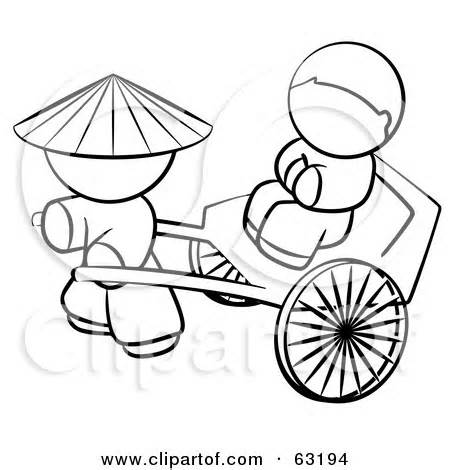
Rickshaw Sample

We both climb into the seat and off the guys goes, not even peddling because his was a hybrid peddle/engine rickshaw, I guess. A minute or so goes by and another rickshaw driver, a bit younger, rides up pointing at one of the back tires frantically and basically just being a very concerned rickshaw driver. Turns out the back tire was too flat and one of us needed to get in the rickshaw with him. This is sounding funny to me, yeah, but I really have no way to convey my thoughts, so I just repeat the price we agreed on and the old driver nods passionately.

Well, off we go again, this time in two rickshaws, careening through dirty alleys, neighborhoods that are definitely not on the must-see list, and then we pull up in a dark, empty alley the man says is right next to the square. We hop off and then things get loopy.

They pull out a laminated chart with prices—all much more than 30 RMB. What ensues is a flurry of frantic gestures and raised voices in Chinese and English, and more and more furious pointing at the prices on the oh-so-official laminated sign. The gist: he wants us to pay 600RMB. Three for each cart. My first thought is, I can take these two little shits. And I give it more than just a cursory look before passing on the option of knocking them both over their rickshaws and just taking off. After all, it’s National Day, as in, Chinese patriotism out the butt, and we’re in the capitol—an alley in the capitol. We open our wallets to pay something, not the whole thing, but something, and what does one of them do? He literally snatches the money out of Noelle’s hand. Seriously. It was tantamount to being mugged, the way it wall went down. In the end he got around 300 or something from us, maybe 400RMB. And as we walked away he still huffed and puffed.

Things we could have done differently: be Chinese, not ride a rickshaw, jump off the rickshaw, push the man over the rickshaw, give him the agreed upon amount and walk away from the man and his rickshaw…

Sometimes, even now, when I think about the whole situation, I get royally irritated and want to go find a rickshaw driver, pretend I know nothing of Chinese, get him to agree to a price, and then wait for him to cheat me…just so I can curse him and yell at him in Chinese, or, maybe just knock him over his rickshaw. But not in Beijing and not during the National Day week.

And then when we got back into Dalian from that very trip we almost let ourselves get picked up by a black taxi.

We had just gotten off the plane and were walking around the terminal looking like lost laowai (informal name for foreigners) when a dude with the Chinese version of swagger just casually approaches us and offers us a ride back to Kaifaqu. I ask him if he’s a taxi driver and he assures us that he is. We ask how much, but he busies himself with looking official and leads us deeper into the terminal and away from people. We descend two flights of stairs with not a human in sight, and finally agreed on a price—something like 80-90 RMB.

At the ground level, we walked out to a dark part of the parking lot and he motioned for us to stay put while he goes to get his car. Noelle and I are exchanging worrisome glances, but it’s when I see him reach his black car that I make the call. We pick up our bags and speedwalk to the front of the terminal, about two hundred feet away. We make it there just as he comes up behind us and tries to motion us in. We stand firm and step in line with the other people waiting for actual taxis.

In the end, the ride home was 100 RMB, so chances are we might have saved money with the black taxi, but probably not. And if he had tried any funny crap we’d have had no way to combat him. The whole thing with him just had a strange vibe, so I’m still pretty certain we made the right decision by ditching him.

Two more recent ones…

On our way to the airport in Zhengzhou on our last day of vacation, Xiao Ming and I fell into a pretty elaborate trap.

We got off the train, and then walked to the bus stop. Tons of people everywhere, some standing in line, others gawking at nothin’ in particular, a few mothers holding their babies out in front of them so the kid can pee right on the street, and of course taxi drivers trying to catch fares.

As we approach the bus a taxi driver intercepts us and offers to take us anywhere, but we push past him and ask the bus worker about bus ticket prices. They’re not expensive at all. Then we ask him how long it takes to get to the airport. At this point the taxi driver we pushed through is right next to us. The bus worker looks from him to us and says, with a straight face, that it takes four hours. Four hours! That’s absurd. We ask why and he says because the bus must drive around the city first, collecting others from different stops.

Well, that is unacceptable. Our plane takes off in less than three.

The taxi driver then says, no problem, he can get us there in less than an hour. We reluctantly play the negotiating game with the man and eventually settle on 80 RMB. It’s a bit more than we’d normally pay, but whatever.

We get into his cab and find to others—a young Chinese man with big round eyes, and a man who looks old enough to set some sort of record—already waiting to go. We quickly ascertain that we’re all going to the airport, so that’s good. I feared that he’d do something shady if we all had different destinations. Yes, I’m that jaded.

So we push off. At first it’s all good, but then the situation deteriorates quickly. He begins to talk in rapid-fire dialect that I can’t follow. Turns out that he now want 20RMB more. Xiao Ming says that he will kick us out if we don’t pay now.

The two of them go back and forth for a while, both yelling. She tells him that he already agreed upon a price and that business is carried out that way everywhere. He counters that, no, it’s not.

She then assails his manhood. She tells him that a real business man, but specifically, she adds, a man, would not lie like this.

While they’re going at it the other two in the car are just silent. I’m adding in my own commentary on how much of a moron this guy is, but I’m not making much of a dent. And the driver is just meandering through back streets, threatening to leave us.

Finally Xiao Ming calls him out. She tells him that he purposely cheated us. He doesn’t want to admit it. Instead, he claims that, of course he had to agree to our price or we wouldn’t have gotten in his cab. We tell him, no shit. He somehow doesn’t see this as a cheat or a lie…

And then Xiao Ming hit him with mianzi. Mianzi, or Face, is a big deal in China, especially among men. It is respect, influence, peer admiration, clout—all rolled up into one. At this point Xiao Ming has gotten the guy to admit that, yes, he deceived us on purpose. He actually says it, “Wo pian ni le.” I cheated you.

He still wants his money, though, so Xiao Ming asks him one final question: Will 20 RMB buy your face?

Oh, that was great. The old man is staring at Xiao Ming like he’s witnessing a crazed animal spirit strike. The driver is resolutely staring straight ahead, avoiding my gaze in the rear view mirror.

She asks him again.

And he says, yes.

I can’t believe it, but then again, by this point it was obvious that he only worshipped at the altar of the dollar, or Ren Minbi, and wasn’t a man of any value himself. Even so, I couldn’t help add something to the moment.

As I passed him the 20 RMB note I said, “Hen pianyi mianzi.” Very Cheap Face.

About ten minutes later we’re on the highway and the driver pipes up again. He says we’re all getting off. I’m like, what the heck now?

He pulls up next to another taxi and they exchange a few words. We get out and the drivers help us haul our crap into the second taxi. After a parting glance, the first driver is gone like a fart in the wind.

Once in the second cab we get the story. Turns out, the first driver had called the second one an hour ago and told him to meet him there, on the highway. The second driver was always the one who was going to take us the rest of the way, apparently. We asked him if he did this often and how much he got paid. He said, yes, this was a common thing for him, and that he got paid 70RMB each time.

For a twenty minute ride, that’s not bad, but the first driver had collected 100 from us, 160 from the old man, and 120 from the other young Chinese guy. We then learned that the taxi driver is friends with a bus driver back at the bus stop, and that the bus actually got to the airport in one hour, not four. In fact, taxi drivers aren’t even legally allowed to be at the bus stop where we were picked up.

The Taxi Relay Scam, ladies and gents.

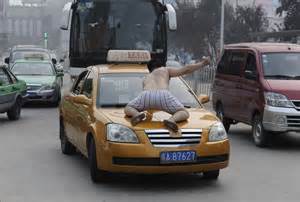
Sometimes you just have to take off your clothes to really express how pissed you are....
Sometimes you just have to take off your clothes to really express how pissed you are….

And the one thing that happened on our last trip to Guilin also happened on our way out of the city. Though it wasn’t as bad, and much less elaborate, it still annoyed me.

Before hailing a cab we were assured of a certain price, or at least what a ride should cost, to our destination. The driver we got, however, only saw me as a white face with zeros attached somewhere. He wants a ridiculous amount, and when we counter he basically just says, foreigners are all rich, that what he’s asking is nothing. This is, sadly, a way of thinking here. It gets a lot of foreigners in tight spots. People just think we all have money. When you claim you don’t most won’t believe you.

At first, the driver only talks to Xiao Ming and I stay silent, just listen. They go on a bit, but then I finally interrupt. I ask him why he’s giving us trouble. He is surprised I’m speaking Chinese, but not for long. He asks me, “What trouble?” I tell him that he knows, “what trouble.” I add that if he doesn’t want to take us then he can just stop and we’ll get out. I tell him we’re not in a hurry and that we don’t need him. Wo men bu zhaoji. Bu xu yao ni song wo men.

He then changes his tune a bit. He offers to take us to a bus stop nearby. At a normal price, we get there. Then, as we’re getting out, he says something I don’t catch. I ask Xiao Ming what it is, but she doesn’t tell me until we’re on the bus. Chinese girl with a foreigner—what does she thing? His tone, she said, had a lot of venom in it. When she told me all I kept thinking was, “I want to break his face”—the one with a nose and eyes on it, not mianzi.” I wanted to chase the narrow-minded buttnugget down and…But she calmed me down, and soon we were driving away from Guilin and to the airport.

These have been a few of my experiences with the Chinese Taxi Driver, a species of worker who sometimes sees every fare as an opportunity to practice their own special style of kung-fu: the art of the grubby paws.

Now, don’t get me wrong, I’ve had some pleasant ones (singing with a cabbie, a driver who gave great local descriptions, and even one who saved me money), but the bad ones are just more plentiful, and they have the potential to ruin your trip to some degree.

Some of the foreign teachers I met when I first got here had a phrase that helped them see their way through the hard, inconvenient, and downright strange times: T.I.C-This is China.

Wo Xiang Qu Guilin

We traveled to Guilin, Yangshuo, and Chongqing two weeks ago…

But a few days before I traveled to Guilin I was in a taxi talking with the driver about music. On my way to my business English class the topic of what kind of music I liked somehow came up.

Taxi drivers are a strange breed; you can have very annoying experiences with them or pretty entertaining ones. You just never know.

After I told him where I wanted to go he made a comment about my Chinese. That turned into a conversation about me not liking Lady Gaga. I really am not sure how that happened.

When I asked about his music tastes he said he liked Eminem. He asked if I liked “Mei Guo Hip Hop.” I told him I liked some, but not a lot. My brother used to listen to it a lot. I prefer 80s rock, I said. He smiled and said, “Hotel California!” I humored him and agreed, that yes, The Eagles were great.

This carried on for a few more moments until he asked about Chinese music I liked. In truth, I don’t like much (any). I mentioned that I had recently begun learning some of the lyrics to an old Chinese song—“Wo Xiang Qu Guilin” (I want to go to Guilin)—since I was going to be visiting the place at the end of the week. He perked up and laughed when I quoted a few lines from the song.

After a few laughs, and him coaching me on the melody, he and I did a duet. Seriously. We sang the song’s chorus and a few lines after…

Of course he asked me what other songs I knew. I mentioned the, “Yin Wei Ai Qing,” (Because of Love) song and the other one, “Wo zui qinaide,” (My greatest love).  These two songs are EVERYWHERE here. Along with Adele, Michael Jackson, and a strange Western boy band called West Life, these are two Chinese songs I hear constantly. I was at a bar one night and the Chinese business men who were hanging out there requested the two Chinese songs to be played—on loop. Really. Anyway…

As soon as I said the Greatest Love song the taxi driver busted out with several lines from the song. “Qin ai de, ni guo de zen me yang?” And he kept going. He serenaded me until we came to a stop at my destination. And what’s really funny—he had a great voice.

As I climbed out of the cab he shook my hand and said, “Zai Jian, Pengyou.” Goodbye, friend.

A few days later, I boarded another plane; this time to beautiful Guilin. I’ll tell you about it soon.

http://www.youtube.com/watch?v=X0N7yIychcM

–This is the Guilin Song… Wo Xiang Qu Guilin.

Wo Zui Qin Ai De (My Dearest Love. By Zhuang Hui Mei (Ah-Mei) (This version is not sung by A-Mei. For some reason I CANNOT find a video of her singing it on American internet. Go figure. Usually I use the VPN to access stuff I can’t get on Chinese net. Never thought it’d go the other way.) The original is more beautiful, but this is a good cover….

http://www.youtube.com/watch?v=WjSHDULwyjM

Yin Wei Ai Qing (Because of Love) By Eason Chan and Faye Wong

http://www.youtube.com/watch?v=zYdMNECbDUY

Song Shan Days 6, 7, and 8

Rain lazily poured down the sides of the bus as Xiao Ming and I settled in to our uncomfortable seats and prepared for the few hours ride to Song Mountain.

I could barely keep my eyes open, and my head wasn’t all that clear thanks to the cold I picked up in either Luoyang or Zhengzhou, however, as the bus took to the road the small TVs descended and a classic began to play—Shaolin Temple. (Shao lin Si)

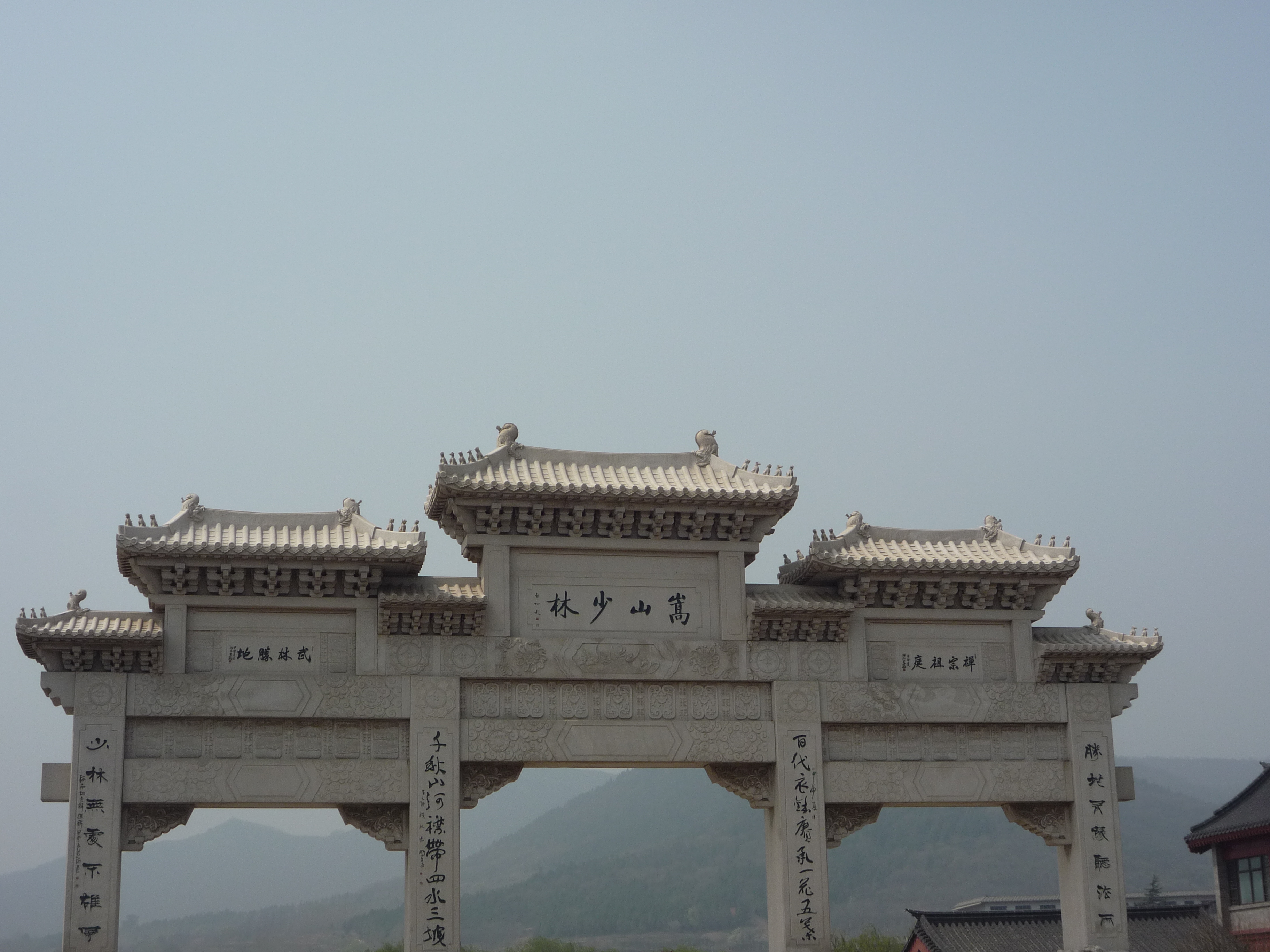
The world-famous temple known for the almost supernatural Shaolin Monks is located on Song Mountain and it was definitely on our agenda. Having never seen the old film, my eyes were glued to the screen despite my fatigue. A few early surprises—finding a young Jet Li in the lead role, and watching as his character kills a pretty innocent dog by smothering it on accident only to then cook it and share the meat with his fellow monks (who aren’t supposed to eat meat in the first place) in an effort to hide his misstep from the cute shepherd girl—kept me awake enough to follow the whole thing despite there being no English subtitles.

The movie’s credits rolled up the screen just as the bus came to a stop in Deng Feng, at the foot of Song Shan. We disembarked and hailed a cab, ignoring the ubiquitous “Black Taxis” that are everywhere in China. Those are people who are, as you can probably guess, not legal Cab drivers. They all appear to have black Volvos or BMWs or Volkswagens, and are really good at cheating folks. They like to target foreigners, but also snare their compatriots just as easily. Stay away. I’ll tell you more about Taxi Mishaps I’ve been privy to another time, just to elucidate the full range of my disdain for them, but right now we’re in Song Shan.

We outran the rain sometime a few miles back, so we could appreciate the small town without needing to duck for cover. The presence of the Shaolin Temple very obviously is the heart from which the community draws its lifeblood. Everywhere around the town frescos and murals of monks training or captured in some crazy aerial maneuver can be seen. Shops sell porcelain monks with styles ranging from traditional to down right gaudy.

The narrow streets and small shops don’t really scream tourist destination, but what really made the place feel like a quiet village mostly forgotten was the lack of people—Chinese and foreign. We had chosen to travel during this week because it was a normal work week for most and not a national holiday, but it still seemed like Deng Feng was more vacant than it should be.

Even the hostel we checked into had an empty feel to it. Don’t get me wrong, the little restaurant/hostel combo was very comfortable—especially the restaurant/café part. The interior had a decidedly international theme going. Flags strung up around the ceiling, pictures from different countries, and even the ever-present American country music rounded out the ambiance (I’ve asked before, but, seriously, what is with American Country Music in Chinese Hostel?). But we were two of what I later realized was probably less than ten guests. The people were nice, and in the evenings they show movies for free, so it’s a place I recommend.

Xi'an and Henan 644

Xi'an and Henan 156

It wasn’t too late in the day, still around lunchtime, so we decided to make plans. We bought tickets to the Shaolin Zen Performance for later that night, and then headed out to the famous Song Yang Academy and hike along Song Shan’s trails.

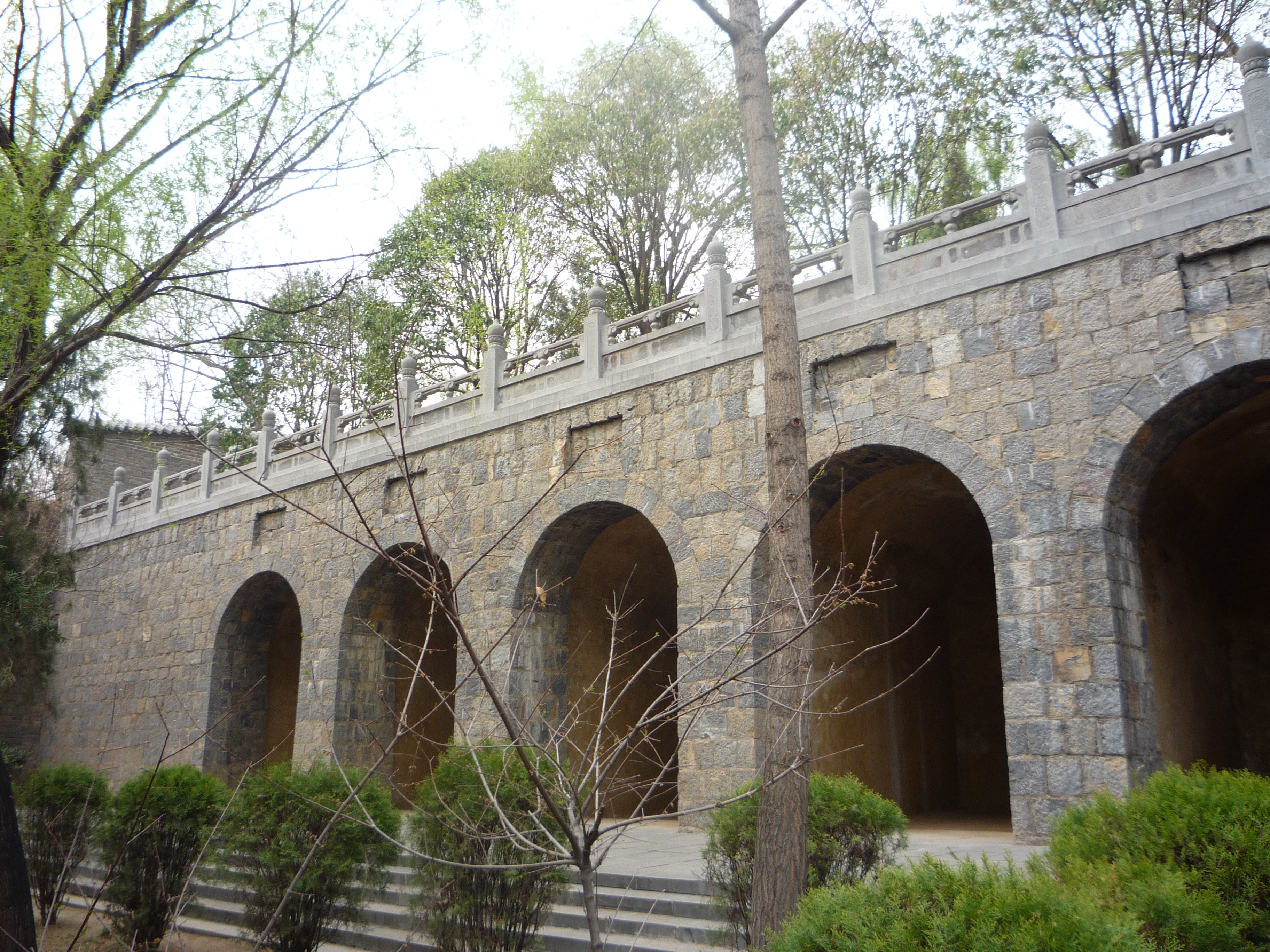
The ancient academy turned out to be pretty docile, but still worth a look. Truly ancient, the structure had first been used as a temple way back around 484 AD, but then became an establishment of higher learning for Confucian scholars hundreds of years later. Song Shan is a symbolic area not just because of Shaolin fame, but because it is on the mountain and its surrounding areas that three belief systems more or less peacefully coexisted—Buddhism, Taoism, and the art of Zen.

Xi'an and Henan 440

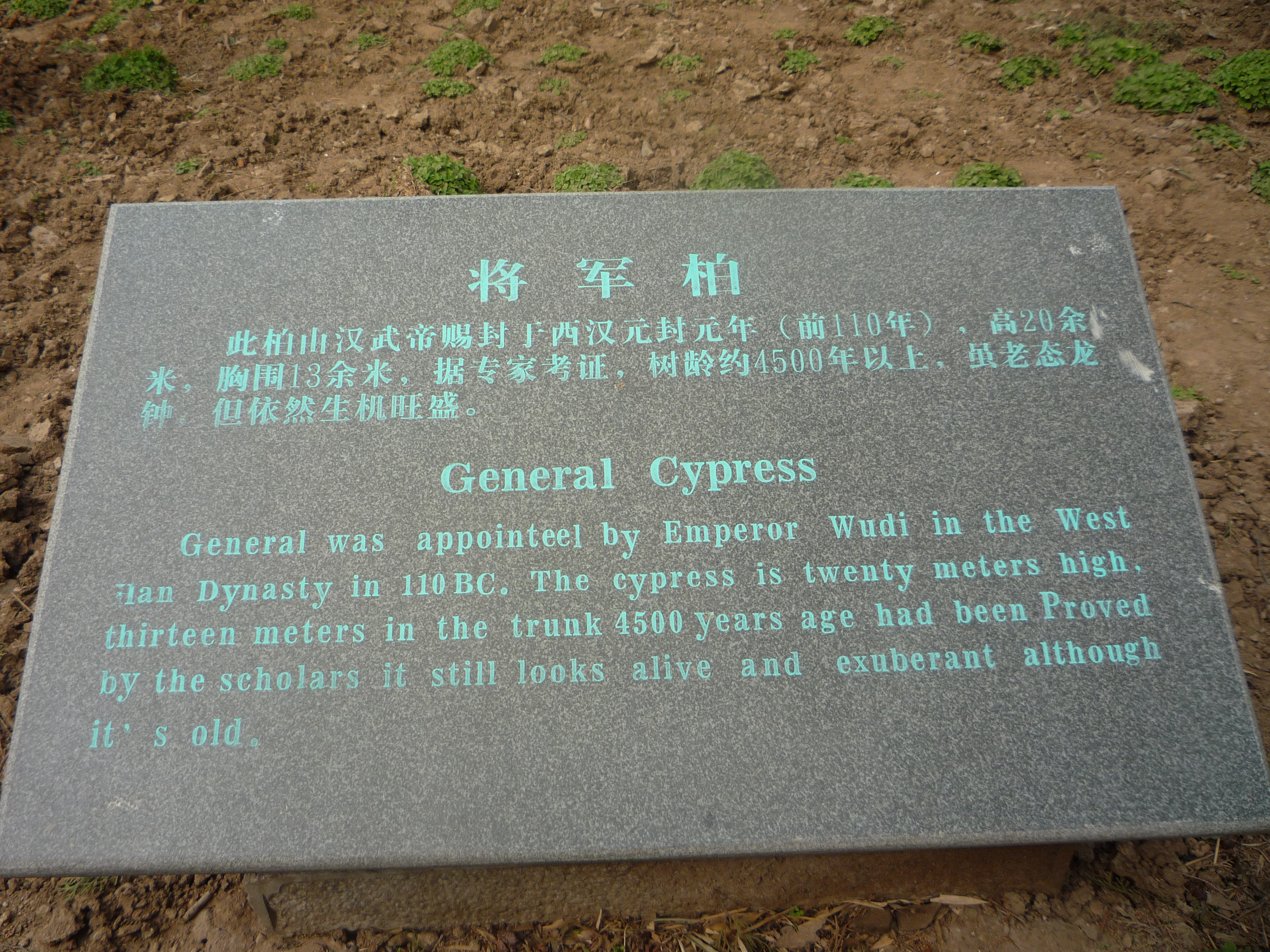
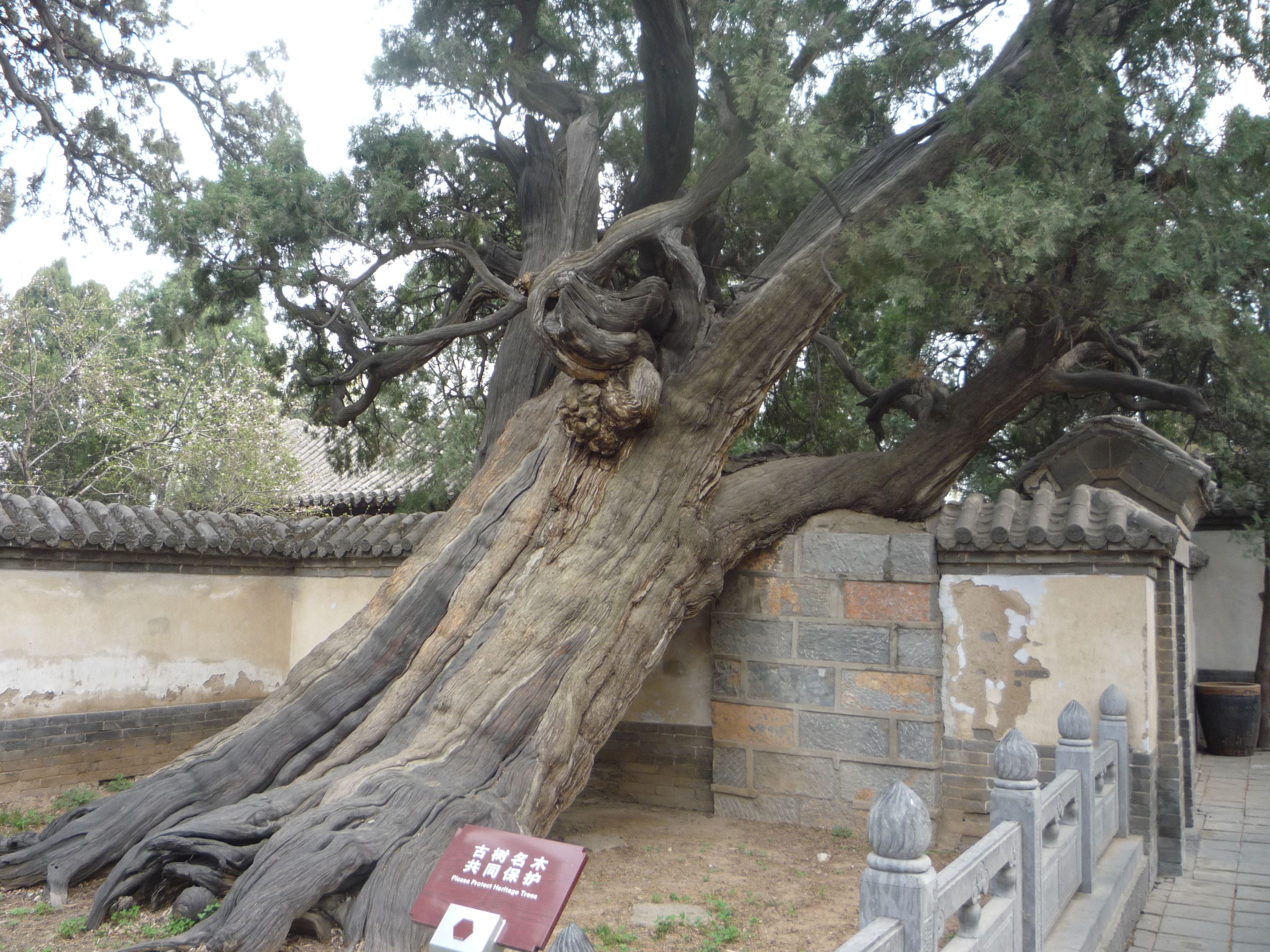
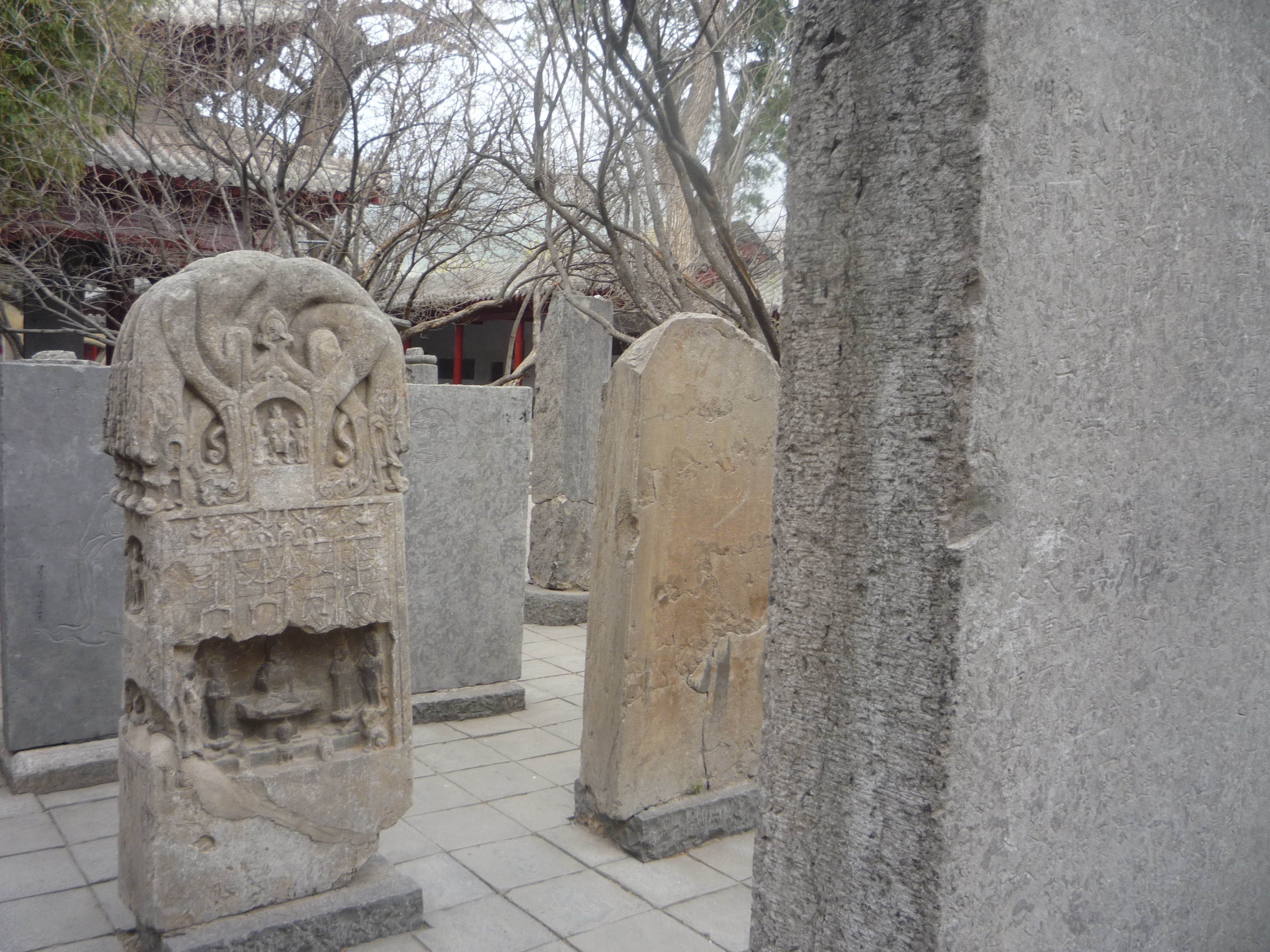
We walked through the open courtyard design and I couldn’t help but think of the Great Mosque in Xi’an, the one with similar open courtyards. Ancient tablets with faded inscriptions and tombstones with faded names were everywhere. Two gianormous Cyprus trees also hung out in the courtyards. These suckers were huge, and old, apparently.

Xi'an and Henan 479

Xi'an and Henan 471

Xi'an and Henan 470

Xi'an and Henan 447

Xi'an and Henan 464

Xi'an and Henan 465

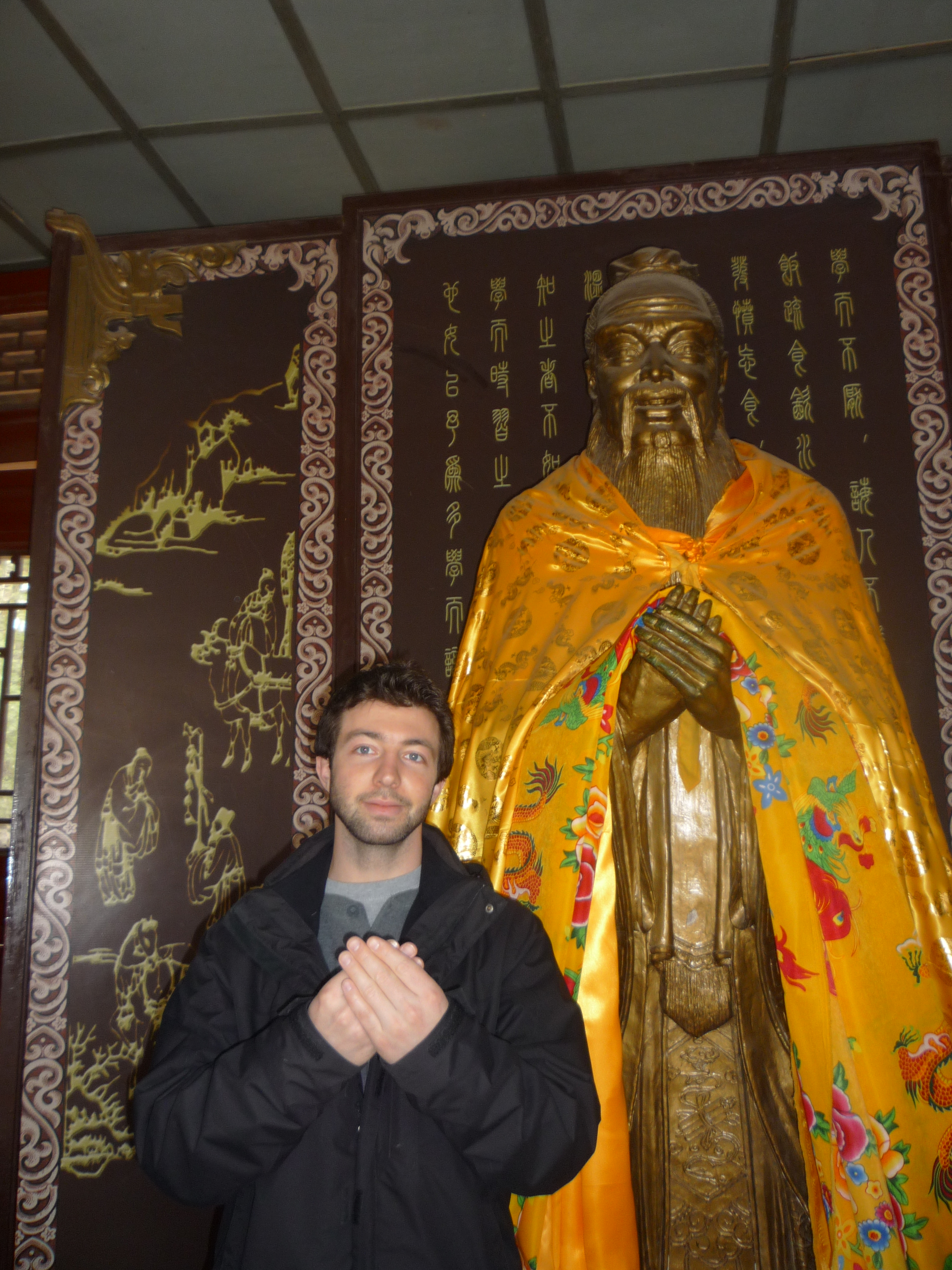
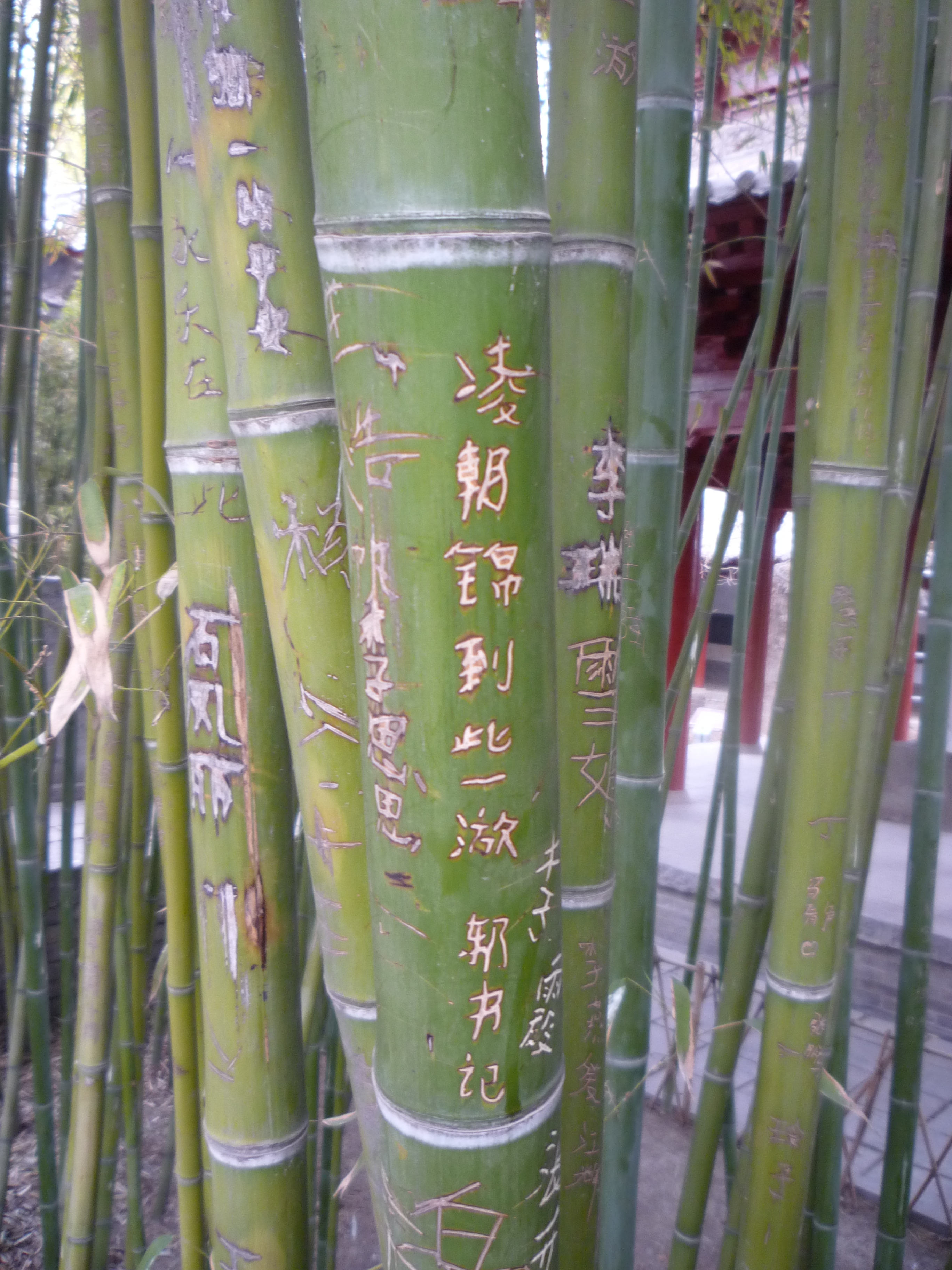
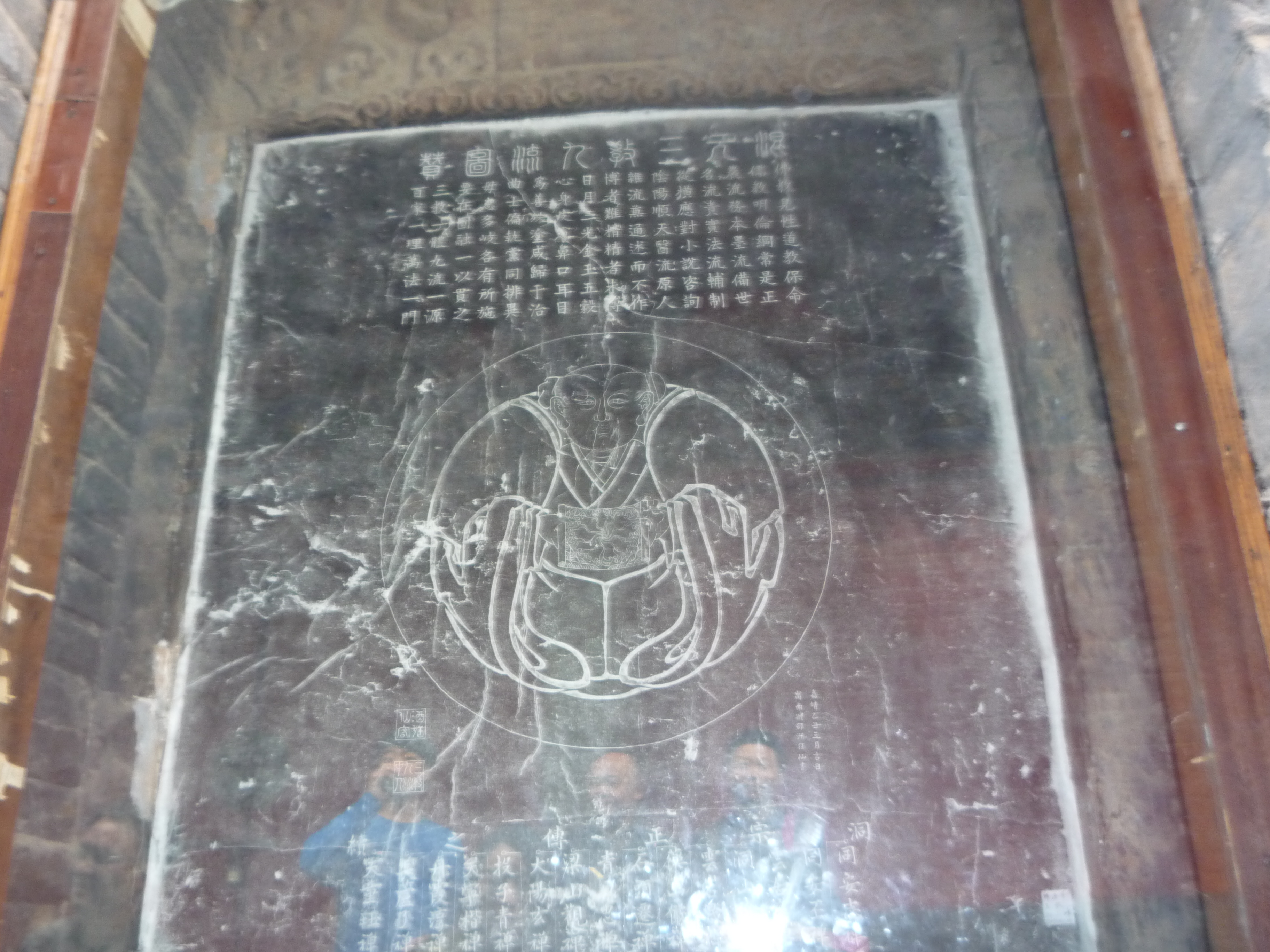
I took some snapshots with Confucius and some bamboo graffiti, and then we found a little room where a man sold charcoal prints he claimed were taken from tombstones and frescos at the Shaolin Temple. I wasn’t supposed to take a picture…but I did anyways. He even sold five together in a pack, and after some serious bartering, I managed to get him to sell us one set for 100 RMB. Xiao Ming and I split them three and two. One of the prints I eventually had set into a scroll and gave to a friend as a gift. It was an old Chinese poem, but the characters were created from the leaves dangling from a bamboo tree. Pretty cool image. The other two I kept were also very interesting. One, a face made up of three people’s face was symbolic of the three beliefs on the mountain, and the other one, a representation of the five sacred mountains of China written in ancient characters. But what made them all even more interesting was knowing that the designs had actually all come from the Shaolin Temple, which we’d be seeing the next day.

Xi'an and Henan 498

Xi'an and Henan 484

Xi'an and Henan 485

Xi'an and Henan 467

Xi'an and Henan 631                                       This is the one that represents the three beliefs in one figure. The figure is comprised of three people, the big cheeses of Buddhism, Taoism, and Zen.

Xi'an and Henan 421

Xi'an and Henan 423

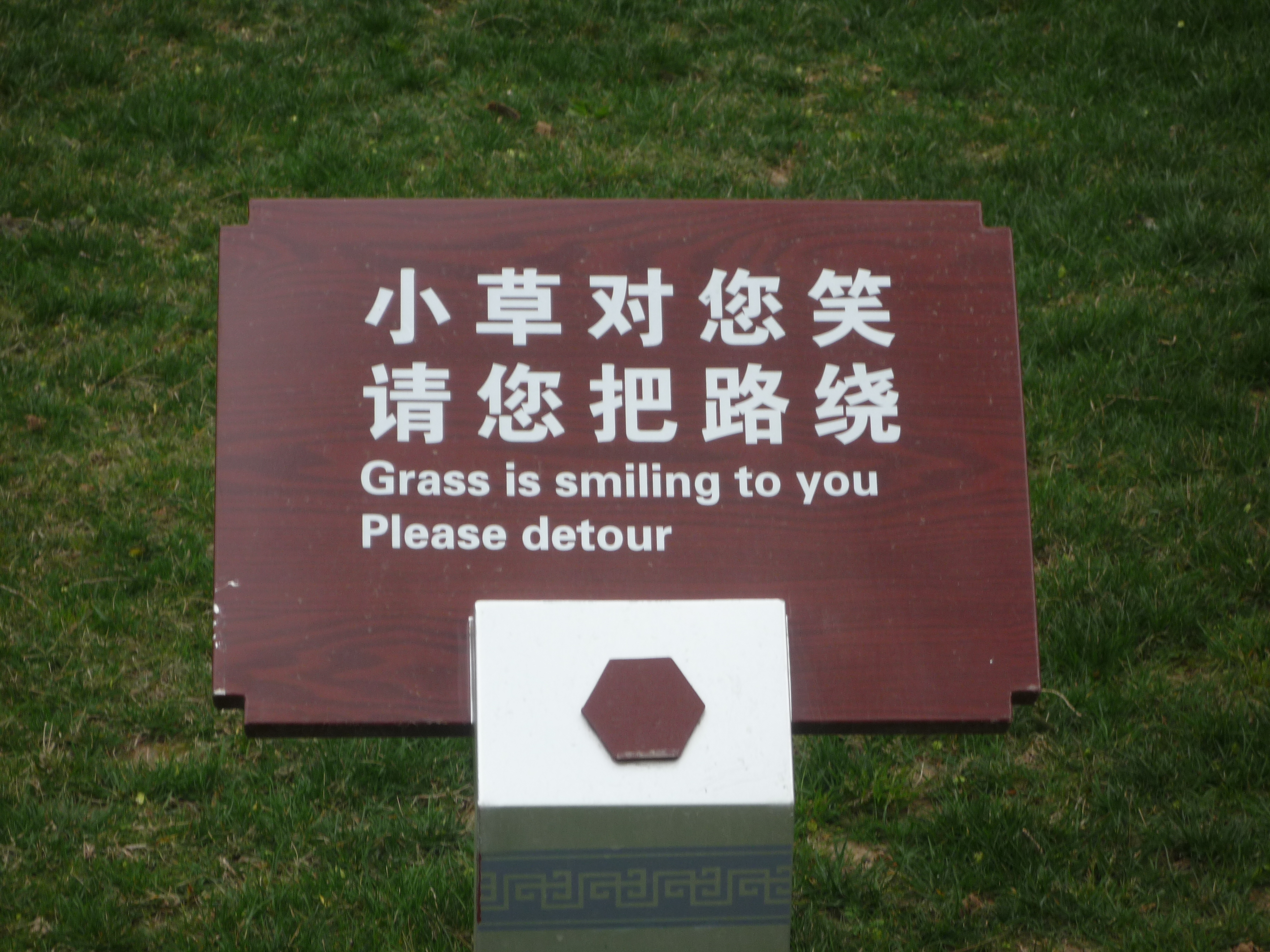
Chinglish!
Because when grass smiles at you the fit is gonna hit the shan, man.

Thirty minutes into the hike, I realized two things: All of the people visiting the area had apparently congregated on the trails, and there was no way I was going to make it off the mountain alive if I didn’t turn back. The climb is really easy. Song Shan is a very old mountain, and it’s kinda got a globular shape more than a mountainous one. They even frequently refer to the mountain as an Old Man or Grandpa. It’s not steep at all, is what I’m saying. NO, it was my cold that had suddenly decided to kick my ass.

So in a move so out of character it was basically against my morals, I went back to the hostel and took a nap.

I look like a zombie, man. I was wiped out..

Later that night, though, I felt better.

We were driven about fifteen minutes away, to this outdoor theater of sorts, where the Zen Performance is held. The air held a chill that we hadn’t felt all vacation. Luckily, we packed anticipating a night or two of colder weather so we just enjoyed the brisk breeze and watched the show.

Xi'an and Henan 507

Xi'an and Henan 509

Xi'an and Henan 525

Xi'an and Henan 517

Xi'an and Henan 518

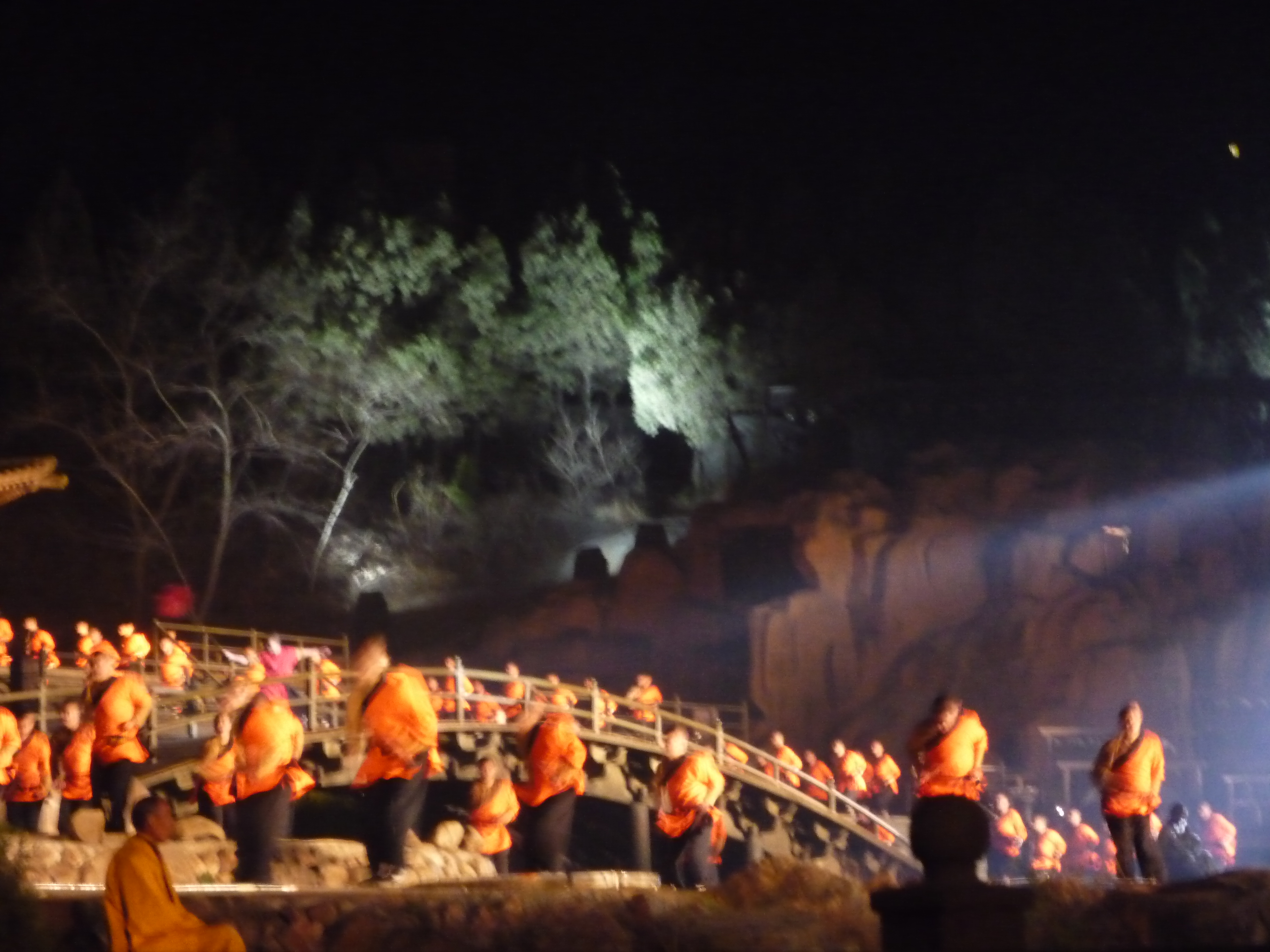
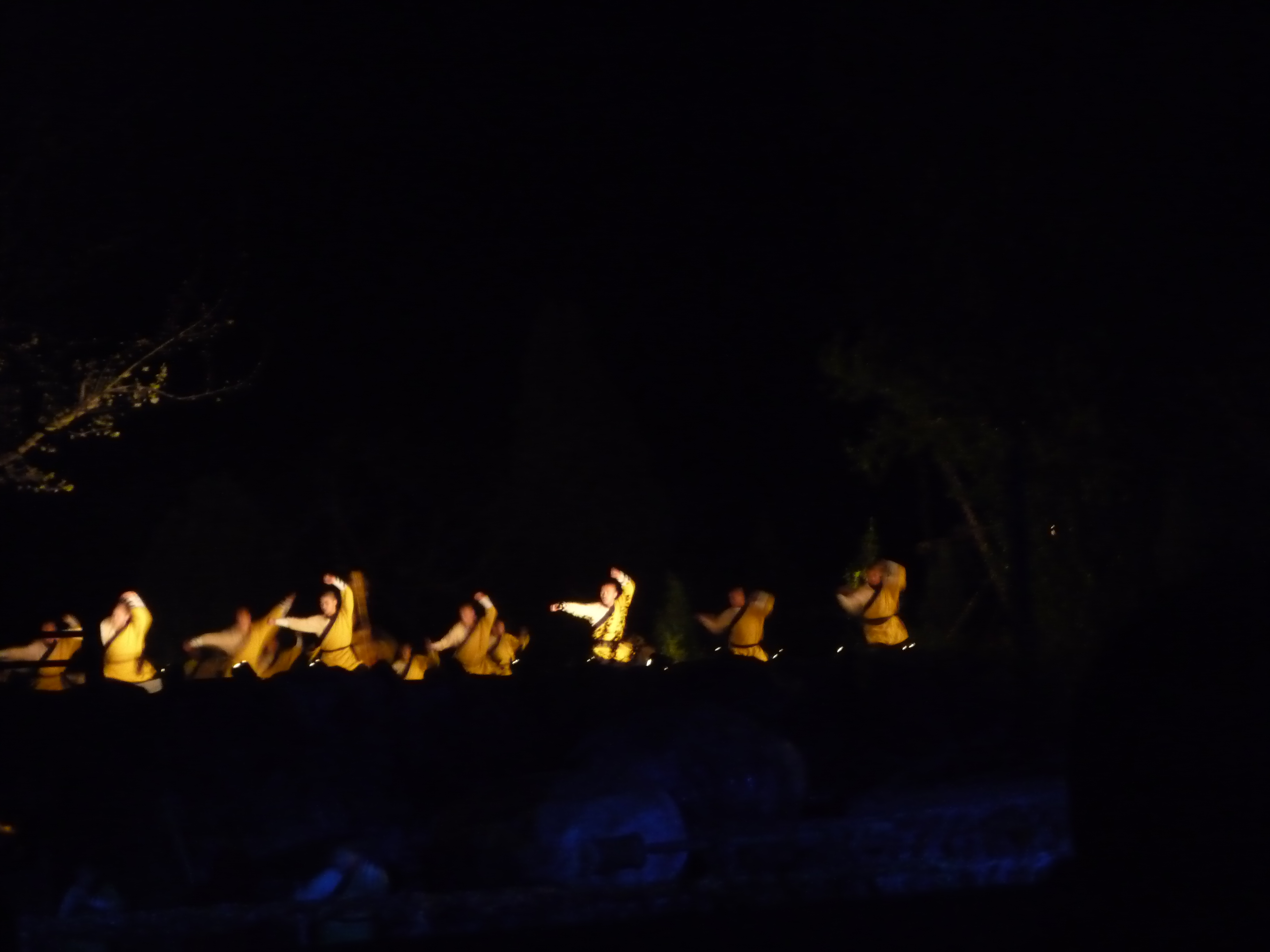
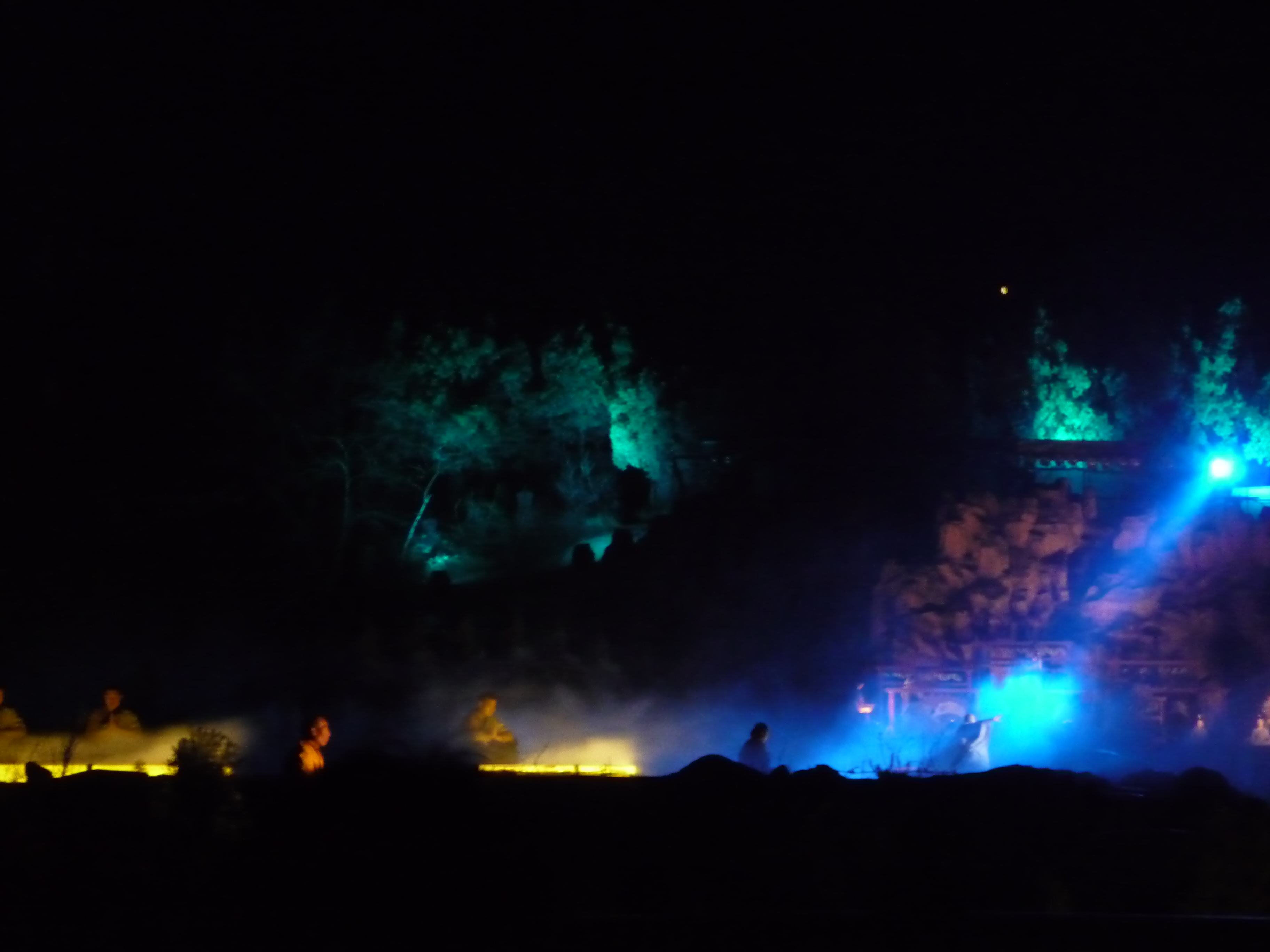
The “stage” is really an elaborately designed set that is modeled after a village. Not just any village, either, but the one from the film, Shaolin Temple. And the show itself seems to model every act on scenes from the movie. First thing the audience is treated to is the sight of five elderly men in dark orange/yellow robes sitting in rigid positions about thirty feet in front of the area the audience is sitting. The men, we are led to believe, are traditional followers of the Zen practice. For the entire duration of the show they DO NOT MOVE. It’s cold, windy, and they are in robes, but they do not flinch, not even to pick their nose or scratch an itch. At different points in the show Xiao Ming and I questioned their very humanity, finding it hard to believe that modern geriatrics could pull off what we were witnessing.

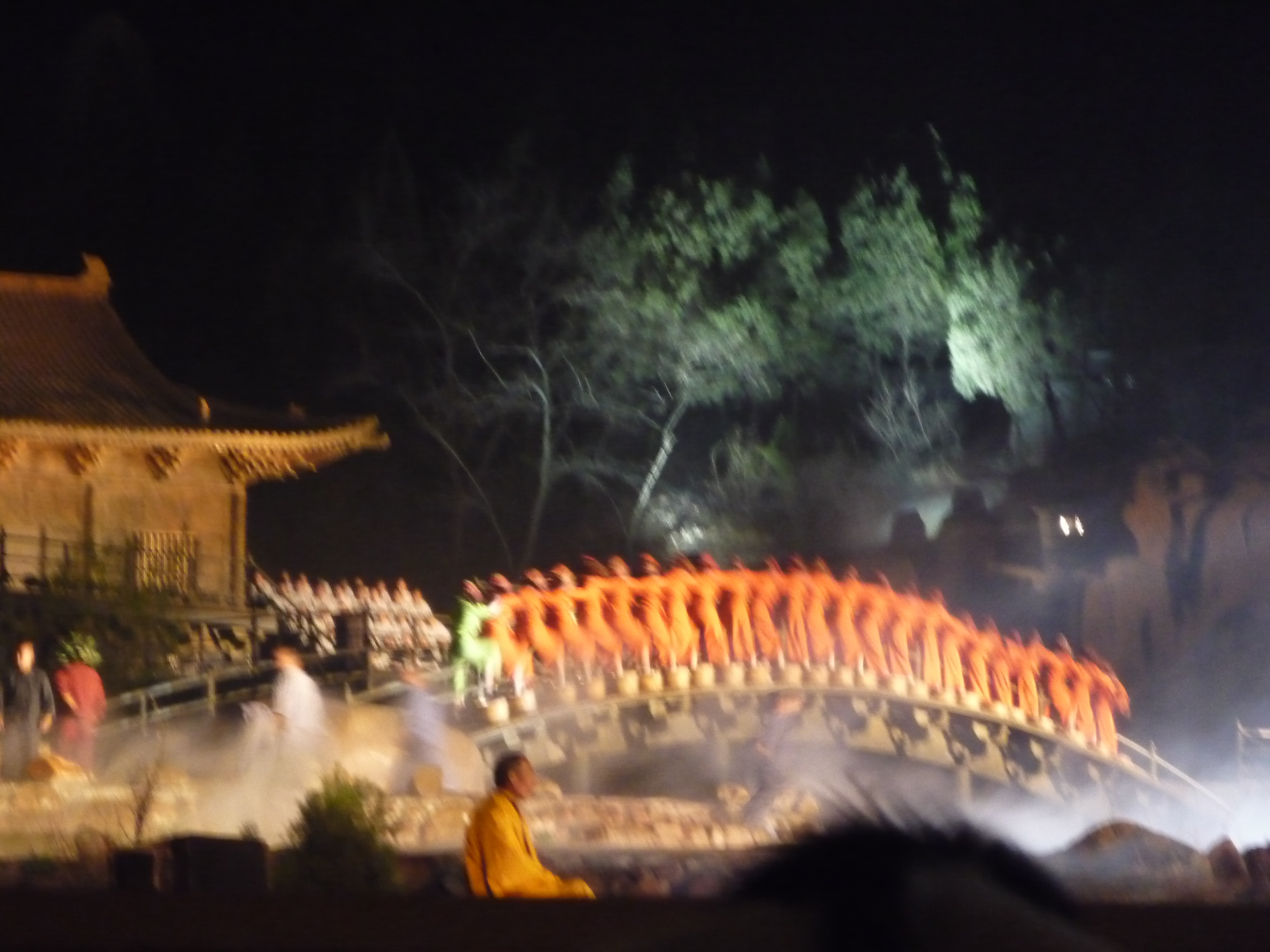
The rest of the actual show progressed just as the movie had. We watch as a beautiful shepherd girl takes her flock to some fresh grass (they use real sheep and goats and seriously lead them to patches of grass on the stage). Then a bunch of young monks-in-training toting buckets held out to their sides come racing along the “village,” chanting all the way. Lights and music swirl around in the open air, and what’s probably the most impressive sight of all is the natural face of the mountain in the background, above and behind a temple. In the night the temple and mountain would normally be impossible to see, but they have incorporated both into the show as part of the set by having landscaping lights cast ethereal glows of greens, blues, reds, and purples all along both at different times. I found it difficult to constantly follow the show instead of just marvel at the scene and let the music fill me.

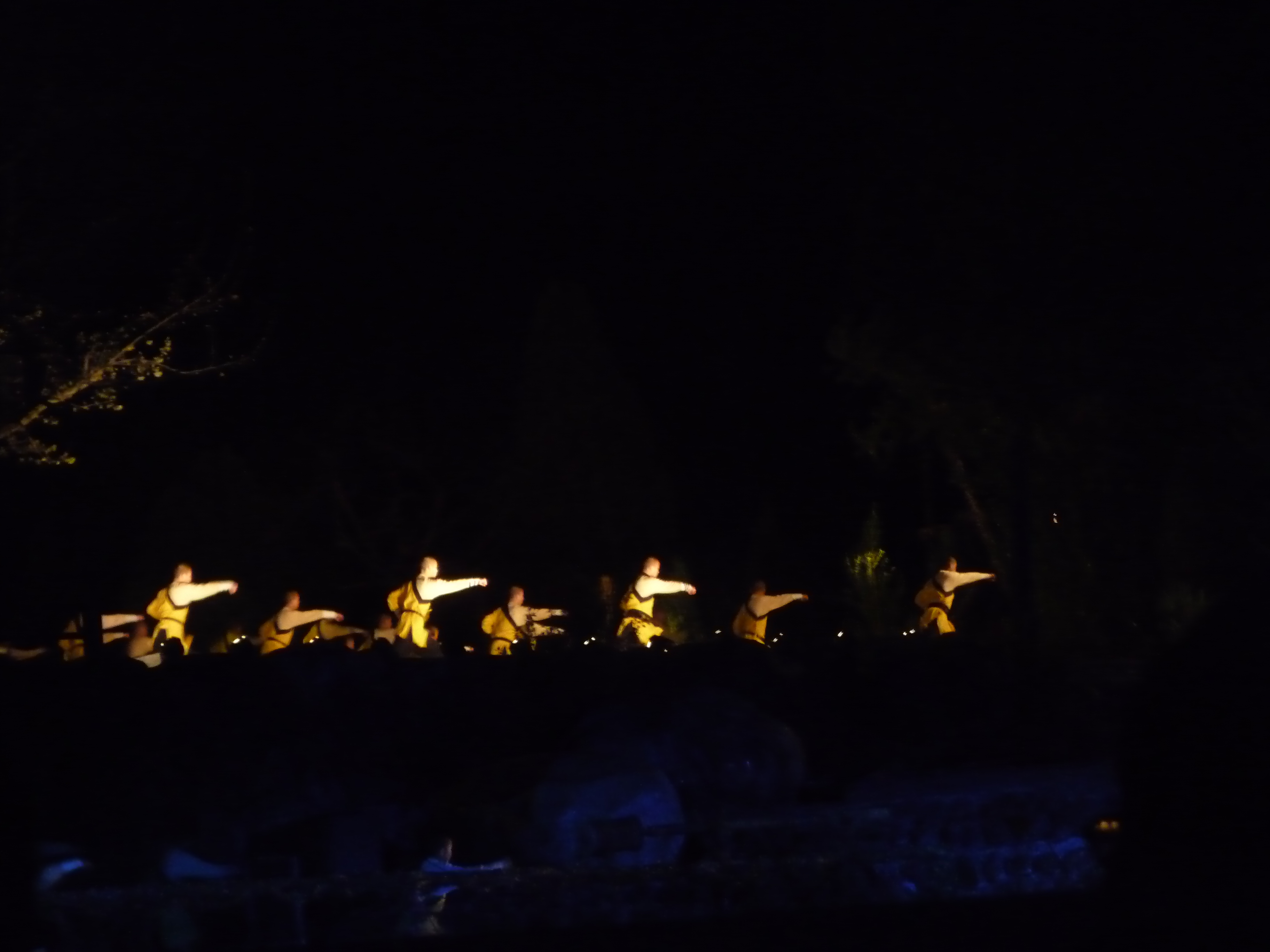
From young monks carrying water the show moves to slightly older monks going through fighting stances. The group seems to be in their early teens and much more focused. They through punches and kicks, and grunt and holler like true warriors, mostly. More dramatic music and dazzling lights. Then another group, older, going through more techniques, this time with weapons. The show continues on like this for a while, with small groups of monks performing various skills with an array of weapons. They pop up at all places, fully making use of every inch of the set, and making it easy for every audience member to see them. They never stay in one part too long.

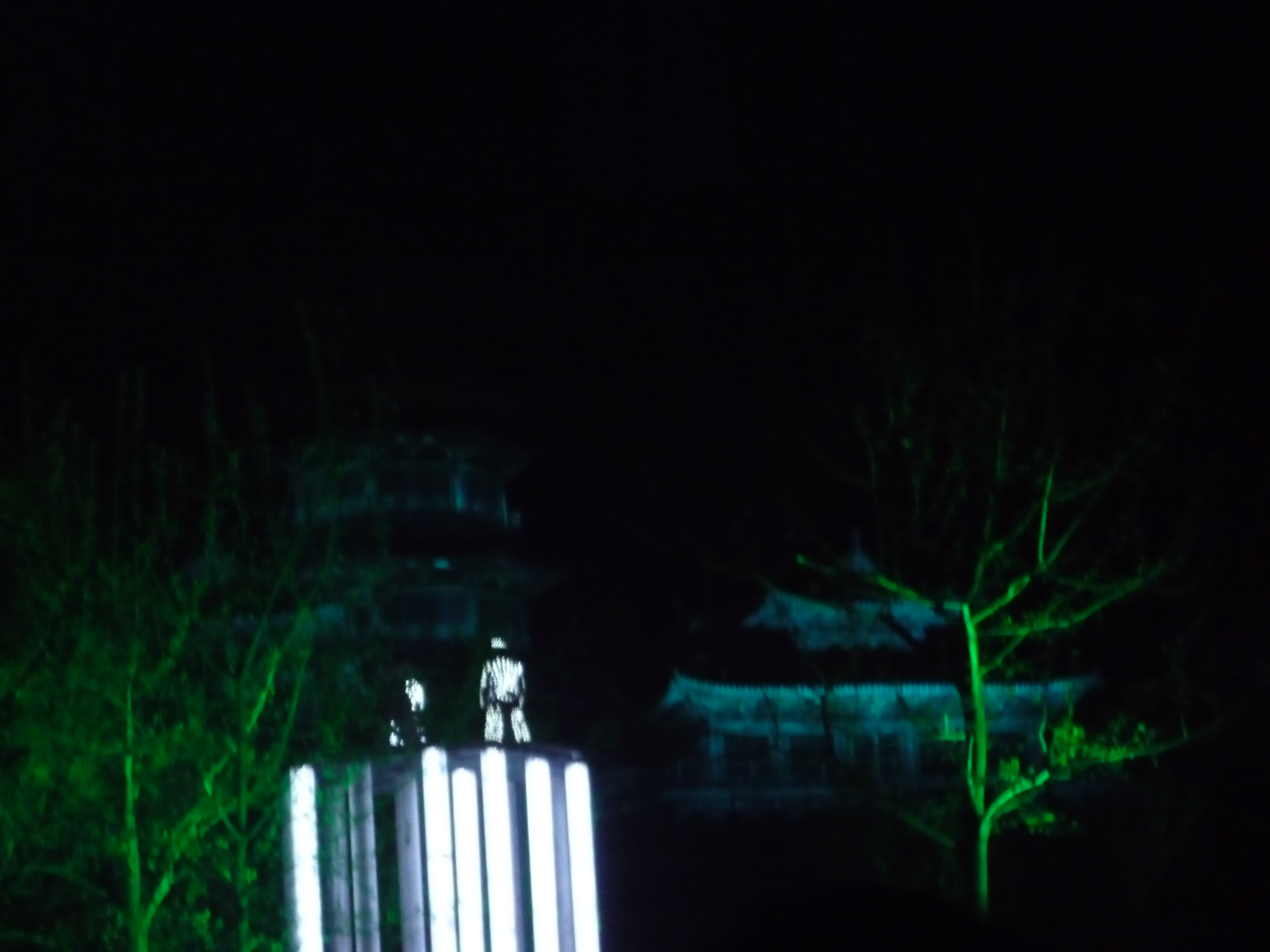
At one point a portion of the stage actually lifts into the air and three electrified monks give an exhibition that looks like Christmas trees seeking revenge for being chopped down. Simulation battles, traditional Chinese songs, crazy light work, and five or six old monks who probably didn’t even blink the whole darn time—that about sums up the show.

Xi'an and Henan 515

Xi'an and Henan 511

This image really just utterly fails to do any form of mild justice to the beauty of the actual scene…I’m sorry.

Xi'an and Henan 529

Xi'an and Henan 534

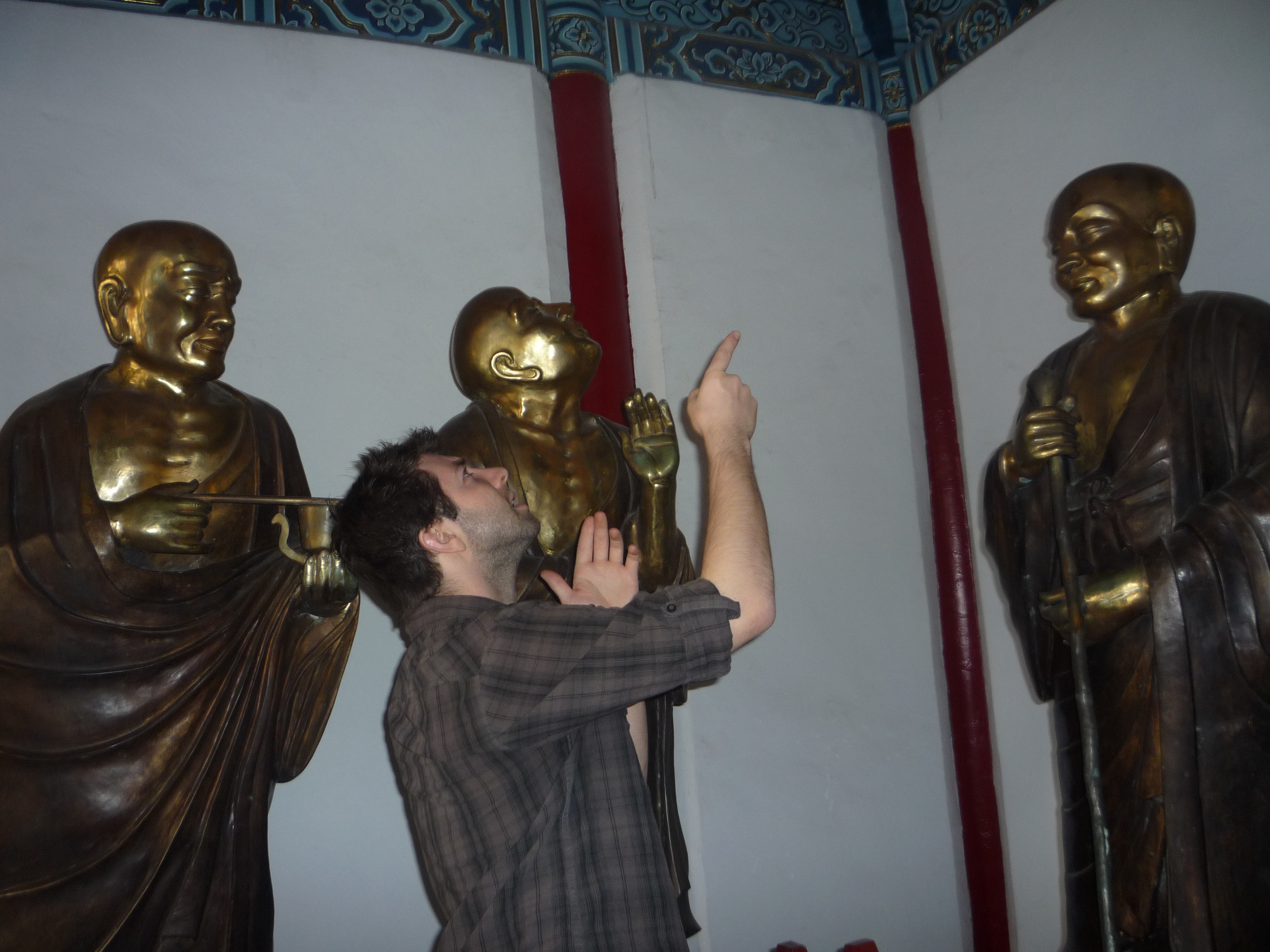
When the lights dimmed and the woman on the speaker politely kicked us all out, then, under the cover of near-pitch black conditions, I saw the monk statue closest to us turn and look at the audience. They’re alive!

That night, back at the hostel, we hung out in the café/restaurant part and watched the movie, The Way. I had seen the flick before, but watching while you’re traveling gives it a different perspective. It’s about a father who goes to retrieve his deceased son’s possessions at the beginning of the Camino de Santiago. If you don’t know what that particular road is I recommend you do a little Googling. In the film the father, Martin Sheen, doesn’t just collect his son’s (Emilio Estevez) stuff, but travels along the old pilgrim’s road in an attempt to…just finish his son’s last goal. It’s a great movie that asks you to just take a look at what you’re doing and decide if that’s what you really want to be doing. Of course, the lead is a doctor who has the financial freedom to take more vacations than most of us, but the main thoughts are pretty accessible to all socio-economic levels.

In fact, when I began telling people that I was moving to China for a while a huge majority of them sighed and expressed a desire to do something similar, only to amend the wish with the words, “But I can’t.” I’ve not got much to my name, I’ve made scores of mistakes, and I’m still too young to be qualified to give advice, but when I think about all the people who have desires to change their lives, that want to do something else, only to crap on their own dreams with sentiments like, “someday,” “I can’t,” or “I don’t have the time,” I just want to make a blanket statement, the same answer to all of them: “Yes, you can.” That’s not a political reference but a basic building block of a simple belief. You can change yourself and your world.

Okay. That’s it. Pulpit is being burned down and used to cook come good Korean barbecue.

Xi'an and Henan 537

Xi'an and Henan 540

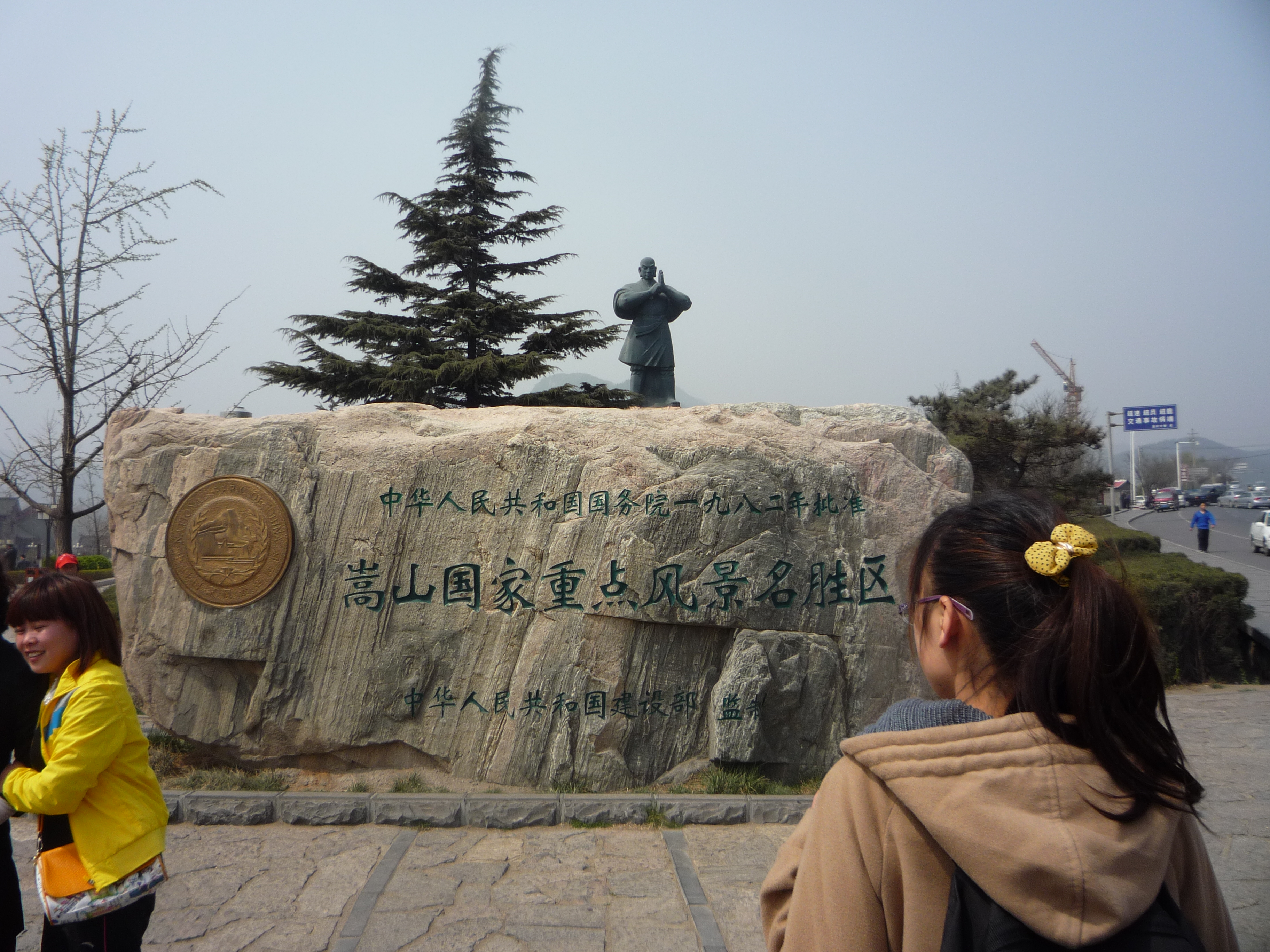
The next day we took a bus to the Shaolin Temple bright and early. The temple area is more like a very big campus. You are greeted by a giant statue of a muscular monk, and then must walk a gauntlet of souvenir shops before you get to the actual grounds of the temple and its surrounding structures.

We took a cable car ride up the mountain to check out the scenery. I picked up a medallion as a souvenir for my step-dad and had the merchant carve his name into it. After having negotiated rather expertly for the prints earlier, I was disappointed when I only got the guy to take five RMB off the original price. Then we came back down and wandered around the Pagoda Forest for a while.

Xi'an and Henan 567

Xi'an and Henan 559

Xi'an and Henan 441

Xi'an and Henan 545

Xi'an and Henan 555

Xi'an and Henan 564

We nearly missed the Shaolin Monk performance, but we raced down the narrow paths to the building and squeezed through the crowd in the dark theater and made our own seats at the base of the stairs. Creating our front row seats was surprisingly simple and a small kid thought it was a good idea, too, so he sat right next to me and periodically chatted with me in Chinese throughout the show.

The show itself turned out to be fun, but less genuine than an American kung-fu flick. Sure, the young monks had great skill and twirled their swords, staffs, and chains with precision, but the whole feel of it seemed a bit affected, a little too commercialized. A funny part of the half-hour performance included three young monks teaching three audience members a few steps and tumbles in the Monkey, Snake, and Tiger styles. The three audience members, young Chinese guys about my age, took to the tasks with about as much grace as a Hippo on a pogo stick.

A few demonstrations of qi were also part of the whole thing. One monk threw a needle through glass to pop a balloon. Another bent some metal bars with his neck. A third one did push-ups with one finger. All to rounds of applause.

After the show Xiao Ming bought a cheap DVD with more demonstrations and then we left the building. On the way out visitors were given the opportunity to pose for photos with young and old monks in fighting stances, or even allowed to hold blunted weapons and pantomime gestures for the camera.

Xi'an and Henan 603

Finally, we headed to the actual Shaolin Temple.

It looked just like the movie! Only…smaller, in some way.

We entered into the temple, another open courtyard design (What is it the Chinese have against roofs?), and wandered around taking it all in. There were tons of other foreigners and Chinese tourists, some in small groups and others in larger ones led by tour guides. One group of French travelers had a Chinese guide with great French, so Xiao Ming (who got her PhD in France) kinda stalked them to get as much info as she could.

Xi'an and Henan 611

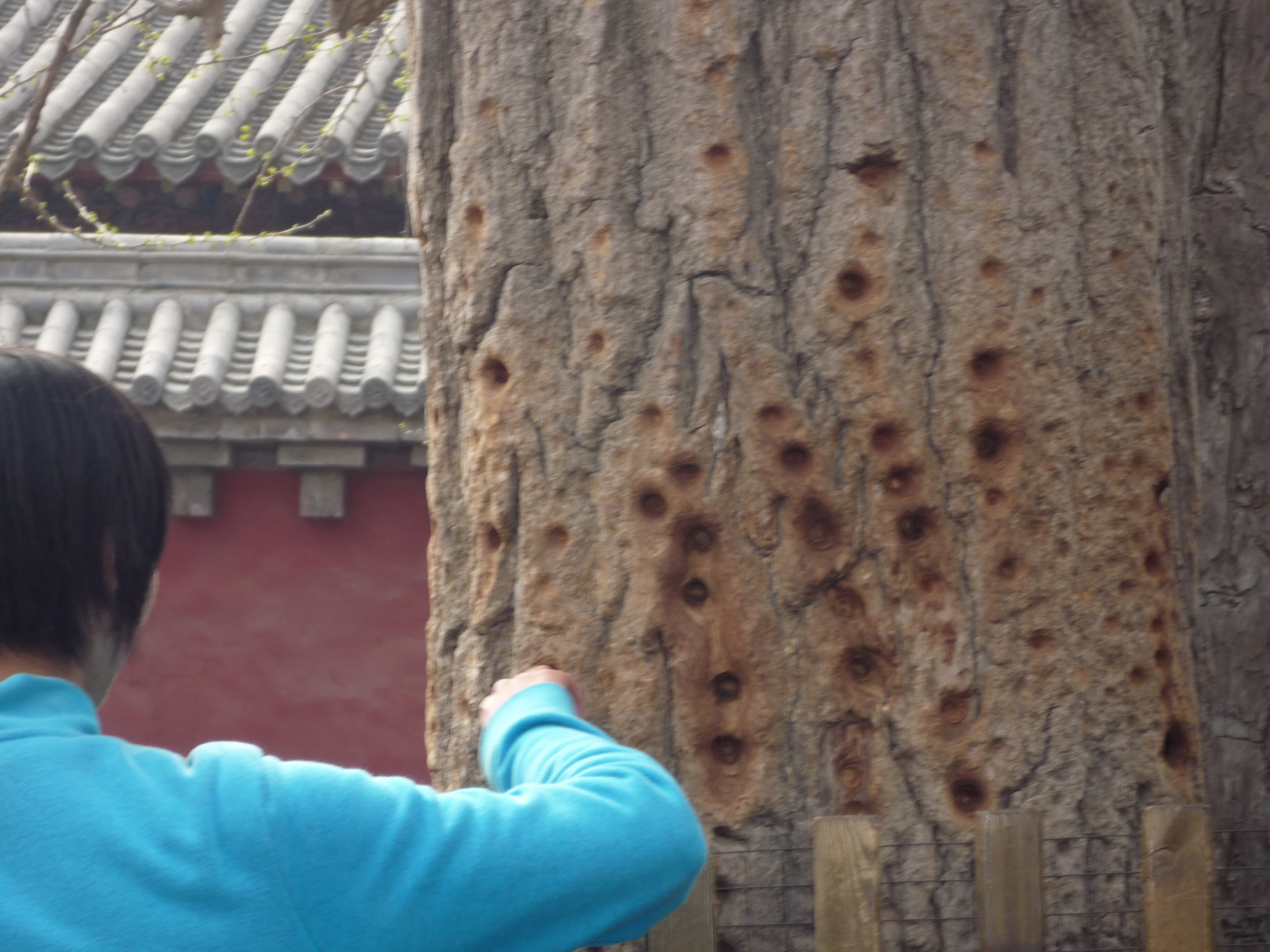
A tree where monks practiced the sacred technique of poking.

Xi'an and Henan 579

Xi'an and Henan 577

Xi'an and Henan 615

Xi'an and Henan 626

Xi'an and Henan 609

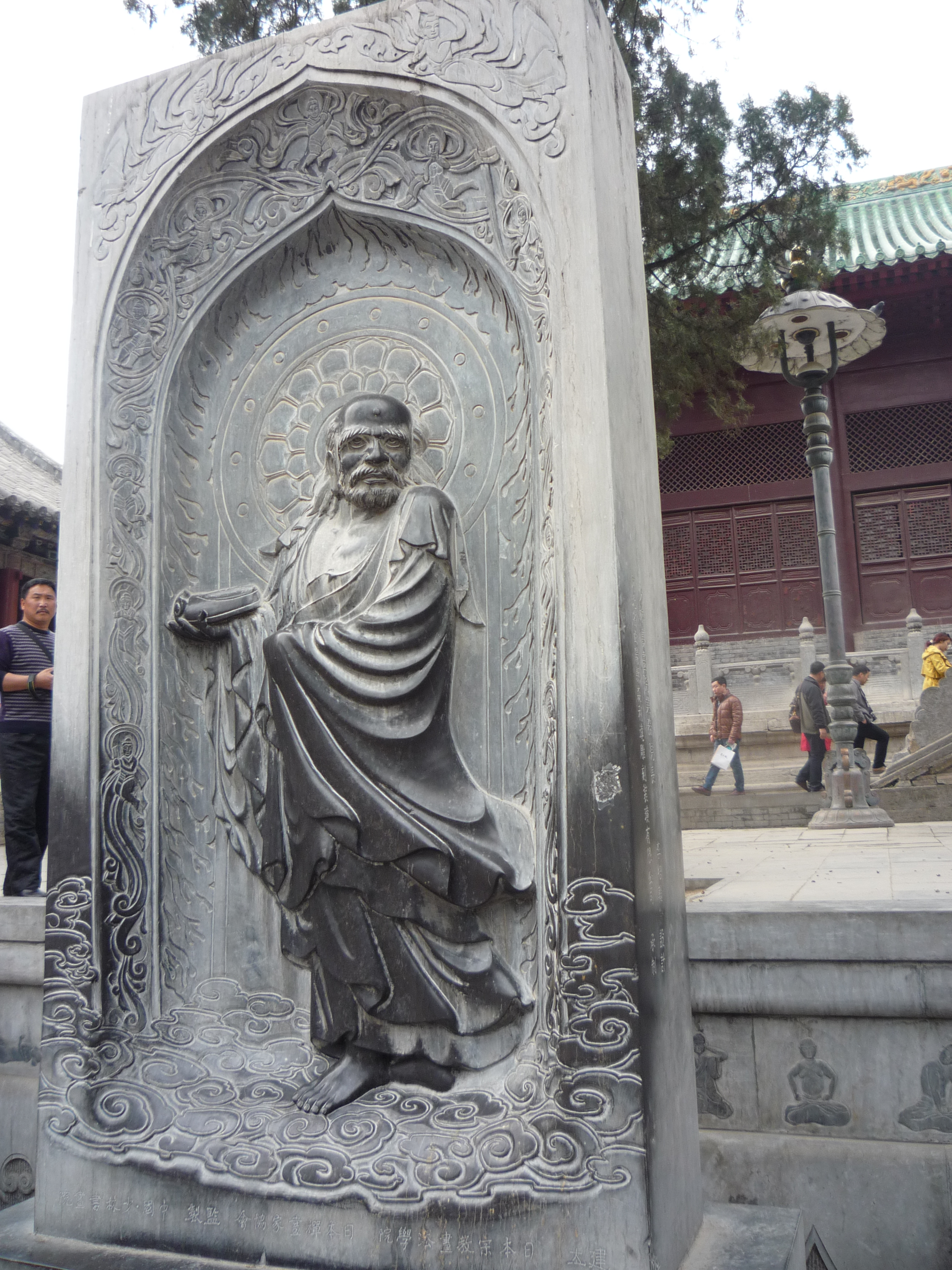
One of the famous monks from history Da Mo, is said to have been the one who gave Chan Zong or Zen to the Shaolin Temple. Legend says Da Mo traveled to India and back to learn the secrets of Buddha and that when he got back in town the current leader of the temple, otherwise known by his title as the Fang Zhang, wanted to become his disciple. Da Mo didn’t like the guy’s face or his arrogance or something, and said, “nope.” Instead, Da Mo found a cave and spent the next 8-9 years staring at a wall. The Fang Zhang, however, spent the better part of the next decade bringing food to the crazy guy in the cave so that he didn’t just rot away before he could pass on his teachings. Da Mo apparently psychically teleported the food from the bowls to his bowels because the legend says he just sat there, without moving. The Fang Zhang eventually got around to asking Da Mo what the hell, and the crazy man’s reply came out as something like, “Until the snows that fall become red, I will not train you.”

Having no regard whatsoever for himself or a rather inflamed sense of trust in men who spend every waking moment staring at walls, the Fang Zhang took the words to heart and chopped off his arm. He sprinkled his blood on a snow bank and then promptly tried to spell his name before giving a shout to Da Mo. When Da Mo got there he realized that the Fang Zhang’s crazy was that special little something that had been missing from his cave-staring days, and decided to take him on as a disciple.

The Fang Zhang’s masochistic nature is why Zen monks still walk around with their right hands in front of their chest. That, or it represents devotion and discipline. Either one.

Like this...
Like this…

Another story, about kung-fu, says that it was the fighting prowess of the Shaolin monks that helped soon-to-be emperor Li Shi Min defend China against an evil opposing army. Of course, this is the story that’s depicted in the film Shaolin Temple. In the end, after the bad guys are vanquished, the emperor grants the fighting monks of the Shaolin temple the right to eat meat and drink alcohol. So basically, he gave China’s bodyguards the right to get plastered. Nice guy. Also, throughout history the monks show up to help emperors—always on the side of justice, of course.

Da Mo himself, ladies and gents.

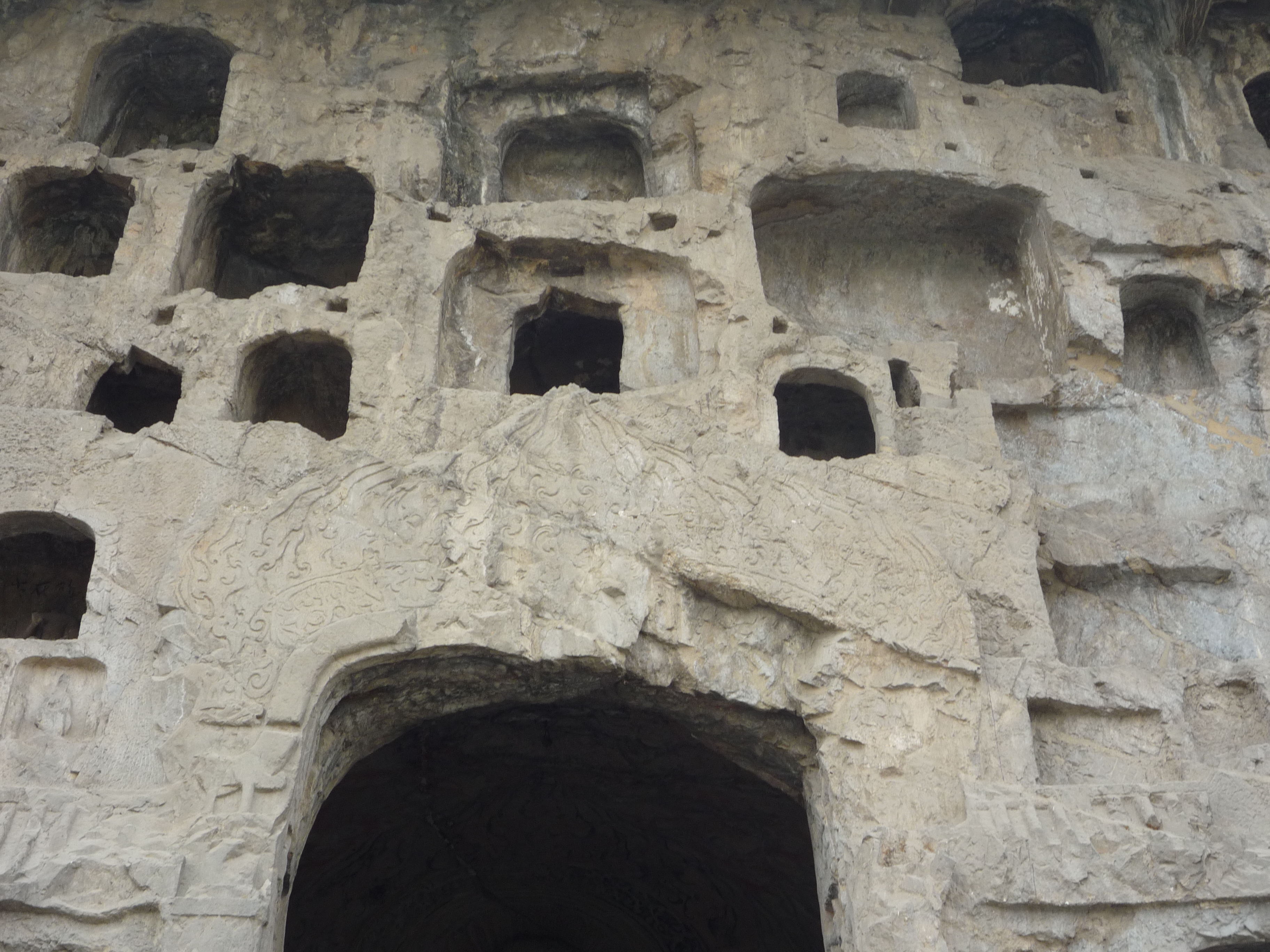
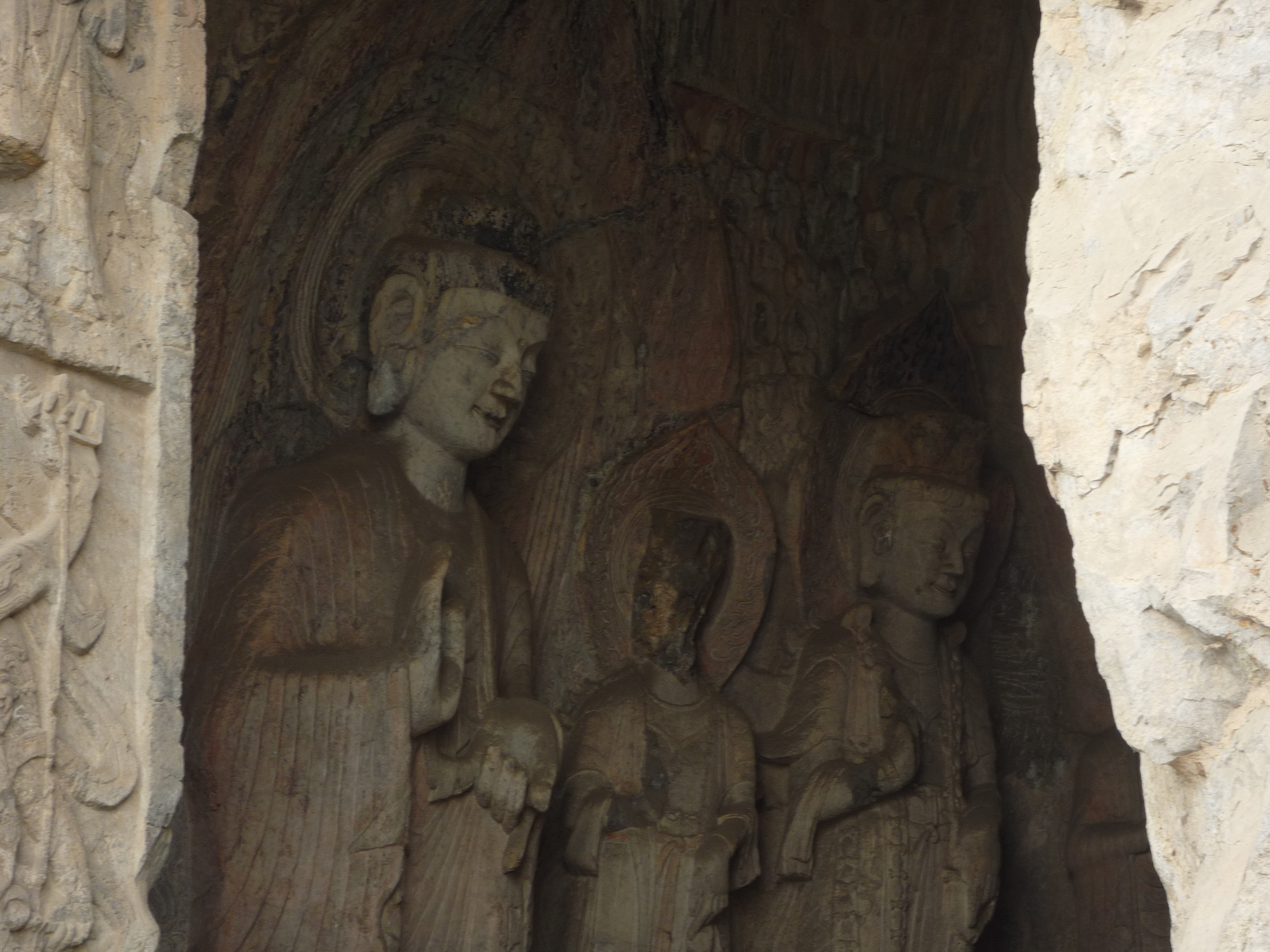
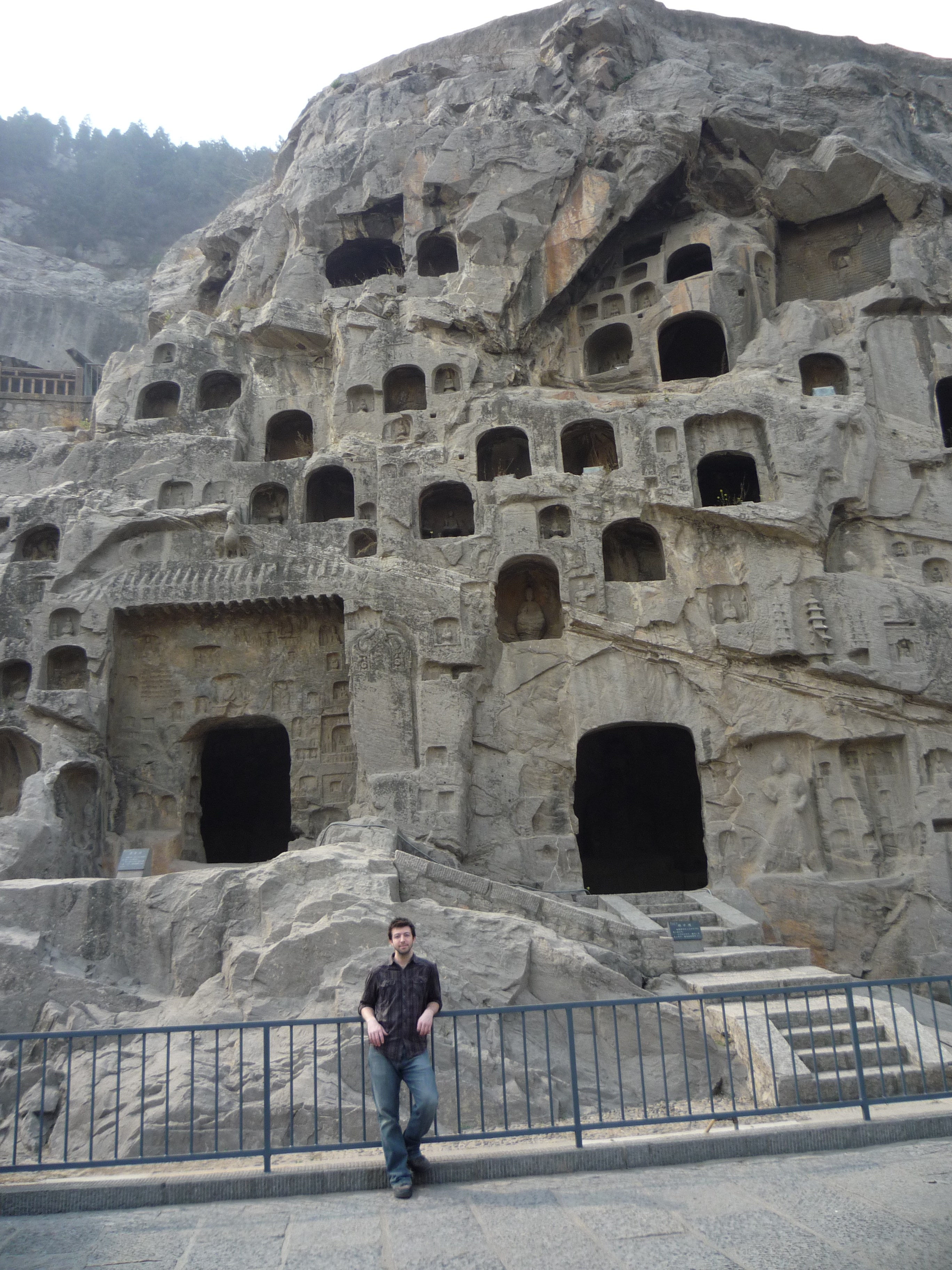
Unfortunately, a lot of the structures of the temple are not that old. Fame didn’t really do the temple any favors over the centuries. At different times, various walls and courtyards of the temple have been destroyed and burned down. The most recent was sometime in the 1930s. Just like the Longmen Grottoes, the place has fallen victim to the crashing, volatile waves of political unrest, and iconoclast tyrants.

Back at the hostel we grabbed some grub and chatted with some of the locals. We turned in early in order to wake refreshed the next day. My cold still clung to me with a vengeance, but it had been a great trip regardless.

The next morning we caught a bus back to lovely Zhengzhou and then a cab to the airport. The taxi driver turned out to be a huge conman, but we made it to the airport in time to board the plane despite his over-the-top disregard for human decency.

On the flight back to Dalian Xiao Ming and I talked about Chinese history, and I outlined a story idea I’d been nursing for the last few days inspired by the places we visited. I reviewed some of the new words I’d learned and tried to sleep a bit.

Shaanxi and Henan Trip: Days 4 and 5

Luoyang is a city in the western Henan province of Central China. It borders the provincial capital of Zhengzhou to the east, Pingdingshan to the southeast, Nanyang to the south, Sanmenxia to the west, Jiyuan to the north, and Jiaozuo to the northeast.

Situated on the central plain of China, one of the cradles of the Chinese civilization, Luoyang was one of the Four Great Ancient Capitals of China.

That’s all well and good, Wikipedia, but what you fail to mention is that walking around outside in the city is like sucking on the end of a car’s tailpipe. Yes, the place served as the capitol for 13 ancient dynasties, but today its dusty streets, polluted air, and unending industrialization makes Luoyang a far-cry from the picturesque town that captured the fancy of the famous writer Bai Juyi during the Tang Period.

We got to the city by taking the High Speed Train from Xi’an. Getting the sword through security proved a bit easier since we had wrapped that baby up tightly. They still insisted that I not take it out and swing it around while on the train, though.

We took a bus to the youth hostel and got situated before heading out to the one redeeming quality the city has: Longman Grottoes.

Xi'an and Henan 299

Xi'an and Henan 307

Xi'an and Henan 319

Xi'an and Henan 324

Xi'an and Henan 358

Xi'an and Henan 369

Now I’m sure I’m not giving the city it’s due credit, and since I was only there a day, I’m even willing to bet there’s more to the place than what I saw….but I just don’t care. Really, as I walked around outside in the heart of the city I could barely breathe. I got sick there after just eight hours. Anyway—the Grottoes.

There are as many as 100,000 statues within the 1,400 caves, ranging from an 1 inch to 57 feet in height. The area also contains over sixty Buddhist pagodas. Situated in what is probably the most scenic area in the whole darn city, the grottoes were carved from a stretch of cliff running along both banks of the river. 30% date from the Northern Wei Dynasty and 60% from the Tang, caves from other periods accounting for less than 10% of the total.Starting with the Northern Wei Dynasty in 493 AD, patrons and donors from the highest echelons of society endorsed artists to add to the site, even the first female emperor, Wu Zetian got involved.

This place basically became a spot of great spiritual significance, and a place to one-up who ever had carved or paid to have carved the previous grotto. All along the side of this mountain there are different size and styles of Buddha. There is no concept of planning things out or even the tried and true, “My side, your side.” The whole site seems like a bunch of very talented graffiti artists just decided to bum rush the mountain over a period of several hundred years.

The mastery is simply amazing, no doubt, but by about the halfway point you start to glaze over a lot of what you’re seeing. There are just SO MANY small caves with carvings. Too much detail all jammed together.

Xi'an and Henan 336

Xi'an and Henan 311

Xi'an and Henan 342

Xi'an and Henan 379

Strike a pose, boys.

But along with the artwork you can also see the glaring evidence that humans have always just liked breaking crap. Throughout the centuries the Grottoes have been ransacked, vandalized, and even forgotten. During different wars the Japanese defaced and stole many relics, western collectors and soldiers looted, and even the Chinese defaced the murals during the Cultural Revolution. It wasn’t until after 1949 and the establishment of the P.R. of China that the place even got officially “protected.”

While at the BIG Grottoes a group of foreigners—all with shaved heads—were attracting a lot of attention because of their shirts. They were a part of some Kung Fu school. They all looked athletic and like actual practitioners, but Xiao Ming said their shirts didn’t make a lot of sense since the designs were from two belief systems and the Chinese characters didn’t have significant meaning. I’d heard of schools that people could visit, even monasteries and temples that let people pay to stay and train at their facilities. I wondered if this group was like that…Either way, they were the stars of the stage. High schoolers and middle schoolers on fieldtrips flocked them and snapped pictures like manic little paparazzi.

Xi'an and Henan 378

But when the baldies left, I was the only white face around. We tried to be discreet, but that just doesn’t work most of the time here. The focus of about fifty school-age teens turned to me, and I was coaxed into posing for a handful of pictures before we got away.

The whole site also includes the Xiangshan Temple, Bai Garden, and the tomb of the famous Chinese poet and writer, Bai Juyi. The writer lived in Luoyang during his later years.

We meandered around the whole place, taking in the sights, history, and enjoying the lack of floating dust particles the size of ping-pong balls. Afterward, as we were walking out, I tried to find some good postcards, but all of them looked like they were from the seventies, and the merchants wanted too much. I shrugged it off and decided to just find some at our next big destination when we got there: The Shaolin Temple.

This is a shot one of the kids took.....she held the camera like a gangsta getting ready to pop a cap...
This is a shot one of the kids took…..she held the camera like a gangsta getting ready to pop a cap…

Xi'an and Henan 407

This is the Big Tang Stone...seriously, that's what it's called...was put here wayyy back in the day.
This is the Big Tang Stone…seriously, that’s what it’s called…was put here wayyy back in the day.

Xi'an and Henan 344

"As wanderers, homeless and destitute, we have been brought together and though we have never before seen the other, the spirits of our lives are similar and allow us to know each other intimately." Kinda sorta a translation of a paraphrased summary by Xiao Ming
“As wanderers, homeless and destitute, we have been brought together and though we have never before seen the other, the spirits of our lives are similar and allow us to know each other intimately.” Kinda sorta a translation of a paraphrased summary by Xiao Ming
Bai Juyi's Tomb
Bai Juyi’s Tomb
Xiangshan Temple
Xiangshan Temple

Xi'an and Henan 350

In the evening I wasn’t feeling well (told you I got sick), so I checked some things out online, chatted with a few other guests in Chinese, and then turned in early. We left after breakfast the next day and boarded another train to the city of Zhengzhou.

In retrospect, I have no idea why we didn’t just travel directly to Song Shan, the Sacred Mountain on which the famed Shaolin Temple is located. I think it was something about a museum or whatever, something we could do or see in the city for one day before heading over to the second sacred mountain of the trip. We were wrong. It was raining when we got there, but the place was a typical Chinese city: cramped, polluted, and full of scents you’re not entirely sure aren’t aromatic poisons.

The weather did nothing good for the cold that had begun to ravage my head, and having the hostel we booked before coming tell us—when we got there and were standing in the damn lobby—that they couldn’t accept foreigners didn’t help much. Yeah, we were tired, wet, and I was sick and the three girls behind the counter just looked at me like they’d never seen a white face. When they went about trying to explain how the city doesn’t allow most hostels or even smaller hotels to house foreigners I wanted to pull my hair out. They flitted and fluttered like crazy hens, moving and shifting papers, looking around with confused expressions. They reminded me of a female set of the three stooges. Seriously, I was waiting for one of them to slap the other or poke ‘em in the eyes.

Xiao Ming managed to track down a hostel and after a long conversation where she repeatedly made sure they could accept me, we made left. She told me that even the guy she spoke to on the phone sounded like an idiot. He mumbled, and spoke in fragments. This was the beginning of what we would come to later refer to as the “Zhengzhou Water” syndrome. Most idioms in Chinese are comprised of four characters and have a story or history to give them their meaning. We came up with our own idiom: He Zhengzhou Shui (drink zhengzhou water). We still use it to explain any stupid behavior. “Ta men he zhengzhou shui,”  they drink zhengzhou water, we say when something exceptionally stupid happens within sight.

Once we tracked down the “hostel” I groaned. The building was obviously not a hostel, and by the looks of it, not even a legal place for human habitation. The proprietor of the joint had acquired a beaten up apartment building and taken to calling it a hotel. Walking through the darkened halls with paint peeling from the walls and vague, muffled sounds coming from behind some of the doors we passed, it was hard not to think of every slasher movie ever. The room was cold and damp, but the sheets looked dry and clean.

Needless to say, not even getting to bed early helped my cold that night. I woke up the next day with a headache, sniffling, and probably running a fever, but I packed my bag up and we said so long to Slasher Inn. We kicked ourselves for even stepping foot in the city, but didn’t let the bad night keep us down long. We boarded a bus in the rain, and tried to relax as we headed to the last destination of the trip: Song Shan.

Xi’an Day Three: Hua Shan Lun Jian

There are stories—in China there are always stories—about Hua Shan’s connection to Chinese martial arts. Famous novels depict the sacred mountain as a ritual meeting place for Kung-fu tournaments and a sword competition where the winner is given a sword and proclaimed the champion. The “Hua Shan Lun Jian,” or Mount Hua’s Discussion of the Sword is a well-known cultural detail that just about anyone that visits the place can tell you about thanks to the “kung-fu” author, Jin Yong. Though we didn’t have to defend our honor in a bloody duel, I did descend the mountain with a sword. Here, I’ll tell you about it…

From the hostel we took the subway to the train station, and then the train to the town Hua Shan is located. We missed our original train because of a confusion with the time…Not my fault! Anyway, because of that we did not have tickets with seats on the one we finally got on. For about twenty minutes we managed to pretend like we belonged in two seats while others filed in and stood around in the cramped compartment. Eventually our luck ran out, though. Someone with a ticket number matching (my stolen) seat booted me out and I had to stand. Xiao Ming managed to hang on to her seat and the two of us ended up sharing it for the rest of the journey. The whole ride took about an hour and a half or two. It was my first time on a train.

Xi'an and Henan 201

At the base of the mountain chain, and the entrance to the site, the jagged, sword-tipped peaks were too far away to be intimidating, but the place sure was pretty. Xiao Ming and I ambled about in the welcome/info center, a state-of-the-art, artistically designed building that would be at home on the Enterprise. We paid the absurdly expensive tickets to get into the mountain and then grabbed some lunch at one of the restaurants on the bottom floor. We had just missed a group departing for the mountain, so the center was mostly empty. As I’ve mentioned in different ways before: that doesn’t happen much in China. It’s one of those things I just can’t get around—I don’t like big crowds. I don’t even go to the stores here unless I absolutely have to. I will wait until all my resources at home are completely tapped before braving the throngs and overly heated supermarkets…I digress…

wandering around like an idiot...Or, in Chines, Ben Dan (dumb egg)...
wandering around like an idiot…Or, in Chines, Ben Dan (dumb egg)…Mts. in the background there…

Xi'an and Henan 137

Xi'an and Henan 087

A shuttle bus took us up to the cable cars. The ride up through the base of the mountain was not what I expected. The shuttle driver reminded me of the van driver I had on the way back to Chiang Mai from Pai, a few months ago in Thailand. Both of them took the curves at ridiculous speeds and seemed to have forgotten what the brake was used for. Homicidal driving was not what captured my attention, though. It was the mountain. Rising up on all sides of the shuttle, the mountain seemed to just explode from the ground and shoot up into the clouds. Peering out of the windows while being jerked left and right as we rounded curves, I felt like I was looking straight up at skyscrapers. The peaks touched the sky like sword points being raised in celebration. I tried to take some pictures, but none could really do the scene any justice.

We walked up to the cable car place and weaved through the empty metal guide things that people have to walk around when they’re in lines…what are those damn things called? As we entered the actual building part I caught the screen of one of the TVs hanging from the ceiling. Avril, from at least eight years ago, belting one out. No worries. No one paid her any mind.

The cable car ride up through the mountains brought us even closer to those sharp peaks. We boarded the car along with three others. As we ascended one of the others, a middle-aged woman, buried her face in her husband’s shoulder. He joked with her, saying we were going to fall and that if the wind picked up we’d all drop. Most of us laughed, but it was easy to see that the woman had a genuine fear of heights. I loved being up that high. I kept leaning over close to the glass to get different views, but once I looked straight down at the cars that trailed behind us I got a bit dizzy. The angle, movement, and small space of the cable car kinda had that affect.

I know, I know…why didn’t we just climb up the mountain? That option was available to us, but we just didn’t have the time. We needed to catch a bus back by six, and even at the top, it takes hours to hike along the ridges and peaks. Taking the cable car saved us time and got us to the wonderful scenery faster.

Xi'an and Henan 140

Xi'an and Henan 144

As one of China’s Five Sacred Mountains, Hua Shan is pretty famous. But it’s also considered dangerous. Xiao Ming’s father told her about how tourists die every year along the hike up the mountain. The narrow walkways, sharp angles and paths, they claim lives all the time apparently. That may be true, but our experience up and around the sacred mountain proved relatively uneventful.

The views were great, though. Up and down the peaks we hiked, snapping shots and resting to enjoy the scenery a lot. My thoughts drifted in and out of focus, tossed about, no doubt, by the wind and the simple beauty and history that surrounded me.

Xi'an and Henan 215

Xi'an and Henan 207

Hua Shan Top View

Xi'an and Henan 238

Xi'an and Henan 231

We bumped into two familiar faces, two of the girls who’d gone on the Terra Cotta tour with us. We chatted and they told us we still had several more peaks to see before we had to turn back around.

Along the way up you can see thousands of little locks with Chinese messages carved into them hanging from the guard chains. These messages contain names, hopes, desires, and even lovers’ names. People buy them, carve their special message, and then lock them where they want. They are given a key and a little note that describes the location of their lock. The hope is that one day you can come back and claim it if you want. Xiao Ming bought one and put her parents’ names on it. She said that she hopes one day they can make it back and unlock it together.

Xi'an and Henan 234

Xi'an and Henan 263

Xi'an and Henan 265

Xi'an and Henan 283

Then, at one of the peaks, Xiao Ming bought me a sword. A bit paradoxically, the swords are cheaper at the top than they are at the base. It’s illegal to own guns in China, and in the Liaoning Province in the NE of China even knives aren’t that common, but in the Shaanxi province and around Xi’an, they are everywhere. For the last few days I had been seeing booths and stores with swords of all description. I have loved swords ever since I saw the first Highlander years and years ago, and even have a small collection in America. Seriously, I even tracked down the dragon katana that Connor McCloud uses. So when Xiao Ming asked me which one I liked I checked them out and told her. I never thought she’d say, “Okay, let’s wrap ‘er up.” When she began negotiating with the guy sellin’ them I butted in and tried to stop her, but she carried on until the two had come to an agreeable price. After that I still tried to tell her it wasn’t worth it, that I didn’t need it, that it was too much, blah, blah, blah….To no avail. A few minutes later we were trekking back along the path we’d come, sword in tow.

On the way down we took some pictures, and since I was one of the few white guys on the mountain, AND I happened to be carrying a sword, people wanted to get in on the picture taking. I took about three or four pictures with different people, even letting one of them hold the sword, and then we got a few of our own.

Xi'an and Henan 289

Xi'an and Henan 276

Ever since my hiking trip with my dad along the Great Smokey Mountains I’ve noticed a difference in the endurance of my knees. Up is no problem. Down is where the knees wanna just give out. It takes a while before any discomfort flares up, but it eventually does, reminding me that my old neighbor was right: jumping off roofs and doing flips out of trees as a teen has finally caught up to me.

We made it to the cable car place and descended, taking in the change of angle. Rising through the peaks was still more dramatic, but coming down through them also had its appeal.

Xi'an and Henan 294

On our way down the walkway we sat down on one of the benches lining the path, and I finished off the rest of the sandwich from our earlier lunch. As the other people filed out down the path we caught a few of them glancing at us. Stares are just something you have to get used to as an Expat, but these stares and conversations were even more specific. I understood some of it, phrases like, “Foreigner with sword,” and “look.” I asked Xiao Ming to clarify.

“They’re saying, ‘Why does the foreigner think he deserves the sword?’ They’re referencing the old stories.”

Of course I was annoyed and wanted to use my limited Chinese to ask them, “What are you looking at?” but Xiao Ming gave me a better phrase: Jiao Liang Yi Xia (roughly: let’s compare). It’s a phrase that kungfu fighters used to begin a fight or contest of ability.

Once off the mountain and back at the train station we encountered the first of what would become many “sword transporting” issues. First off, before stepping into the place I handed the sword to Xiao Ming. It was in a box and a red string was tied to either end of it so you could sling it over your shoulder, but I’m white. And in China. Carrying a sword is just too much attention. Giving her the box just bypassed some of the superficial issues that could come our way.

I set my bag on the security belt and it passed through just fine. I walked ahead of Xiao Ming and tried to seem nondescript to the point of just plain old ignorable…By the way, never, ever works here. As soon as the sword passed through the woman behind the scanner sat bolt upright. She motioned to the box and then to the other security guard. I didn’t make eye contact with either one. Instead, I grabbed it and set it against the railing like I didn’t have the faintest clue what they were on about. Then the male guard came over to it and asked in Chinese what was inside it. I shrugged my shoulders and told him in English that I didn’t understand. I made a gesture to Xiao Ming and grabbed the sword and headed off in her direction. I gave her a heads up when I got to her just before the guard came over.

Xiao Ming told them it was a fake sword for her father, a gift for an old sick man. It was tied up tight and was not dangerous, at all. They relented and let us through under the condition that we didn’t open it or swing it around on the train. I kind of just stared at him when he said that. I wanted to ask what the hell fun could I have with it on a train if I couldn’t lop it around and do some permanent damage to body parts, but I didn’t…

Anyway, once we got back to Xi’an we took another bus to get us on the same block as the hostel. Before heading back we picked up some newspaper and tape. At the hostel we taped the sword up, using about five newspapers and an entire roll of packaging tape. Hopefully having it sealed up would limit the amount of bullcrap we’d have to deal with on the rest of our trip (barely any help, is the answer to that one).

We grabbed some more food at the hostel, but the atmosphere had changed. As soon as you walked in, the place felt more like a club. On the second floor a live band played and a Chinese girl who sounded like Sarah Mclachlin sang songs in Mandarin that I had no hope of understanding. Customers who were definitely not staying at the hostel came and went, ordering food, beer, smoking, and chatting loudly. The Han Tang Hostel is a strange and interesting place. They play American country music in the mornings, alternative international ballads in the evenings, and on our last night there they had a Chinese girl with a voice combo of Mclachlin and Pink. And the staff stayed friendly and helpful the whole time, even the over-worked girl from that first day maintained a scary amount energy and patience at all times. She even laughed at my jokes in Chinese. I spoke Chinese, she didn’t laugh in Chinese…

But we were leaving in the morning. Off to Luoyang in the morning, to see the famous Longman Grottoes. We packed our bags, and turned in for an early night. I dreamed of cutting things with my new sword.

The next morning, on our walk out of the hostel, we ran into Lady Jia Jia. She smiled at us broadly and wished us happy travels.

Xi’an Day Two and the Bing Ma Yong: featuring Bragon and the Big Duck.

More than anything, when I travel, it’s the people who catch my attention. I’m not talking walking-in-Wal-mart-after-hours kind of people, but still, characters nonetheless.

After eating breakfast in the Han Tang Inn while American country music played on the house stereo, we boarded a long van with other travelers—Canadians, Brazilians, French, Scottish, Italian, English, Australian, Singaporean, Chinese, and yes, me as the one American. We were on our way to see the Terra Cotta Warriors (Bing Ma Yong), the first emperor’s army that was to protect him in the afterlife.

As we sat down behind a group of four girls, all with different accents, we listened as the tour guide introduced herself. Jia Jia, or Lady Jia Jia, as she liked to be called, spoke good-enough English, smiled a lot, and liked to emphasis points by repeating words and nodding her head.

She gave us the intro info about the first emperor, Qin Shi Huang. Considered a great leader because he was the first to unit China in an empire, built roads, added, unified, and improved on parts of the Great Wall, had his big-ass mausoleum that’s protected by his terra cotta army built, and made some big waves with his policies….oh, and to stifle free thought—er, I mean to maintain stability—he burned a lot of books and even some scholars alive.

Great leader, Lady Jia Jia said, adding, “but ruthless, ruthless.”

After the intro she decided to quiz us, and for some reason the person she happened to ask was me. She asked me how many different kinds of statues were made in the army. I told her (four: soldiers, archers, cavalry, generals). People were surprised I rattled the answer off so quickly, but it wasn’t difficult: she had just given us the info a few minutes earlier. Anyway, she followed her question up with a smile and another question: “What’s my name?” I answered again and got another big smile and a nod.

That pretty much sealed it. From that moment on I was her # 1. After she spoke a little bit with me she turned her attention elsewhere, for a time. My friend and I got talking with some of the other travelers and enjoyed the 40 minute ride to the site.

Once there Jia Jia came up to me and handed me someone else’s license. She said that using my passport as my only photo ID was not wise since sometimes they misplace them. Ever since my wallet was stolen months ago I’ve been using my passport as my sole photo ID and it has never failed. She said to just hold the ID and the ticket together at the three gates and it would be fine. Uh, ok.

So I did, but at all three gates the guards barely even peaked at either the ticket or the ID. I wondered if this was Jia Jia’s way of making it seem like she was going above and beyond and all that, when really, it was no biggie. Whatever.

Then when we were all through the gates we hopped onto another small van, but not before Jia Jia handed me her tour guide flag/wand-thing. You know, that flag or banner they all have for the group to easily see them? Hers was this red bear-dragon stuffed animal attached to a retractable wand. Yeah, she called me out of the group, handed it off to me, and then told people to follow me onto the van. Once on a few others and I dubbed it “Bragon.” Then she took it, leaving me to wonder again why she’d even given it to me in the first place since we only walked about ten yards.

Lady Jia Jia and Bragon

Our first stop was Qin Shi Huang’s tomb, a large hill with a lot of manicured land and pretty flowers, but not much on the tombiness. Turns out that the tomb is buried beneath the hill, and scientists and archeologists want to do things right for a change. They are waiting an estimated 20 more years before they dig into the hill in order to preserve the integrity of the artifacts inside. Legend says that the tomb is surrounded by a mercury mote, and science has recently picked up readings that suggest it’s not just a legend. Why 20 years? I don’t know. They’re banking on better technology then. I’m happy to hear they want to go about it the right way, but it was a bit of a bummer only walking around a glorified hill.

Also, once there Jia Jia insisted on taking some pictures for my friend and me.

Xi'an and Henan 088

Then we hit the three pits backwards, working our way up to Pit one, the best one.

In three not much of the soldiers are visible since the archeologists are still working on them, but there are broken remains scattered about in the places that have been excavated. The majority of pit three is comprised of ancient earth and stone that have been packed and compressed by time into a wavy terrain that looks a bit like a mud pool was frozen with brown waves at the surface.

Jia Jia asked us if we knew why the terrain looked that way—wavy. No one did. The group crowded around her, but I was hanging around in the back, kinda checking out the area and looking over the railing. So I almost missed her calling for me.

Even though I was literally the farthest away from her she asked if I could assist her with her explanation. I pushed my way through the group and she asked to see my left hand. She directed me with her fingers to open my palm. She explained that the soldiers had all been lined up in rows that looked similar to the way your fingers do when your palm is opened flat. After the emperor kicked the bucket other armies broke into the tomb and ransacked the place. They stole the real bronze weapons the clay soldiers held and then burned down the wooden roof that covered the tomb, sealing the army beneath the ashen remains. Over time they were buried deeper and deeper, but because of the way they were lined up, the waves were formed.

Cool story, but why couldn’t she have used her own hand?

Xi'an and Henan 097

We carried on, taking pics and soaking up the sights. The Terra Cotta Soldiers were only discovered in 1973 when a man digging for a well stumbled upon this guy, the kneeling archer. He’s the one who started it all. He also still has some of the original painting on his butt.

Mr. Archer...
Mr. Archer…

Xi'an and Henan 109

A man and his horse...Touching tale of equestrian love and pottery.
A man and his horse…Touching tale of equestrian love and pottery.

In the second pit I noticed my friend’s expression. She didn’t seem impressed one bit, so I asked about it. “I don’t think they’re real,” she said.

“What are you talking about? Of course they’re real.”

“No. There are no guards. Look at the floor there.” She pointed out that the floor beneath the spots excavated seemed too even, too precise. “And how do they know where to dig? If there are still people working on these where are the tools and equipment?”

I countered her as best I could, but she was unconvinced even through to the number one pit. In fact, we kept going back and forth, gradually getting more heated. She believed that they were once real, but that all the stuff we were seeing were replicas. The government had hidden away the real ones to protect them.

Finally, once inside the first pit we did get a glimpse of tools being used to unearth the army, and we saw evidence (or well-placed decoys) of on-going archeological pursuits. She seemed a bit more convinced once we were staring at rows and rows of the world-famous clay statues, but still not wholly sold on their authenticity. And by the end of it, I was starting to see that she might not have been so crazy. For a Chinese person to say that about a famous historical Chinese sight shows a level of cynicism I was unprepared for, but her stubborn conviction began to wear on me.

I’d like to think that the soldiers we saw were the real McCoy, that China isn’t puling a fast one, but who rightly knows…

Xi'an and Henan 113

Xi'an and Henan 112

Xi'an and Henan 119

After the pits the group voted on a place to eat. We got there and the food was already prepared, Chinese style. Chinese style includes setting a dozen communal dishes on a spinning table and turning it around and plucking what you want from them. A few of the group members who’d been in China a bit were comfortable with this method of eating, but some weren’t. Either way, the food was great.

As we ate we all talked. Everyone there had a different story. Traveling on business, holiday, passing through on to somewhere else, living and working in China…We shared travel experiences and made recommendations, compared info and even exchanged some contact numbers. After a good meal and good conversation Jia Jia stood up and asked everyone if they’d had had a good time. Greeted by an affirmative answer, Lady Jia Jia smiled and told us how happy she was to have been with us that day and that she hoped we had a great rest of our travels. Then she asked, “Where’s Jordan?”

Hesitantly, I raised my hand and said, “Here,” as though checking in for roll call. In front of everyone she pulled out a three inch tall Terra Cotta Soldier and handed it to me, saying simply, “This is a gift for you.” I accepted the little soldier gladly, but could feel the eyes (and maybe judgment?) of the other group members as I held it. The thing looked much older than the few I had bought in Xi’an for souvenirs and I instantly liked it, even though the condition under which I came to possess it seemed a bit strange.

The ride back to the hostel was one filled with speculation over Jia Jia’s motives, and me trying to defuse my friend’s annoyance. In the end, I just had to laugh it all off. People climbed out of the van when we arrived, and my friend and I grabbed some grub, cleaned up, and then headed back out to see Da Yan Ta, The Wild Goose Pagoda (I spent the majority of the night referring to it as “Da Ya Jia” Big Duck House. I even made a song to go along with it and sang it in Chinese. Yup.).

We hopped on a bus and got there in the early evening. It’s positioned about 20 minutes away from the hostel, so we thought it wouldn’t be too late. We were wrong. Once we got there and strolled along the park that’s sprung up around the pagoda the place was already closed. We didn’t let that bum us out, though. Instead, we just found a place to chill out and people watch, the pagoda always in the background with lights illuminating it. People from all over China were walkin’ along the sidewalks and through the park. We tried to guess which provinces some were from, but it isn’t easy, even for a Chinese person. A common physiological trait I’ve come to notice is the proportionally correct torso and slightly shorter legs. This can be seen on both men and women, but it’s more noticeable on the women…at least for me.

Xi'an and Henan 121

Da Ya Jia at night...the big duck is lurking through the corridors...waiting...waiting...
Da Ya Jia at night…the big duck is lurking through the corridors…waiting…waiting…

Xi'an and Henan 124

I sort of lost myself in the peoplegazing until it was completely dark out, and we both realized we were exhausted. We made our way back to where we thought the bus stop was, but with no luck. We ended up walking around for about twenty-five minutes before we managed to find a bus. By the time we did make it back to the hostel I could barely hold a conversation. Maybe it was the excitement of travel, lack of sleep, air, whatever—I needed sleep.

Because tomorrow we were going to climb Mount Hua Shan.

Xi’an Day One

I brought a new notebook with me on my recent trip to parts of the Shaanxi and Henan Provinces. It fit in my jacket’s inside pocket, and even at seven-thirty am, after having already been up a few hours, I was taking notes as the plane ambled around on the tarmac. As the plane lifted off I asked my friend how to say things like, “board plane,” “fly in the sky,” “gate,” “take off,” “land,” and “turbulence.”

I’m not afraid of flying in the least, but now that I’m older I prefer the aisle seat over the window. More leg room.

I feel like I could write about plane experiences all day long. Especially as a foreigner on an Asian airline. I go back and forth about how to talk to the flight attendants—Chinese or English—in my head, and no matter what I choose, they use the opposite to respond. I don’t get it, either. People are fun, too. Just like anywhere in mainland China, if there is the slightest chance of standing in a line everyone and their brother will fight to the death to be the first in it. Of course all this accomplishes is a long, crowded, irritated line where people are just holding their carry-ons and staring at one another for ten minutes.

The other day I looked up how to say, “Don’t push me,” surprised I had never used it before. In fact, to this day, I’ve never heard anyone utter the words. It reminds me of the time I asked my friend how to request privacy when speaking with a doctor. She looked at me, baffled for a moment, and then told me that Mandarin doesn’t have that word. She was serious.

Now of course they do have the word for privacy, and even a really indirect way to ask for it, but the fact is, when asked, she had a hard time thinking of a response, and it wasn’t due to poor English skills. It’s because they just don’t consider an individual person’s personal space. I haven’t gotten a chance to ask for privacy with a doc, but next time I need to see one you can be sure I’ll be shooing the half a dozen strangers lurking in the room out of it.

I digress.

The trip from Dalian to Xi’an, one of the ancient capitols of China, was pretty quick. Only about 2 hours.

Just like in Kunming, a shuttle bus from the airport got us to the hostel. This hostel, like many of them, is located on a skinny back street that many would just pass by without a second glance. I like narrow streets. People are forced to interact, children play in them and tangle with the “adults,” and when a little restaurant has an outdoor area almost everyone on the block is there chatting and eating. Skinny streets have a lot of life.

The Han Tang Hostel, not to be confused with the Han Tang Inn located 100 meters away on the same street, is a hostel to contend with. You walk in and realize you could be in a bar, restaurant, or some snazzy hotel, not just a haven for the weary trekker.

Every week the place hosts “events and outings” for their guests at no cost. A trip to the Muslim Quarter, Tour of the Wild Goose Pagoda, Dumpling Making Night, Live Music, etc. The food is Western style, and even though it’s a bit overpriced, it’s freakin’ good. The rooms themselves are comfortable, too. You’ve got your normal choices: dorm of 4-10 beds, doubles, or privates. Always go with the dorms, guys. Why travel if you’re just going to be a strange loner. The beds are bunk-beds that are almost too comfy, and the shower is AMAZING. It was better than two of my old apartments’. Just saying. Friendly staff with buttloads of intel on the area, and ridiculous work ethic. Seriously. One girl who checked us in around 1 pm and closed that night at midnight also opened the next day at 6 am. The girl’s a beast.

We dropped our stuff in our room and got cleaned up. Ever notice when you travel you just feel like you need a shower even if you took a shower that morning? Once we were good to go we checked out a few nearby sights. We got to the Bell Tower and the Drum Tower, two largely remodeled and refurbished structures that served true and useful purposes back in the day, around the Ming Dynasty. Today they are about a block apart and a large, busy intersection separate the two. A fancy looking shopping center sits behind the Drum Tower. At both there are ancient relics from the past, as far back as the mythical Xia and Shang Dynasties, about 5,000 years old.

Me...next to a big bell...
Me…next to a big bell…

At the Bell Tower there is a complete replica set of bells that were dug up from the first emperor’s tomb, Qin Shi Huang. We caught a Bell ringin’ show, complete with a few other traditional Chinese instruments. They played two legitimate Chinese songs, and then on the third one I found myself humming along…because they were playing “Old Lang Syne,” the New Year’s Song. Yup.

The replica set.
The replica set.

Xi'an and Henan 021

Xi'an and Henan 025

At the Drum Tower it was much the same, except for, you know, the show being a Drum show.

Xi'an and Henan 032

Xi'an and Henan 038

Xi'an and Henan 008

That in the distance there is the Bell Tower....
That in the distance there is the Drum Tower….

But at both places I picked up some souvenirs. Two that I got for my mother and brother I picked up from a woman with Ox Bone necklaces. She was a tough old bird who I worked on for a bit before I got her from 63 Rmb to 35. There was this really cool eagle carving that had the head of an eagle and the bottom part was a talon. It reminded me of my brother’s tattoo, so that was his. My mom’s was a necklace that had the two characters for “Peace,” “ping,” and “an.” The woman wanted 28 for my bro’s and 35 for my mom’s.

We had scanned them without much comment accept to ask the price before going to see one of the towers, but then we came back on our way out. It’s my “Haggle Policy” to never come back to a merchant once you’ve already walked away, but since I hadn’t really initiated a negotiation with her the first time, I let the rule slide. Plus, I wanted them.

I started looking around at other carvings I knew I didn’t want, asking prices and holding them up to my neck. I eventually asked about both of the ones I did want, but passed over them nonchalantly. When I picked up one (that I didn’t want) and asked about the price I tried to haggle her down without much success. I gave in easily and set it down. Then, acting like it was my consolation prize, and catching the look in her eye that said, “Buy something, Pleeease,” I picked up the eagle one and asked. I asked her to come down a bit and she did, a little. I then made a move to group two together for a lower price. She was for it, but still wanted too much. When I finally snatched up the two I actually wanted we had been going around for about ten minutes, with me “almost” walking away. She was eager to sell something at this point.

Being a foreigner speaking and negotiating in Chinese, I had brought a bit of a crowd to the table. This wasn’t good. She was representing China now. So she didn’t want to bend. So I cooled it, and bided my time. Once most of the others had wandered off I began talking to my friend about how these would make good gifts for my mother and brother. The woman perked up then. The Chinese are Big into family. You have no idea. So then she started helping looking for other nice ones and we reentered into the wheelin’ and dealin’. When I got her down to 45 she was pretty hard looking. She kept waving her hands, and my friend said that was the best. It wasn’t getting’ any prettier.
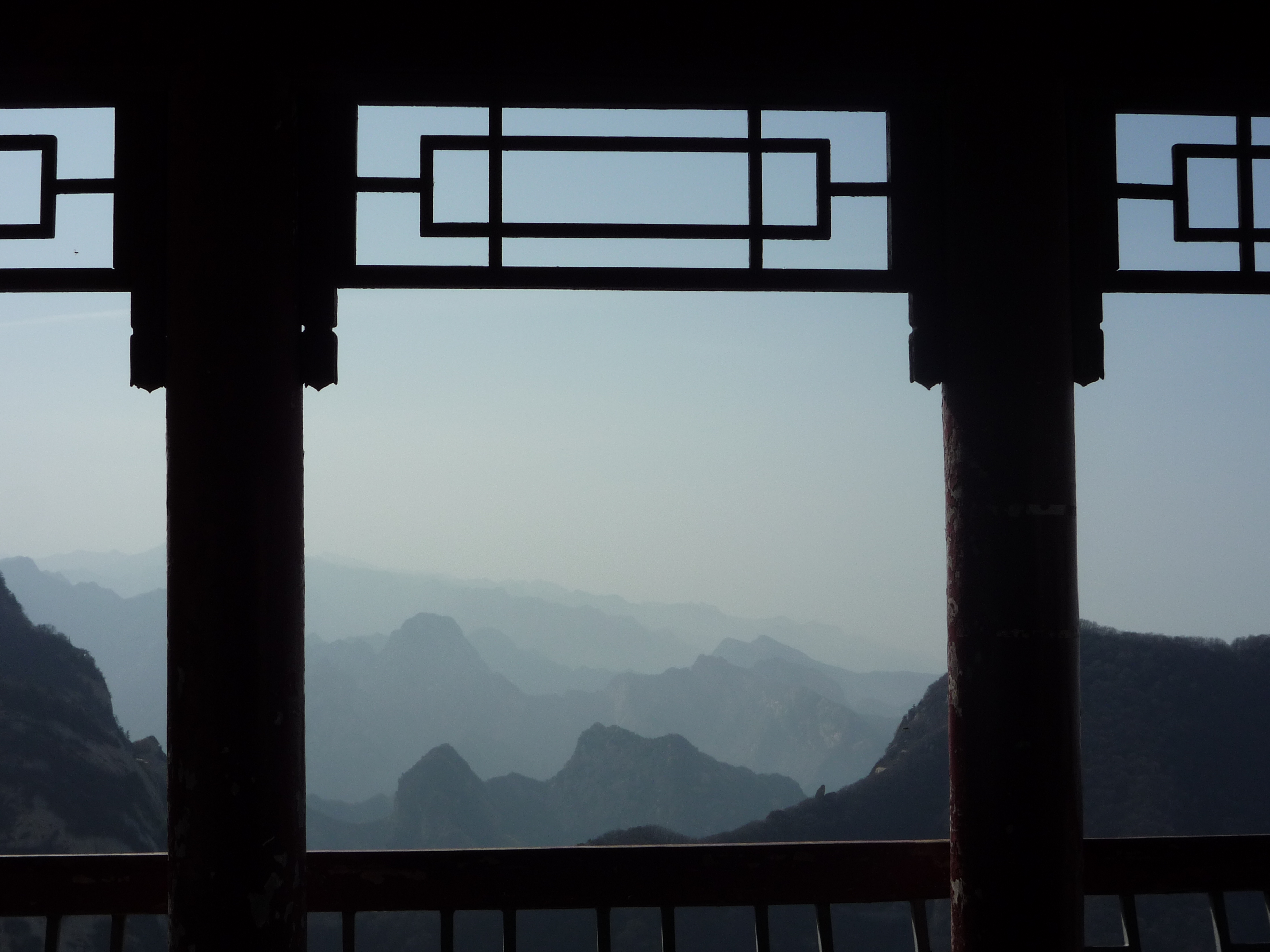
Then I told the woman in Chinese what I told the man in Thailand using English. “35 and I’ll buy these right now.” I added that they weren’t for me, but for family, and….she caved.

And then I had them carve “Xi’an” into the back of my brother’s necklace just for good measure…and the memories.

My friend couldn’t believe I got her so low without the merchant being royally pissed, but I knew it was fine. She wouldn’t have kept talking if she wasn’t willing. And plus, in the time we stood there she sold a bunch all because we were creating a crowd.

Don’t look at me like that; saving money on vacation is a tricky endeavor.

We wandered around the streets then, taking in some local scents and scenes. Another skinny street with a bunch of merchants, restaurants, and overhanging trees…and people, people, people. There’s an idiom in China that goes, “People mountain, people sea.” It basically means there’s a lot of flippin’ people. But you already knew that.

Xi'an and Henan 040

Xi'an and Henan 041

We headed to the Great Mosque next. It wasn’t far, just a few blocks away. We had to shimmy and shuffle through tightly packed alleys with a million merchants hawking their wares. Everything from imitation Dynasty currency to T-shirts sporting Obama with communist slogans on them could be seen. Once we got through it all, though, we came to the “Great” Mosque. With a name that literally brags about its awesomeness, I was expecting something…greater.

"Wei Ren Min Fu Wu" "Dedicate service to the people." This is a phrase good ol' Mao made well known. It's a phrase still used by the military.
“Wei Ren Min Fu Wu” “Dedicate service to the people.” This is a phrase good ol’ Mao made well known. It’s a phrase still used by the military.

The Mosque is definitely an ancient, meaningful, still-in-use place of worship, but when you hear Mosque certain images are conjured. What I saw fit none of them. The whole place is Chinese style. Built in a long rectangular shape with big open-air courtyards and symbolic gazebos and stone tablets, the place looked more like what you’d see in an old Kung-fu movie, not the Middle East.

Xi'an and Henan 052

Xi'an and Henan 064

Xi'an and Henan 067

In that notebook I mentioned earlier I had a running commentary on the trip. Let’s see what I wrote about the GM: “Blond children Kung-fu fighting in the Great Mosque, Muslims in business suits, and a wooden sign protruding over the top of the wall proclaiming free wi-fi at a nearby café.”

The kids were with one of the very few Western families we saw. The bother and sister were running around the courtyards chopping at each other. The business men seemed to have just finished up with a meeting and were walking around in a herd. The wooden sign peaked over the stone walls of the Mosque and made sure we knew we were in the 21st century.

Afterward, we hiked it to the South Gate of the City Walls. Xi’an’s City Walls are, I think, the only fully intact city walls. The existing wall was started by the Ming Dynasty in 1370. It encircles 5.4 sq mi, a much smaller part of the city than the original. The wall measures 8.5 mi in circumference, 39 ft in height, and 49–59 ft in thickness at the base.

We got there around 6:45 and bought a ticket to get in and walk on the walls, but renting bikes and riding along the whole perimeter was our goal. Problem was, the rental place turned us away because they were closing at 7:30 and it takes 100 minutes to cover the whole wall. We went back down, told the other people, the gate people, the problem, and they just said we should have still been able to rent the bikes up until 7:30 with no issue. We ended up wasting 15 minutes arguing with them to either give us our money back or just let us ride the damn bikes. It was actually a good set up because the gate people sold tickets to get in and walk on the walls. Technically they had fulfilled their side of the bargain. The bike people were a separate organization that owed us nothing.

In the end, they rented the bikes to us for 50 minutes and grumbled about just wanting to get off work. We took the bikes and zipped off into the fading light as evening truly descended. It felt great riding on the walls at night when no one else was there. We could even see a few stars, something that’s actually more amazing than you might think…especially in a Chinese city.

Xi'an and Henan 077

We rode along for a while, picking up speed and just watching as parts of the city passed by. And then, around 7:45, we peaked behind us and noticed an electric cart following us. We kept going, but eventually they caught up and told us we needed to hop on with them and ride back. They wanted to get going. The whole time they’re talking to us I’m circling them on the bike. I ask my friend what time it is, and then I say, “Okay, see you back there.” I take off back in the direction we had come and dart through the night. I ride as fast as my legs can take me, looking back just a few times. The cart didn’t even come close to me. The cool air is circulating in and out of my lungs, my legs are burning, and I’m fairly certain the chain on the bike is about to bust any second…but I keep going. Something about the whole hassle with them closing earlier than they should have, the way they just were jerking us around…it propels me like a bat out of hell.

I made it back to the bike rental place and had enough time to hop off and put the bike back in the line where it belonged before the cart rolled up. The two workers look like they want to lop me off the side of the wall, but my friend just smiles at me and says, “You’re awesome.” I ask her what happened when I took off and she says they were irritated, but when they tried to catch up to me they couldn’t. Immature? Probably. Would I do it again? You bet I would.

Of course that night I began coughing. It would be the start of a two week cold that I’m pretty sure I deserved.

When we got back to the hostel we found that we shared the room with a Chinese guy, a Chinese couple, and two Norwegian girls. With day one down, we grabbed some western food, more showers, and slept like babies in the bunk beds.

Day Two would be the day we saw the Bing Ma Yong, Terra Cotta Warriors.